
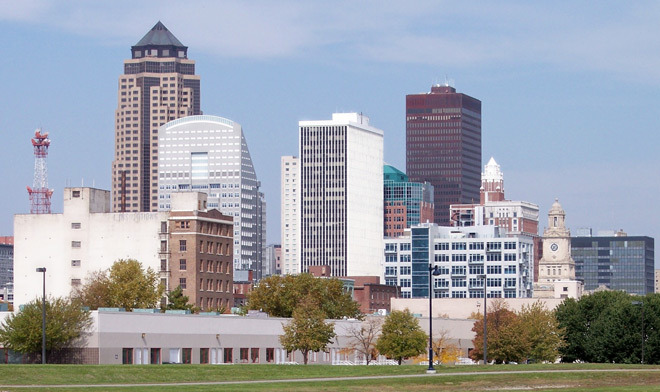
Iowa City is a representative college town in the Midwest of the United States, where education, healthcare, manufacturing, and technology industries have developed in a balanced manner. With a population of about 70,000, it may not be large, but its economic base is solid for a city of its size. On the surface, it may seem like a quiet small town, but in reality, it is considered one of the most stable and knowledge-centered cities in the Midwest. At the heart of it is the University of Iowa. This university is not just an educational institution but a key engine driving the entire local economy.
The University of Iowa has tens of thousands of students and staff, which has significantly developed the education-related industries and services. The University of Iowa Hospitals and Clinics, located on campus, is the largest medical institution in the state, employing thousands in the healthcare and biotech fields. The healthcare industry accounts for a large portion of local employment, and research institutes and pharmaceutical startups centered around the university hospital are steadily growing. Particularly, research fields in rehabilitation medicine, biomedical engineering, and biotechnology are active, and there is substantial government funding for research, leading to the frequent emergence of healthcare and biotech-related ventures.
The second major pillar of Iowa City is manufacturing. Traditionally, industries such as agricultural machinery, automotive parts, and construction materials have been strong, and recently, the industrial structure is becoming increasingly sophisticated with the manufacturing of precision machinery, eco-friendly products, and medical equipment. In the industrial complex on the outskirts of the city, small and medium-sized manufacturers are gathered, and the transportation network is good, providing excellent logistics efficiency. Iowa City is close to the I-80 highway, making it easy to transport goods to Chicago or Minneapolis, thus serving as a hub for inland logistics in the Midwest.
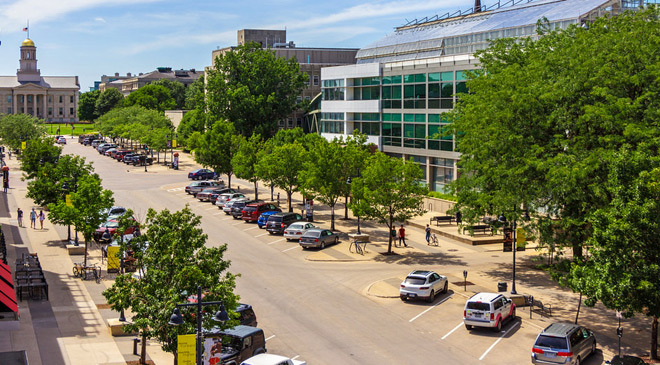
The third notable sector is information technology (IT) and research and development. In recent years, the tech industry has rapidly grown as startups collaborating with the university have increased. In particular, the Iowa Innovation Corridor, the university's startup support center, serves as an incubator for new companies, laying the foundation for technology-based startups to grow. Here, startups in fields such as data analytics, medical AI, educational technology, and AgTech are actively taking place.
Agriculture and the food industry also play an important role in the local economy. Since the entire state of Iowa is a representative grain-producing area in the United States, there are many processing plants and distribution facilities related to corn, soybeans, and pork around Iowa City. While agriculture itself takes place more in the outskirts than in the urban center, research on agricultural products, quality control, and processing technology development are conducted in collaboration with the university. This has created a favorable environment for innovative industries like 'smart agriculture' to grow.
The service industry cannot be overlooked either. With many college students, healthcare professionals, and researchers, consumer-related industries such as restaurants, accommodations, cafes, and cultural facilities are thriving. In particular, the Ped Mall in the downtown area is the commercial center, densely packed with restaurants, bookstores, and performance venues, injecting vitality into the local economy. Additionally, the entire city is designated as a 'City of Literature,' with many cultural and artistic programs, and the number of creators and freelancers in this field is steadily increasing.
The unemployment rate in Iowa City is about 2.8%, which is lower than the national average. This is due to the balanced growth of education, healthcare, manufacturing, and research and development, stabilizing the employment base. Furthermore, the local government is proactive in supporting startups and transitioning to eco-friendly energy, making it a city with many opportunities for the younger generation. New industries in fields such as wind energy, biofuels, and recycling technology are also gradually taking root.
Ultimately, the economy of Iowa City, while not large like a big city, is creating a sustainable industrial ecosystem centered on education and healthcare. The real competitiveness of Iowa City lies in its continuous innovation built on a solid foundation.





 Iowa Egen Aunt |
 Hoorah Ooorah |
 Iowa School News |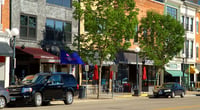
 Tonky |
  viroma |
  cookie |
  Live and that's it |
  Alright Twain |
  eatontown blog |
  HAWAII Korean Church News |
  Amore |
  linex |
  Balancework |
  laro90 |
  MEDBIO American Doctor Blog |
  SWAT TEAM BLK |
  DREAM BIG |
  frostbite |
  330 Forever My Love |
  El Dorado |
  dralix58 |
  Gorama Round |
  Skydiving |