
Last week in the evening, a trivial disagreement escalated into a one-hour argument. It started over the order of doing the dishes, but before I knew it, we were bringing up issues from three years ago.
At that moment, I realized my voice was a half-tone higher than usual. My head was hot, and I couldn't hear a word my partner was saying.
Eventually, I suggested, "Let's take a 20-minute break and talk again later," and I stepped outside. Later, I learned that this wasn't just running away; it was a method backed by research.
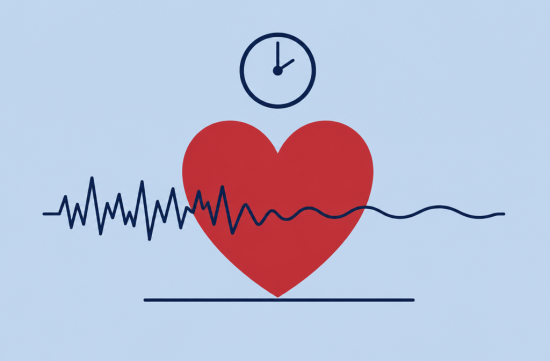
Dr. John Gottman, known for his research on marital relationships, refers to this state as flooding. It's when emotions overwhelm you, causing your thinking to become paralyzed.
According to the Gottman Institute, during flooding, the heart rate can exceed 100 beats per minute on average. Dr. Julie Gottman has mentioned that for someone who usually exercises a lot, even a heart rate above 85 should be considered a warning sign.
When in this state, the body enters a mode of choosing whether to fight or flee. This means your ability to listen to and understand your partner diminishes significantly.
So, the words exchanged during this time are more about defense than conversation. I think my bringing up something from three years ago was a perfect example of that state.
Interestingly, the Gottman research team confirmed this through experiments. They paused couples during conflict conversations and had them read silently for 20 minutes.
During that time, their heart rates returned to normal levels, and when they resumed talking, the atmosphere changed dramatically. Humor and expressions of affection began to emerge again.
It was the same people and the same topic, but just taking a 20-minute break improved the quality of the conversation. Honestly, I felt a bit deflated when I first read this. I wondered why we had been trying to push through all this time.
The research team also reported that couples who exhibited high levels of physiological arousal during conflict conversations experienced a greater decline in marital satisfaction over the next three years. This was based on physical indicators like heart rate and sweat response.
So why exactly 20 minutes? The Gottman materials suggest that it takes at least that long for an agitated body to calm down.
The Gottman Institute recommends taking a break of 20 to 30 minutes, but never exceeding 24 hours. If the break is too short, the body doesn't cool down enough, and if it's too long, it can lead to avoidance.
There's one important condition here: during the break, you shouldn't replay the argument in your mind.
If you go out and think, "Next time, I'll respond like this," your heart will keep racing, and even after 20 minutes, you won't have calmed down. I fell into this trap at first too.
Instead, you should engage in activities that genuinely help your body relax. Things like walking, listening to music, reading, or stretching.
The key is to calm the body first, not the mind. Just taking slow, deep breaths can be helpful.
I walked along the riverbank. Listening to some old blues songs with my earbuds definitely helped me breathe more deeply.
Another important thing is to communicate the time you'll be back. If you just say, "I'm leaving," and shut the door, your partner may feel abandoned.
Simply saying, "I'm too upset right now; let's talk again in 30 minutes," can completely change the meaning of the break. And you must return at the promised time.
The person suggesting the break doesn't have to be the one who is upset. If you notice your partner's face becoming tense and their responses getting shorter, you can suggest taking a short break first.
If you establish this in advance when you're calm, it becomes much easier. You can create a signal that only the two of you understand, like raising a hand or saying a predetermined word.
It seems that Korean couples, in particular, have a strong belief that "we must resolve everything by talking it out." I understand that mindset, but if your body is already in a flooded state, pushing through can actually be harmful.
The first words upon returning are also important. Instead of diving right back into the argument, it's better to open with something like, "I was a bit harsh earlier." A simple apology can resolve more than you might think.
If you wear a smartwatch, check your heart rate during an argument. Seeing the numbers can make it easier to acknowledge how worked up you are.
Of course, the research findings may not apply universally to all couples. Heart rate thresholds vary from person to person, so it's best to view them as general indicators.
And if the argument escalates to verbal abuse or threats, a 20-minute break won't solve the problem. In such cases, seeking help from a counseling professional should be the priority.
That day, I walked for about 25 minutes before returning. When we sat down again, the discussion about the dishwashing order was resolved in just five minutes.
It made the hour-long argument seem trivial. We both laughed and wondered why we had reacted that way. Just like a river needs to slow down at a bend to flow in the right direction again.
If it were me, the next time my voice starts to rise, I would stop immediately. A 20-minute cool-down is far more beneficial for the relationship than enduring an hour just to win.
 Fruity Pebble


 Baguette Blog |
 Khan Film Blog Production |
 dermoon |
 hoosierdaddy |
 sun walker |
 nexabyte |
 Goroke Geureoke News |
 greenloop |
 Choco Mint Creator |

 road98 |
  Churros Train Conductor |
  gleeful |
  Burbank Lee |
  Olivia's Blog |
  Bushing Around Life |
  Active |
  Cherokee Rose |
  Kor. Master |
  Holey Moley |
  Conflite Teacher |
  Hodong Prince Over Flex |
  Mist inn |
  citrus pop |
  Onion Ring |
  phoenixia |
  viewtop |
  loverun |
  Kim Do Sun |
  SEVEN SEVEN |