
A homeowner asked me last week about the 17% reduction in property taxes that was mentioned a few years ago. When will that happen? To cut to the chase, as of October 2026, that 17% reduction has not been implemented.
The story began in August 2023 when Mayor Mike Duggan announced a plan for the Land Value Tax. According to the city's announcement, 97% of homeowners would see a tax decrease, with an average reduction of 17%.
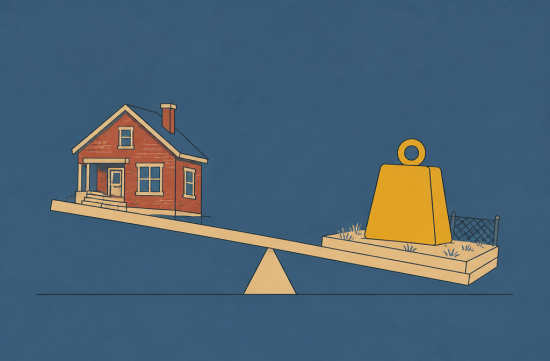
The principle is simple. Currently, the same tax rate is applied to both land and buildings. This plan aims to lower the tax rate on buildings while increasing the rate on land.
So, where will the burden shift? To vacant land, abandoned buildings, parking lots, and scrap yards. Properties that are small in structure but have large land areas will end up paying more.
The issue is that Detroit cannot make this decision alone. Under Michigan state law, the state legislature must first pave the way for separate tax rates on land and buildings. After that, it must pass a citywide referendum.
The original timeline was as follows: passage by the state legislature in 2023, a referendum in November 2024, and tax reductions starting in 2025.
However, reality was different. The bill (HB 4966) made it through the state House Tax Committee, but the vote in the full chamber was postponed, and even within the same Democratic party, votes were not gathered.
Ultimately, the Michigan legislature wrapped up the 2023 session without that bill. There were reports that some city council members lobbied against it. Since then, there has been no record of the bill passing.
The opposing arguments were also worth noting. Some residents who used the calculator provided by the city reported results that were far below the 17% reduction. There were ongoing concerns that setting the land tax rate too high could lead to negative side effects.
In the meantime, the mayor changed. Since January 2026, Mayor Mary Sheffield has been in charge. At the Detroit Policy Conference that same month, property tax reduction was highlighted as a top priority for the mayor, city council, and state legislators.
In her first state of the city address on March 31, Mayor Sheffield introduced a larger figure. She proposed reducing property taxes by 30% to 60%. However, she did not specifically mention the Land Value Tax.
This proposal also requires state legislative approval. She mentioned that the reduced tax revenue would be compensated by population and economic growth. In the short term, she referred to new revenue sources like an entertainment tax on performances or sports tickets, which would also require changes to state law.
Looking at the numbers, it's clear why everyone is so invested in this issue. According to a study by a researcher at the University of Michigan, Detroit's effective tax rate in 2024 is projected to be 3.02%, the highest among major U.S. cities.
The tax rate for commercial properties is set to be 82.18 mills in 2025, which is 34% higher than the Michigan state median of 61.20 mills. One mill equals one dollar per $1,000 of taxable value. Having observed this market for decades, this gap feels heavy every time I see it.
So, is there no immediate change in sight? Mayor Sheffield's first budget proposal included a small reduction. It suggested lowering the debt repayment tax rate from 4 mills to 3 mills.
Calculating this, if a home has a taxable value of $50,000, it would mean a $50 reduction per year. This is far from the 17% or 30% reductions, making it difficult to feel the impact.
There is also movement at the state level. In May 2026, the Michigan House passed a property tax reduction bill package that included the elimination of the state education tax. This was led by Republicans, with almost all Democrats opposing it.
This bill has now moved to the state Senate, which has a Democratic majority. It is separate from the Land Value Tax bill specifically for Detroit. The outcome of the Senate's processing is still unknown.
Returning to the initial question, there is no date for when the 17% reduction will occur. The steps of passing the state legislation, holding a referendum, and implementation remain. None of the three initial steps have been completed yet.
In the meantime, there are things homeowners can do. First, check your tax bill to ensure that the Principal Residence Exemption is properly applied. If this is missing, you will incur a school operating tax, significantly increasing your tax bill.
Second, do not overlook the assessment notice that comes every year at the beginning of the year. If you believe the assessed value is higher than the market value, you can appeal through the city's assessment office and the March Board of Review process.
Third, if you are a low-income household, there is a property tax relief program called HOPE. The application period and income criteria change every year, so it's safest to check the city's website for the conditions for that year.
For those considering buying, I have a word of advice. If the Land Value Tax passes someday, homes will become favorable, while large vacant lots or parking spaces will become unfavorable. If you are contemplating land-based investments, be sure to factor this variable into your calculations.
In my opinion, the direction is correct. It makes sense that those who build and live in homes should pay less than those who hold onto vacant land. However, the numbers must be credible once the bill is actually released.
Therefore, I would not include the 17% or 60% in my plans. I would assess whether it is manageable based on the current tax bill. If a reduction comes, it should be considered a bonus.
Moving forward, there are two places to watch. The Michigan legislature's website for bill progress and the announcements from the city's finance department. These two sources are faster and more accurate than rumors.
This article is based on public reports and city data as of the end of October 2026. Individual property taxes can vary significantly based on taxable value and exemptions, so please verify actual assessments with the city's assessment office.
 CraneDancer






 moo moo |

 ultron78 |
 garlic bread |

 Sugar Cream Door Bulletproof Noodles |

 urbanmint |

 amolayo |
 So is multiplied by So, So Ji-sub |

 juniper |

 Michigan Enthusiast |

 U.S. Weather Bureau News |
 Rowland Mama |
 foxtree |
 bayaa |
 loveyom |
 Coastal city |
 Spaghetti Flying Religion |
 My Town My Way Blog |
 holy cow |
 endone |
 starline |
 Where is a really nice neighborhood? |
 Real Estate |
 Forest Gump |
 Real Estate Investment Korean American |
 Dollydori, Lover of Movies |
 dmzline |
 travelo |
 American Food Information & Calories |
 Splendid Mission |
 sparklingo |