

These days, one of the most common questions from those looking to sell their homes is whether it's true that Missouri has eliminated capital gains tax on home sales.
To put it simply, the answer is partially correct and partially needs verification. It is true that state income tax is exempt, but federal taxes remain unchanged.
The Governor of Missouri signed HB 594 on July 10, 2025. This law allows individual taxpayers to calculate their Missouri adjusted gross income by excluding 100% of capital gains included in federal income.
The effective date is for tax years beginning on or after January 1, 2025. So, if you sold your home last year, you should have already received this deduction on your state tax return for 2025 submitted earlier this year.
The Missouri Department of Revenue (DOR) explains that both short-term and long-term gains, as well as stocks, real estate, and cryptocurrencies, are included. This means the same principle applies whether it's a personal residence or an investment property rented out.
However, there are exceptions. Withdrawals from retirement accounts like IRAs or 401(k)s are not eligible for this deduction.
Corporations are still not included. The corporate deduction structure requires the individual top tax rate to drop below 4.5%, but the top rate in 2025 was 4.7%.
So, what about federal taxes? This is where the actual calculations become crucial.
If you have owned and lived in your home for more than two years, under federal tax law Section 121, you are exempt from taxes on up to $250,000 of profit, or $500,000 for married couples filing jointly. This amount has not increased since it was set in 1997.
There are proposals in Congress to eliminate this limit or double it. However, nothing has passed yet, so relying solely on expectations for timing your sale could be problematic.
The calculation order is as follows: first, subtract the brokerage fees and closing costs from the sale price. Then, add the original purchase price to any capital improvements made, such as renovations, to determine the acquisition cost.
The difference between these two amounts is the capital gain. If there is any remaining amount after applying the Section 121 exclusion, that portion will be taxed at the federal long-term capital gains rates of 0%, 15%, or 20%.
For those with higher incomes, an additional 3.8% net investment income tax may apply. Just because Missouri has eliminated state tax does not mean this part disappears.
If you are a primary residence homeowner, the impact of this change may not be significant. If your profit is within the exclusion limit, you likely had little to no tax liability to begin with.
In fact, the biggest beneficiaries are those who have held rental properties for a long time or those who exceed the exclusion limits. Previously, they would have faced both federal and state taxes, but now they will only have to deal with the federal tax.
For rental properties, there is one more consideration. The depreciation you have claimed will be recaptured by the federal government at a maximum rate of 25%, and how this is handled in relation to the state deduction should definitely be confirmed with a tax professional.
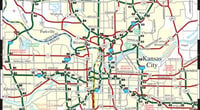
Residents of Kansas City may also be curious about the 1% city income tax (E-tax). According to city explanations, this tax is applied to income earned through work, such as wages or commissions.
The city's personal tax filing guidelines also classify interest, dividends, and capital gains as non-taxable items. However, if you are buying and selling real estate as a business, the situation may differ, so it is safer to check with the city tax office (816-513-1120).
This time, let's compare it side by side with Kansas across the river. Kansas does not differentiate capital gains and taxes them at the same rate as ordinary income.
Even if you sell similar homes within the same metro area, if your profit exceeds the exclusion limit, the state tax burden will vary depending on which side of the state line your home is located. This is where Missouri clearly has an advantage.
However, it cannot be definitively stated that Missouri is superior in every aspect. Property taxes, school districts, and housing market trends vary by neighborhood, and taxes are just one of many factors.
I've seen people moving from other states rush to invest in Missouri properties based solely on this news. Remember that the laws applicable are those at the time of sale, not purchase, and that laws can change.
If you are planning to sell, I recommend gathering your documents first. You will need closing documents from the time of purchase, receipts for roof or kitchen renovations, and if it's a rental property, annual depreciation records.
If you lack these documents, you will have to set a lower acquisition cost, which will increase your federal capital gains. Just because state tax has been eliminated, neglecting record-keeping could lead to losses at the federal level.
From my long observation in this field, I feel that the pace at which tax law changes affect the market is slower than expected. This deduction is likely to prompt decisions for those looking to liquidate long-held investment properties rather than immediately impacting home prices.
Calculations can vary significantly based on individual circumstances, so be sure to verify the numbers with a tax advisor or accountant before selling. This is especially important for jointly owned properties, inherited homes, or properties held in corporate names.
In summary, Missouri's state capital gains tax is indeed $0, while federal taxes remain unchanged. Personally, I would calculate the federal tax first before considering the state tax savings as a bonus.
 CleoPartner







 moo moo |

 ultron78 |

 garlic bread |

 Sugar Cream Door Bulletproof Noodles |

 urbanmint |

 viroma |

 roma |

 Missouri Kings News Information |

 dravion |

 selviro |
 Maximum Pro |
 Joyce blog |
 Atlanta Business Information |
 Ansaso |
 Soft Feeling That Feeling |
 assa man |
 Yugo Girl I'm So Hot |
 nexaro |
 Experiences Living in America |
 arsnack |
 Nebraska Center Director TOP |
 Florida Gario |
 menmo |
 Arizona AZ Cowboy |
 springw |
 Woooooah |
 frostpup |
 chocopup |
 Angeles Choi |
 My Heart Popper |