
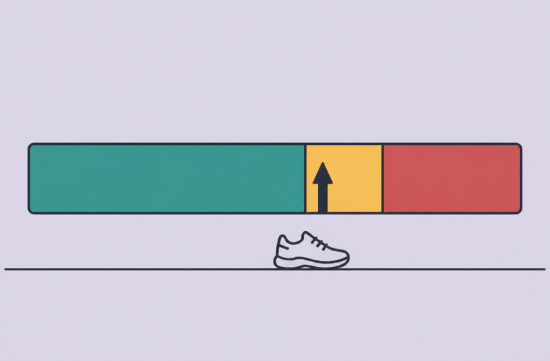
The morning air is refreshing today. Let's start off feeling good, just like the autumn sky!
A friend recently brought me their health check results. They laughed and said that since there were no red marks, everything must be fine.
However, upon closer inspection, their fasting blood sugar was 108. This is a borderline number, slightly above the normal range.
Such numbers often go unnoticed because they don't cause any symptoms and are somewhat ambiguous. Today, I want to discuss these borderline metrics.
The first is blood sugar. According to CDC guidelines, a fasting blood sugar between 100 and 125, or an A1C between 5.7 and 6.4 percent, is considered prediabetes.
Since it's not above 126, it's easy to feel reassured that it's not diabetes. However, the term prediabetes itself indicates an opportunity to change direction.
A1C shows the average blood sugar over the past two to three months. It doesn't change drastically just because you fasted the day before the test, so it honestly reflects your usual lifestyle habits.
Looking at CDC statistics, I was surprised to find that 97.6 million American adults, or 38.0 percent of the adult population, are in the prediabetes stage.
When looking specifically at those aged 65 and older, the numbers are even more startling: 27.2 million, or 48.8 percent. This means that one in two seniors is affected, making it a serious issue.
Our Korean seniors, who love rice, dumplings, and noodles, should pay special attention. I've started to reduce my white rice intake and mix in some whole grains. At first, I missed it, but now I've grown fond of the nutty flavor.
The second is blood pressure. According to the American Heart Association and the American College of Cardiology, normal blood pressure is below 120/80.
If the systolic is between 120 and 129 and the diastolic is below 80, it's considered elevated. While it's not hypertension yet, it's a warning sign.
If the systolic is between 130 and 139, or the diastolic is between 80 and 89, it's already classified as stage 1 hypertension. Many people used to think 140/90 was the threshold, so they might overlook this.
If the top and bottom numbers fall into different categories, it's classified as the higher stage. For example, if the systolic is 125 and the diastolic is 85, it's considered stage 1.
If you're curious whether your blood pressure reading at the doctor's office was affected by nerves, try measuring it at home at the same time over several days and keep a record. This information can be very useful during your appointment. It's even better if you note whether you had salty food or slept well that day.
The third is LDL cholesterol. Typically, levels between 130 and 159 are classified as borderline high.
Below 100 is optimal, while above 160 is considered high. Numbers in between can seem insignificant, leading to years of neglect. I once left my levels around 140 for several years before my doctor pointed it out.
However, cholesterol isn't judged by a single number alone. Blood pressure, blood sugar, smoking, and family history are all considered together to assess risk, meaning that a level of 140 can have different implications for different people.
The fourth is the kidney function metric, eGFR, which many people overlook. If it's below 60 for more than three months, it falls into the criteria for chronic kidney disease.
eGFR is an estimate calculated from the creatinine level in a blood test. It tends to decrease slightly with age, making it easy to dismiss as just a sign of aging, but that complacency can be problematic.
A urine test showing an albumin-to-creatinine ratio exceeding 30 mg/g is also a signal of kidney damage. Even if the eGFR looks fine, you should monitor this value separately.
Just because one test result is poor doesn't mean a diagnosis is immediate. This is why it's even more important to have follow-up tests a few months later.
So, what should you do if you receive borderline results? I keep my results and compile them into one file each year.
The trend is much more telling than a single number. If last year it was 102 and this year it's 108, the story changes even if they're both borderline.
When making a doctor's appointment, be sure to ask when you should have the borderline metrics rechecked. If you're worried about your English, you can write down your questions in advance.
Interpreting results and determining next steps can vary from person to person, so it's essential to consult your doctor or pharmacist. Don't rely solely on internet articles or friends' advice to stop or start medications.
Utilizing the Medicare annual wellness visit is also a good option. You can ask them to go over each borderline metric during that appointment. Since it's an annual opportunity, don't hesitate to take full advantage of it.
I love walking the most. Strolling along the colorful paths with friends makes me feel lighter in both blood pressure and blood sugar, as well as in spirit. And the warm soup I enjoy afterward is simply delightful.
Borderline results are not a signal to panic but an invitation to take action now. The saying that the best time to act is when you think it's too late is particularly true for health.
Take a moment to pull out your results from the drawer today. That five minutes spent looking at even the numbers without red marks can greatly enhance our vitality in later years!
 ColaTrain


 Top Beaches |

 Diana Blues |

 Dragon Lee |

 Churros Train Conductor |

 Tora Tora |

 Kansas City Representative Singer |


 business life |



 US Regional Information Blog |
 Soft Feeling That Feeling |
 assa man |
 Yugo Girl I'm So Hot |
 nexaro |
 Experiences Living in America |
 arsnack |
 Nebraska Center Director TOP |
 Florida Gario |
 menmo |
 Arizona AZ Cowboy |
 springw |
 Woooooah |
 frostpup |
 chocopup |
 Angeles Choi |
 My Heart Popper |
 comova |
 vintago |
 Sky Way |