
Last weekend, while pouring coffee in the church fellowship hall, one of the elders I usually get along with called me over. "You know about this stuff, right? I got another letter from the bank about taking my RMD, but I hate losing money to taxes."
The elder mentioned that he makes separate donations to the church and food bank every year at the end of the year. As soon as I heard that, QCD came to mind.
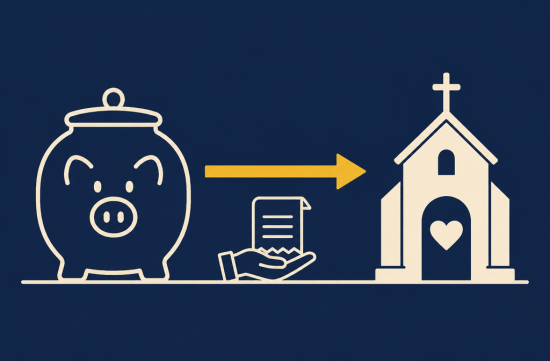
QCD stands for Qualified Charitable Distribution. It allows you to send money from your IRA directly to a charity without passing through your personal account.
The key point is that this money does not count as taxable income at all. If you simply take your RMD and donate it, it counts as income first, and then you have to figure out deductions, but with a QCD, it is excluded from income from the start.
Let's look at the conditions. The IRA owner must be over 70.5 years old, and the money must go directly from the IRA custodian to the charity.
If you receive a check in your name or have it deposited into your account before donating, it will not qualify as a QCD. The IRS has made this quite clear.
The starting age for RMDs is 73 or 75, depending on your birth year, following SECURE 2.0. However, since QCDs can be done starting at 70.5, you can use them to reduce your IRA balance even before RMDs kick in.
Once you turn 73 and become subject to RMDs, the amount of your QCD counts toward that year's RMD. This is the biggest point for someone like the elder.
The limits are also more generous than you might think. As of 2026, you can donate up to $111,000 per person annually, which has increased from $108,000 in 2025 to adjust for inflation.
If a couple each has their own IRA, they can each use their limit. Honestly, I was a bit surprised by this number; it covers the donation amounts for most retirees.
So what's the difference between just donating and getting a deduction? Most retirees these days do not itemize and take the standard deduction instead.
The standard deduction for 2026 is $32,200 for married couples filing jointly and $16,100 for singles. If you don't have enough deductions to exceed this amount, making a donation essentially provides no tax benefit.
Starting this year, there is a new provision that allows cash donations of up to $1,000 for singles and $2,000 for couples to be deducted even if you don't itemize. However, for those who donate more than that, QCDs are still much more advantageous.
Another hidden benefit is that it lowers your AGI. A lower AGI can reduce the taxable portion of your Social Security benefits and may help you avoid the IRMAA brackets for Medicare Part B and D premiums.
IRMAA is typically based on income from two years prior. So, if you do a QCD this year, it will affect your premiums in 2028 rather than immediately.
If you live in Illinois, there's one thing you should know. Illinois allows you to deduct IRA withdrawals from your state income tax, so the savings from a QCD primarily affect federal taxes.
Still, the federal tax savings can be significant. If someone in the 22% bracket directs $10,000 as a QCD, that amount is completely excluded from taxable income.
Now, here are some practical year-end tips. First, the deadline is December 31, but this is based on when the money leaves the IRA. Considering the processing time of the custodian, it's safest to apply by November.
Second, the order of withdrawals matters. The money that leaves the IRA first counts toward your RMD for that year, so if you take your RMD first, you can't reverse it later with a QCD.
Third, check the recipient. Donations to churches or 501(c)(3) public charities qualify, but donor-advised funds or private foundations do not qualify for QCDs.
Fourth, make sure to get a donation confirmation from the organization. Also, you cannot claim a separate charitable deduction for the amount sent as a QCD; double benefits are not allowed.
Fifth, you cannot do this directly from a 401(k). QCDs are exclusive to IRAs, so if you want to use 401(k) funds, you must first roll them over to an IRA.
Finally, be careful when filing your taxes. Box 1 of the 1099-R will show the total distribution amount, including the QCD amount.
Starting in 2025, a new Code Y will be available for QCDs, but it was optional for custodians in the first year. So, on your 1040 form, write the total amount on line 4a and the taxable amount on line 4b, noting QCD next to it.
If you don't inform your accountant or tax software that it was a QCD, it may be processed as fully taxable income. This is a common mistake, so be sure to keep this in mind.
Of course, everyone's IRA type, income bracket, and Medicare situation are different, so it's a good idea to check with a tax professional or financial advisor before proceeding.
I really like this provision. I think it's much more efficient for the money to go directly to a church or local organization I know rather than going through the government first and then being used.
The elder said he would call the bank right then. If you have year-end donation plans and are over 70.5, make sure to look into QCDs this year.
 PigFootDream



 MEDBIO American Doctor Blog |

 Burbank Lee |

 vibranto |

 sparkling |

 oh my salami |

 Alright Twain |

 Arlington house |

 Trot King News |

 American General Knowledge Expert |

 Illinois Mom |
 Soft Feeling That Feeling |
 assa man |
 Yugo Girl I'm So Hot |
 nexaro |
 Experiences Living in America |
 arsnack |
 Nebraska Center Director TOP |
 Florida Gario |
 menmo |
 Arizona AZ Cowboy |
 springw |
 Woooooah |
 frostpup |
 chocopup |
 Angeles Choi |
 My Heart Popper |
 comova |
 vintago |
 Sky Way |
 Top Beaches |