

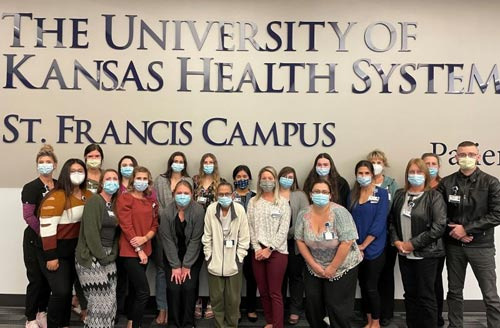
There is a name that cannot be missed when talking about the best hospitals in the Midwest of the United States. That name is The University of Kansas Health System.
Located in Kansas, it is adjacent to Kansas City, Missouri, and is essentially regarded as the representative medical institution of the Kansas City metropolitan area.
Local residents commonly refer to it as "KU Med," and it is one of the first hospitals that come to mind when severe illnesses or complex surgeries are needed.
The hospital's most significant feature is that it is not just a general hospital but an academic medical center that performs education, research, and clinical care. Medical school professors directly treat patients and have a system in place to quickly apply the latest research findings to actual treatments.
As a result, not only patients from Kansas but also from nearby states like Missouri, Oklahoma, and Nebraska seek care here for severe conditions.
The hospital's history began in the early 20th century with the University of Kansas Medical Center, but a crucial turning point in its growth to its current form was in 1998.
At that time, the hospital transitioned from direct state government operation to a newly independent hospital institution.
Since then, it has significantly improved operational efficiency and healthcare services, growing into a representative medical system of the central United States, and in 2017, it integrated with its medical staff organization to establish the current The University of Kansas Health System structure. This institution is particularly renowned for its cancer treatment.
The University of Kansas Cancer Center, under the hospital, is designated as a Comprehensive Cancer Center by the National Cancer Institute (NCI). There are not many institutions in the U.S. that have received such designation, and it provides top-level medical services from cancer diagnosis to surgery, chemotherapy, and clinical trials.
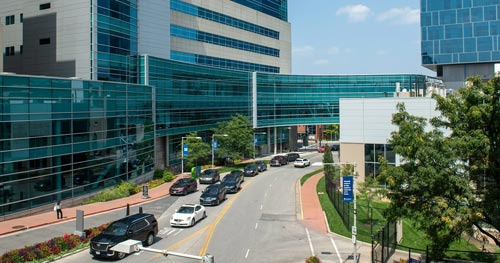
Currently, a next-generation cancer center building is under construction to further connect patient care and research, aiming to become a global hub for cancer research upon completion.
The field of organ transplantation has also gained national recognition. The heart, liver, kidney, and pancreas transplant programs attract patients from across the U.S. due to their high survival rates and extensive experience. In 2021, the hospital reached a significant milestone with a cumulative total of 5,000 organ transplants.
Additionally, it continues to advance in areas such as deep brain stimulation (DBS) for Parkinson's disease treatment, advanced cardiovascular care, and neuroscience by consistently introducing new medical technologies. The hospital's scale is considerable. It currently operates over 140 hospitals and clinics, along with specialized care facilities, covering more than 200 medical fields.
From emergency medical centers to children's hospitals, sports medicine centers, and radiology centers, various specialized facilities are systematically connected, allowing most conditions to be treated within a single healthcare system. The quality of care is also rated among the best in the U.S.
It has received the Magnet certification for nursing excellence five consecutive times, and in 2026, it aims to achieve Magnet with Distinction, a level attained by only a few hospitals nationwide.
This signifies that the professionalism of the medical staff, patient safety, and nursing standards are exceptionally high.
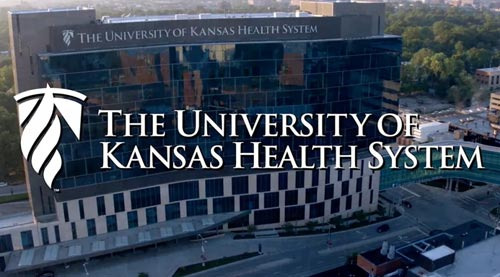
Visiting the campus gives the impression of seeing a small city rather than a large hospital.
Several buildings, including Bell Hospital Tower, Cambridge Tower, and Medical Pavilion, are interconnected, housing research facilities, educational facilities, and outpatient centers.
Inside the hospital, there are well-equipped cafes, lounges for patients and their families, and pharmacies, all thoughtfully designed to consider the convenience of patients undergoing long-term treatment.
The University of Kansas Health System is not just a large hospital; it is the center of healthcare in the Midwest, where research, education, and clinical care are organically connected.
It serves as a research institution developing new treatments while also being a community hospital responsible for the health of local residents.
Thus, for the people of Kansas City, this place is not just a "hospital to go to when sick" but a representative medical institution that has become a source of pride for the community.
 SeaweedRocket
 redcloudcreator1978
 HarleyDavis







 Karina's Blog |
 Jimbeam 88 |
 Taco Bell Candy Note Blog |
 Splendid Mission |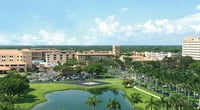
 Florida Gario |
 Rynex |
 calvix |
 Ansaso |

 Kansas City Representative Singer |
  Springs Korea |
  nixon |
  mini hometown |
  Gleeee |
  MacMorningBlog |
  ASURA |
  Elastico |
  shaket |
  vionoo |
  chocolate |
  Whisper |
  Star Voyager |
  InDiGo |
  Rocky Mountains |
  Whoever It Is, I Don't Know |
  Why Not Me |
  Plastic Rose |
  Rice Shop Uncle BLOG |
  Victory 1988 |
  Gook Rule |