
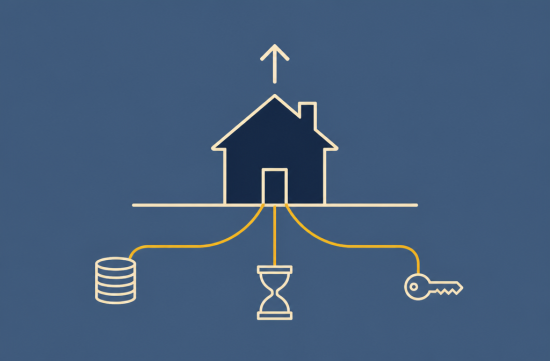
Recently, there has been a noticeable increase in inquiries from those reconsidering their refinancing timing. Most questions boil down to one: "Now that interest rates have risen, should I just keep waiting?"
To put it simply, waiting is just one option among many; it is not the only answer. There are actually several methods available right now.
First, let's clarify the situation. The Federal Reserve raised the benchmark interest rate by 0.25 percentage points during its meeting on September 16, setting it in the range of 3.75% to 4.00%. The vote was unanimous at 12 to 0.
This is the first increase since July 2023, flipping the previous expectations of a rate cut on their head.
Mortgage rates had already started moving before this. According to Freddie Mac's weekly survey, the average 30-year fixed rate was 6.95% on September 17, but it surpassed 7% at 7.03% on September 24.
The breach of 7% is the first since January 2025. Following that, it reached 7.28% on October 1, and then 7.40% on both October 8 and 15.
Considering it dropped to 6.06% on January 15 this year, marking a three-year low, it has risen over 1.3 percentage points in just a few months. Looking at the numbers again surprised me as well.
One area where many get confused is that the Federal Reserve's benchmark rate does not directly set mortgage rates.
In simple terms, 30-year fixed mortgages tend to follow the yield on 10-year Treasury bonds. The yield on those 10-year bonds has been moving above 5% in October, which has caused mortgage rates to rise as well.
Therefore, it would be unwise to make a judgment based solely on the outcome of the next Federal Reserve meeting on October 27-28. If the Treasury market does not stabilize, mortgage rates may not decrease even if the benchmark rate remains unchanged.
Now, let's go through the actual options one by one. The first is to recalculate the break-even point.
If the term is unfamiliar, think of it this way: divide the refinancing closing costs by the monthly savings in payments to see how many months it will take.
For example, if the closing costs are $6,000 and the monthly payment decreases by $150, it will take 40 months. If you don't plan to stay in that house for more than three and a half years, it means there's little reason to proceed.
The second option is a recast. A recast is simply putting a lump sum toward the principal and restructuring the monthly payments based on the remaining term.
The biggest advantage is that you can maintain the existing interest rate. However, not all loans qualify, and each servicer has different minimum amounts and fee criteria, so you'll need to ask directly.
The third option is to utilize home equity. If you were considering a cash-out for home repairs or to consolidate other high-interest debts, you can open a HELOC without touching your first mortgage.
However, HELOCs are mostly tied to variable rates linked to the prime rate, so when the Fed raises rates, they go up as well. You need to be aware that there are both advantages and risks during times like these.
If you live in Texas, there's one more thing to keep in mind. Under Texas Constitution Section 50(a)(6), home equity loans and cash-out refinances cannot exceed 80% of the home value, including existing loans.
This applies only to your primary residence, and you must wait 12 days after receiving the required notice before closing, making it difficult to refinance again within 12 months. The interpretation of the date calculation can vary by loan type, so be sure to confirm with your lender's compliance officer.
The fourth option is an adjustable-rate mortgage (ARM). The first 5 or 7 years are fixed, and after that, it adjusts based on market rates.
If you are certain you will move or sell within that period, it may be worth considering. However, relying solely on the assumption that you can refinance later when rates drop is risky.
The fifth option is for those who absolutely need to buy a home or refinance right now. There's a method to buy points to lower the interest rate, but this also ultimately comes down to a break-even analysis.
Divide the cost of the points by the monthly savings, and it only makes sense if you are confident you will hold the loan longer than that period. Get loan estimates from two or three lenders and compare the same line items.
Finally, those who choose to wait also have tasks to complete. Managing credit scores, reducing credit card balances, and gathering income documents in advance are all important.
When rates drop, applications often surge, leading to slower processing times. Those who are prepared in advance will secure their locks first.
In my opinion, this is more of a time to assess your loan structure rather than focusing solely on refinancing. If your existing rate is low, I would first consider addressing only the necessary parts through a recast or HELOC.
Conversely, if your existing rate is higher than the current market, the situation changes. Calculate the difference and break-even point, and if the numbers align, you don't need to wait.
The interest rate figures mentioned here are based on Freddie Mac's weekly survey and the Federal Reserve's September statement, and the Texas regulations are summarized based on state constitutional provisions. Since conclusions can vary based on individual circumstances, be sure to consult with a lender or expert before making any decisions.
 MichaelKim








 moo moo |

 ultron78 |

 garlic bread |

 Sugar Cream Door Bulletproof Noodles |

 urbanmint |

 Mental Health Psychiatrist |

 Gupabal MissKorea |


 Texas Lone Star Longhorn Spirit |

 US 210 Kim Sangsa |
 Yugo Girl I'm So Hot |
 nexaro |
 Experiences Living in America |
 arsnack |
 Nebraska Center Director TOP |
 Florida Gario |
 menmo |
 Arizona AZ Cowboy |
 springw |
 Woooooah |
 frostpup |
 chocopup |
 Angeles Choi |
 My Heart Popper |
 comova |
 vintago |
 Sky Way |
 Top Beaches |
 folyfoly |
 ground |