

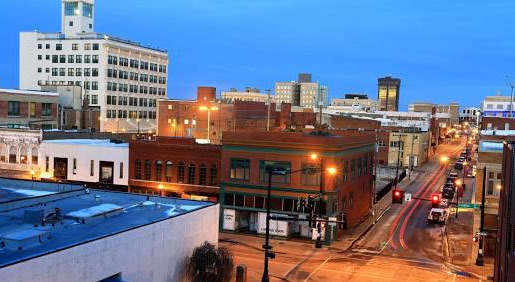
Springfield, Missouri is a city located in the southwestern part of Missouri, known for its rich history, culture, and economy.
Often referred to as one of the representative cities of "the American West," it is also famous as a symbolic location from the American Westward Expansion era. Today, it has established itself as the central city of Southern Missouri, with growth in education, healthcare, manufacturing, and services.
Historical Background
Springfield was established in the mid-1830s and grew based on agriculture and trade. Particularly, with the arrival of the railroad in the mid-19th century, it developed into a transportation and commercial hub. This gave it significant meaning connected to the westward expansion in American history, and it has continued to grow, becoming the third-largest city in Missouri today.
Population and Multicultural Characteristics
As of 2023, the population is estimated to be around 170,000. Including the surrounding suburban areas, it forms a larger metropolitan region. The population composition is diverse, with about 60% White, 15% Black, 15% Hispanic/Latino, 4% Asian, and 6% from other racial backgrounds. With many universities and educational institutions, there is a large population of students and researchers, contributing to a young and vibrant atmosphere throughout the city.
Industry and Economy
The economy of Springfield is balanced across various industries. Education and healthcare are particularly strong, with several universities and hospitals driving the city's economy, while manufacturing and technology sectors are also steadily growing. The job market is stable, resulting in a relatively low unemployment rate, with opportunities available in various fields. The presence of innovative startups and small businesses also invigorates the local economy.
The median household income in Springfield is about $50,000, which is somewhat lower than the national average but is considered average within Missouri. With a relatively high level of education and a significant number of professionals, there are many households earning above the median income.
Housing Environment and Living Standards
The housing market is relatively stable. Housing prices are reasonable compared to major cities in the U.S., making it easy for various income levels to settle down, and the rental market is well-established. The combination of stable income and reasonable housing prices creates a livable urban environment.
Education and Culture
Springfield has a strong character as a college town. With several educational institutions, it provides a good environment not only for students but also for families moving in. Culturally, performing arts, galleries, and local festivals are vibrant, and the diverse backgrounds of residents allow for a rich cultural experience.
Springfield has grown from a hub of agriculture and transportation to diversify its industries into education, healthcare, and manufacturing. With a diverse population and a large youth demographic, it is vibrant, and the cost of living and housing environment are stable, making it a suitable place for families, students, and professionals alike. It is expected to continue growing as an important city in Missouri, fostering both economic stability and cultural diversity.







 moo moo |
 ultron78 |
 garlic bread |
 Sugar Cream Door Bulletproof Noodles |
 urbanmint |
 meonetoo |
 song bang |
 vorame |
 nameone |
 Cherokee Rose |
  Kor. Master |
  Holey Moley |
  Conflite Teacher |
  Hodong Prince Over Flex |
  Mist inn |
  citrus pop |
  Onion Ring |
  phoenixia |
  viewtop |
  loverun |
  Kim Do Sun |
  SEVEN SEVEN |
  yentra |
  Make My Day |
  Victory 1988 |
  Tonky |
  viroma |
  cookie |
  Live and that's it |