
As mid-October approaches, there's a question I often hear: "Will changing trucks this year significantly reduce my taxes?" Friends running small businesses have been asking this more frequently lately.
To get straight to the point, 100% bonus depreciation is back. This time, it's a permanent provision without an expiration date.
Here's a brief background. The 100% bonus depreciation created by the 2017 tax law (TCJA) was set to decrease by 20 percentage points each year starting in 2023.
If things had gone as planned, it would have been 40% in 2025, 20% in 2026, and 0% in 2027. Honestly, I thought it was over.
However, the One Big Beautiful Bill Act, signed on July 4, 2025, changed everything. Assets acquired after January 19, 2025, can now qualify for the full 100% deduction again.
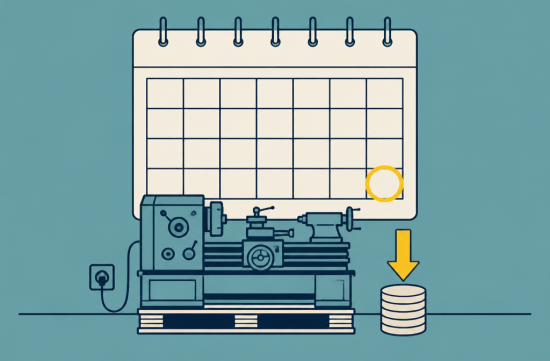
The meaning is simple. Instead of spreading the cost of equipment over several years, you can deduct it all in the year you purchase it.
The IRS also released a preliminary guideline in January this year with Notice 2026-11. The formal regulations will come later, so we need to keep an eye on the detailed interpretations.
Here's a catch: Assets for which a binding contract was signed before January 20, 2025, are not eligible for the 100% deduction. Make sure to check the contract date.
Generally, assets with a recovery period of 20 years or less qualify. This includes equipment, machinery, computers, business vehicles, and some software.
Used equipment is also eligible, as long as it wasn't previously used by you and was purchased from an unrelated party. This is great news for someone starting with a used van.
The reason to buy before year-end is precisely this. Depreciation is based on the date you actually start using the asset for business, not the date you paid for it. You need to receive and set up the equipment by December 31 for it to count as this year's expense.
If you only place an order at the end of December and the equipment arrives in January? That will be next year's issue. Considering supply chain issues, October or November is a realistic deadline.
You should also look at Section 179. The limit has significantly increased under the same law, with a deduction limit of $2.56 million for the 2026 tax year.
If the total cost of equipment purchases exceeds $4.09 million, the limit will decrease by the excess amount. This is a number most small businesses don't need to worry about.
Be aware of the difference between the two. Section 179 cannot exceed your business income for deductions. Bonus depreciation has no such limit, allowing you to create a loss.
There's one more condition for business vehicles. The business use percentage must exceed 50% to qualify for bonus depreciation or Section 179. Keep a detailed mileage log.
For large SUVs over 6,000 pounds, there's a separate Section 179 limit. In 2026, it will be $32,000. Don't just believe the saying "buy an SUV and deduct it all" without understanding the details.
Now, let's talk about California. This is where everyone gets disappointed.
California does not follow federal bonus depreciation rules. Even if you deduct it all on your federal return, you have to add it back on your state return and depreciate it according to the original schedule.
The California Section 179 limit is $25,000. If the purchase amount exceeds $200,000, that limit decreases as well. Compared to the federal limit of $2.56 million, it's laughable.
When filing, you adjust that difference on Schedule CA and Form 3885A. This can be confusing for first-timers, so CPAs often emphasize it.
So, you need to maintain two sets of books. You have to manage separate depreciation schedules for federal and state purposes. It's a hassle, but if you miss this, you might receive a letter from the FTB later.
Let's get a sense of the numbers. If you fully expense $50,000 of equipment in the 24% federal income tax bracket, your federal income tax savings would be $12,000.
Not bad, right? But on the flip side, $38,000 is still money out of your pocket. Buying unnecessary items just to save on taxes is a loss.
And if you deduct everything this year, you won't have any deductions left for that equipment next year. If you expect your income to increase significantly in the future, you can also choose to elect out of the deduction.
When you later sell the equipment, there's a recapture of the amount you deducted, which will be counted as income. There's no such thing as a free lunch.
I generally don't like the government dictating when I can spend my money. However, I see this as a positive change that gives business owners more flexibility in choosing when to invest.
My rule is simple. If I plan to buy equipment in the first half of next year, I'll pull the trigger and make the purchase before year-end, ensuring it's operational by December 31. I won't buy anything that wasn't already in my plans.
The outcomes can vary significantly depending on your business structure and income situation. Be sure to check with your CPA or tax advisor before making any large purchases.
Fear can wait. Calculations come first. I hope you use the remaining two and a half months of this year wisely.
 EricUnisex







 Tonky |
 My NYC |
 coloradoman |
 Living Economy Information Blog |
 Tomato Health Club blog |
 Tony Park |

 Physical Laws and Science |
 Only Dentalbay |
 Grow Your Gut Bacteria Well |
 Kor. Master |
  Holey Moley |
  Conflite Teacher |
  Hodong Prince Over Flex |
  Mist inn |
  citrus pop |
  Onion Ring |
  phoenixia |
  viewtop |
  loverun |
  Kim Do Sun |
  SEVEN SEVEN |
  yentra |
  Make My Day |
  Victory 1988 |
  viroma |
  cookie |
  Live and that's it |
  Alright Twain |