


Recently, there has been an increase in inquiries from individuals wanting to secure a rental property in preparation for retirement. One person looking into Irving was unsure whether to make a lump sum investment and what items to check first. If we break it down, it can be organized into several key points.
The first thing to check is the current rental rates in the area. According to RentCafe, the average rent in Irving for 2026 is $1,501 for a property of 860 square feet, which is a 1.25 percent decrease from a year ago. While this is not a significant drop, it is important to consider that if rental prices are assumed to only increase, it could disrupt retirement funding plans.
The second point to verify is the local rental laws and tax structure. Texas is a state without rent control, and under Texas Government Code Chapter 2143, it is prohibited for cities or counties to set rent caps. However, the burden of property taxes is not light; the average effective property tax rate in Texas is around 1.6 percent, and the Homestead Exemption does not apply to investment properties. If you plan to live on fixed income after retirement, it is essential to deduct this property tax burden from your monthly rental income calculations in advance.
The third point concerns loans and financing structures. Here are the items to check:
- Down payment: For investment properties, a higher down payment of 15 to 25 percent is typical compared to primary residences.
- Credit score: Approval is possible from a score of 620, but a score above 740 is advantageous for securing better interest rates.
- Interest rates: These are often set 0.5 to 0.75 percentage points higher than those for primary residences.
- Rental income recognition: Lenders typically consider only 75 percent of the expected rental income as qualifying income.
The fourth point is calculating actual cash flow. It is advisable to start with the 1 percent rule, which checks if the monthly rent exceeds 1 percent of the purchase price, and also to verify the cap rate, which is the net operating income divided by the purchase price. If you hire a property management company, expect to pay 8 to 12 percent of the monthly rent as a fee, and realistically set aside about 1 percent of the property value annually for maintenance costs. Many prefer property management over direct management after retirement, so this fee should also be included in fixed expenses.
The fifth point is insurance. Landlord insurance differs from standard homeowners insurance in coverage and includes rental loss and tenant liability, but it also comes with higher premiums. If you are managing assets for retirement funds, it is safer to include this insurance cost in your net income calculations.
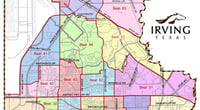
Finally, if you plan to sell this property later and move to another real estate investment, it is good to know that you can defer capital gains tax through a 1031 exchange. Irving is located near school districts preferred by Korean families, leading to steady rental demand; however, school district boundaries change frequently, so it is advisable to check the assigned school for the specific address before purchasing.
Irving is home to several corporate headquarters, making it common for families to start living in rentals before relocating for work. If you are considering rental housing in this area for retirement funds, this stable demand base is worth noting. However, remember that while Texas has no state income tax, property taxes are relatively high. It is safer to plan living expenses based on the remaining amount after deducting property taxes, insurance premiums, and management fees from the monthly rental income. When comparing purchase prices and rental levels, it is also advisable to consider the cap rate. This metric, which is the net operating income divided by the purchase price, reflects all management costs, property taxes, and insurance premiums, providing a clearer picture for retirement funding plans than a simple rental ratio.
This article does not constitute investment or legal advice, and tax and rental laws may vary by county, so it is recommended to consult with real estate and tax professionals, and retirement planning experts if necessary, before making any actual contracts.
 ChocoJoyful
 SunnyCore76





 |
| 
 Premium Gas Camp |
 CA Real Estate |
 cheesepup |
 breezem |
 zentra95 |
 Vivid U.S. Regional Information |
 wexlin84 |

 axelon47 |
  Cap Com |
  nixxon |
  kevin Kim |
  beerdreamer |
  Kims Spring |
  White bunny |
  Kansas City Representative Singer |
  shadow 007 |
  sun walker |
  Choco Choco Star |
  midnight blue |
  honeypot |
  summer |
  adventure77 |
  flexible |
  Shintongbangtong Shin Naerin James Park |
  truepixel |
  Kathy's Blog |
  Hae Naem |
  quatspace |