

When discussing the cost of living in Irving, it's important to be cautious about stating that "the cost of living index is 100, so it is exactly the same as the national average." The cost of living index can vary because different research organizations use different calculation methods and benchmark cities. Therefore, it is more accurate to look at actual housing costs, transportation, groceries, and utilities rather than relying solely on one index.
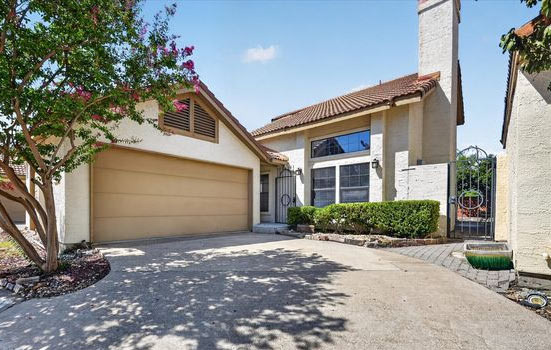
The largest portion of expenses is, of course, housing. Recently, one-bedroom apartments in Irving generally range from about $1,300 to $1,500 per month, while two-bedroom apartments are realistically around $1,700 to $1,900. However, there can be significant differences depending on the area and the age of the apartment.
Especially in new apartments around Lake Carolyn or Mandalay Canal in Las Colinas, two-bedroom units often exceed $2,000. Conversely, if you expand your search to areas with many older apartments, you can find significantly cheaper options. Ultimately, rather than asking "what is the average rent in Irving," it is more about which neighborhood and what type of apartment you are looking for that will determine your actual cost of living.
If you are looking to buy a home, the important price range is in the mid to high $300,000s to $400,000s. However, Texas has no state income tax but relatively high property taxes, so you cannot compare home prices directly with California or other states. You need to calculate the total monthly burden, including homeowners insurance, property taxes, and HOA fees.
Transportation is a definite advantage in Irving. DFW International Airport is right nearby, and using the DART Orange Line allows you to travel from Las Colinas to downtown Dallas. In the DFW area, where having a car is practically essential, having public transportation as an option is a plus.
Grocery costs are generally in line with the national average. Major chains like Walmart, Target, and Kroger compete, and with a little travel, you can also access Asian grocery stores. Given the large Hispanic population, there are many Mexican market options, which is a characteristic of life in Irving.
Surprisingly, one expense to pay attention to is the electricity bill. You can't live in Texas during the summer without running the air conditioning. In July and August, electricity costs can spike significantly depending on the size of your home, insulation, and the efficiency of your air conditioning. However, many areas in Texas, including Irving, allow consumers to compare electricity providers and choose their rates, so it's important to review the contract terms carefully.
When compared within the DFW area, Irving has the advantage of lower housing costs than Plano or some northern suburbs while maintaining good access to Dallas and DFW Airport. However, it is not an area where home prices are extremely low, like the outskirts of Fort Worth.
For Korean families, the location is also quite convenient. It is easy to access the Korean business district in Carrollton by car, and being close to DFW Airport is very convenient for those who travel frequently to Korea.
Ultimately, it is more accurate to view Irving as a city that maintains a cost of living that is not significantly different from the national average while providing good access to DFW Airport, Dallas, and job opportunities in Las Colinas, rather than simply explaining it with the "index of 100." The real advantage of Irving lies in the balance between location and cost of living, rather than just being cheap.
 LatteCupTime
 Ginabalu



 |
| 
 Premium Gas Camp |
 CA Real Estate |
 cheesepup |
 breezem |
 yorvik12 |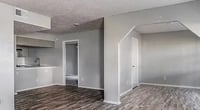
 zentra95 |
 wexlin84 |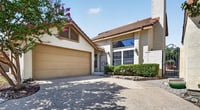
 axelon47 |
  Sammy Beach |
  Bliss O |
  blue ocean |
  greenlight |
  Watanaka Karametibaksa |
  castle |
  xelton52 |
  carefree |
  vrixen73 |
  AZ Road Master |
  Victory 1988 |
  summita |
  business lim |
  Colorado Lee |
  Make My Day |
  Fros Pro |
  lioness |
  La Bean |
  American History This and That |
  Monte Sori |