
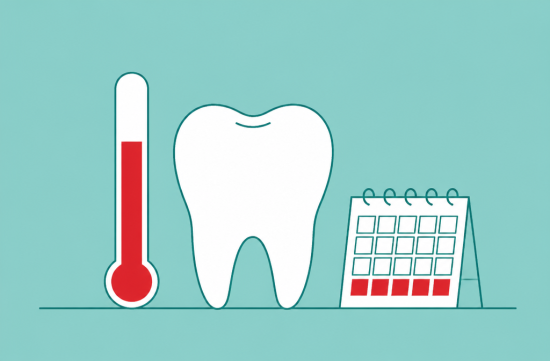
A few days ago, I received a message from my dentist. It said that I still have insurance benefits left for this year and should make an appointment before the end of the year.
At first, I thought it was just a promotional message. However, when I opened the insurance app, I realized that I had spent much less of my annual limit than I expected.
So, I took this opportunity to break down how dental insurance works on a yearly basis. This month is essentially the last chance to do so.
First, let's look at the basic structure. Many dental insurance plans operate on a calendar year basis, calculating from January 1 to December 31.
Benefits that are not used during this period typically do not carry over to the next year. Some employer plans do have a rollover feature, but that is not common.
In simple terms, it's like the meter resets to zero on January 1. Any remaining limit as of December 31 simply disappears.
The annual limit is usually reported to be between $1,000 and $2,000. According to data from the industry group NADP, 73% of dental PPO enrollees had plans with an annual limit of over $1,500 in 2024.
For example, if the limit is $1,500 and you only spent $400 this year, you have $1,100 left. This money will vanish after the year ends.
You also need to consider the deductible. It typically ranges from $50 to $100, and many plans reset this on January 1 as well.
This means that if you have already met your deductible this year, receiving treatment now is relatively advantageous. If you wait until January, you'll have to pay the deductible again.
The coverage ratio is often explained as a 100-80-50 structure. When receiving care within the network, preventive care is covered at 100%, basic care at 80%, and major care at 50%.
Preventive care often has a waived deductible. This is why services like scaling or regular check-ups are essentially treated as free.
What surprised me is that many people actually skip these free services. They tend to make excuses and miss their check-ups in the second half of the year.
Many plans limit preventive care visits to about twice a year. If you had one in the first half and missed the second, now is the perfect time.
On the flip side, the lack of rollover means that you cannot double up on your remaining limit next year. The key point is that points do not accumulate just by saving them.
So, what should you do in November? Here's a logical order to follow.
First, check your remaining limit and whether you've met your deductible on your insurance company's website or app. A quick phone call can provide more accurate information.
Second, verify whether your plan is calendar year or plan year in the Summary of Benefits. Company plans may not renew in January.
Third, if you have any pending treatments, get an estimate of the costs from your dentist in advance. For larger items like crowns or root canals, you can request a pre-authorization from your insurance company.
Fourth, if the treatment costs exceed your remaining limit, you can consider splitting the treatment. Some can be billed under this year's limit, while the rest can be processed under next year's limit.
This is similar to dividing energy into two segments in physics. If you exceed the limit in one year, the excess comes entirely out of your pocket.
However, be sure to keep an eye on waiting periods. Individual plans often have a 6-month waiting period for basic treatments and a 12-month waiting period for major treatments, so be especially cautious if you plan to change your plan next year.
If you use an FSA, check this as well. The contribution limit for health FSAs in 2026 is $3,400.
Depending on the plan, you can only have either a maximum rollover of $680 or a grace period of up to 2.5 months after the year ends. You won't get both, so check which option your company offers.
Paying out-of-pocket expenses that are not covered by insurance with your FSA can help settle the remaining balance at the same time.
Don't forget about network status. Even for the same treatment, receiving care from an out-of-network dentist can lower your coverage ratio or increase your out-of-pocket costs, so it's wise to double-check if your dentist is still in-network before making an appointment.
Here's a practical tip: December is often busy with year-end demand, making it hard to schedule dental appointments.
So, I scheduled my scaling for early December on the same day I received the message. It's much more reassuring than scrambling to find an appointment right before Christmas.
Honestly, it's a bit frustrating that I have to manage my benefits while paying my premiums every month. However, once you understand the rules, the chances of losing out are greatly reduced.
Since conditions vary by plan, the most accurate answers are ultimately with your insurance company. If I were you, I would check the app this week. The remaining limit is like a small gift you receive at the end of the year.
 DonLeeCity



 Grow Your Gut Bacteria Well |

 choi family |

 content |

 Carolina border |

 Que Buena |

 midnight blue |

 blossom7 |

 autumn |

 springwaltz |
 cherry cherry |
 donggul donggul |
 korvix |
 Noodle Zin |
 Forever Tiger Teacher |
 strongman |
 U.S. Military Recruitment Information |
 |
 Star Way |
 Pleasant K |
 Spaghetti Flying Religion |
 Texas Migration Story |
 Forever Coco is Bangga |
 nougat |
 coloradoman |
 Village Man |
 endone |
 Live and that's it |
 what gives |
 willow woo |