
Let's get straight to the point. It's more common than you think for someone with normal cholesterol levels to suffer a heart attack.
At first, I thought it was just a case of bad luck. But I found out there's a measurement that isn't included in standard blood tests.
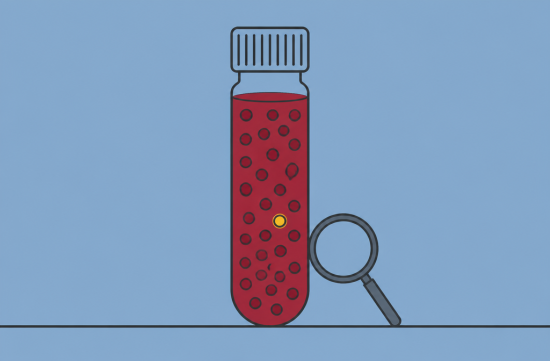
It's called Lp(a), pronounced lipoprotein A. It's a type of fat protein in the blood, and it's usually not part of the cholesterol panel in health screenings.
This means that even if LDL, HDL, and triglycerides are all normal, you might not be aware of this measurement. That's the scariest part. You could spend years thinking everything is fine.
According to the American Heart Association (AHA), one in five people worldwide has high Lp(a). If one in five, that means there's likely someone in line at the grocery store with it.
The threshold is 125 nmol/L, or about 50 mg/dL or higher. If you exceed this level, your risk of heart attack or stroke increases.
What's even more frustrating is that this level is mostly determined by genetics. While you can somewhat manage LDL through diet and exercise, Lp(a) levels don't change much with lifestyle.
So, it's not a number you can easily influence through effort. That's why the new guidelines released this year are important. In March 2026, the American College of Cardiology (ACC) and AHA issued new guidelines for dyslipidemia, replacing the 2018 cholesterol guidelines.
These guidelines recommend that all adults get their Lp(a) tested at least once in their lifetime. Previously, only those who had it tested were considered at risk, but now the approach has shifted to testing everyone.
The key point is that it's a one-time test. Since it's a genetically fixed level, there's usually no need to retest every year.
Honestly, I felt a bit deflated hearing this. I've been diligent about getting my blood tests every year, but I've never had this one done.
So, what changes if it comes back high? The guidelines consider levels above 125 nmol/L as a risk factor and suggest that it should be taken into account when assessing overall cardiovascular risk.
In simple terms, it provides additional evidence for how much you need to lower LDL, and how strictly you should manage blood pressure and blood sugar. It's not just a single number; it's a whole new perspective on your health.
For example, if someone's LDL is borderline, a high Lp(a) level might prompt the doctor to recommend more aggressive treatment. Conversely, a low level could provide reassurance.
And you need to inform your family. Since it's genetic, if you have high levels, your siblings or children might also be at risk.
It's important to note that there are currently no FDA-approved medications specifically for lowering Lp(a).
There was a lot of hope for a drug called pelacarsen from Novartis, but the results from a phase 3 trial involving over 8,300 participants were not favorable. While it did lower Lp(a) levels, there was no significant difference in heart attacks or strokes compared to the placebo.
This overall result was presented at the AHA conference this month and published in a medical journal. Some cardiologists are now questioning whether everyone should be tested.
Companies like Lilly and Amgen are also conducting trials, and results are expected in the coming years. So, for now, we're in a waiting phase.
Still, I'm in favor of getting tested. Not knowing because there's no medication is completely different from knowing and being able to manage the remaining risks more carefully.
Cost is also a factor to consider. According to commercial lab data, out-of-pocket costs ranged from $39 to $177, but this was from a 2023 survey, so it may vary now.
Medicare and private insurance coverage varies by plan and region. It's a good idea to check with your insurance company or the lab beforehand to see if Lp(a) testing is covered.
I think asking your primary care physician through a portal message is a good approach. Everyone has experienced forgetting what to say once they're in the exam room.
When you go to the hospital, you can simply say this: Can you also test for Lp(a) when you check my cholesterol?
If there's a family history of heart disease or stroke at a young age, it's even more crucial to ask. Those cases were typically the ones recommended for early testing.
When you receive the results, make sure to check the units. nmol/L and mg/dL are completely different numbers and can be confusing.
This article summarizes the information I found; it is not a diagnosis. Please consult your doctor or pharmacist regarding testing, result interpretation, or medication issues.
I plan to ask about it during my regular check-up this month. While making soup with chopped green onions, I realized there's no reason not to do a simple test that takes just a few drops of blood.
Having normal cholesterol doesn't mean everything is fine. Make sure to get your Lp(a) tested at least once in your lifetime.
 CryingLoses
 lover1987



 fruitflash |

 Anjollinya Blog |
 United States Army |

 premium |

 The Emperor Must Grow |

 Another Eden Channel BLOG |

 babybay |

 Round and Round Children's Song Kingdom |

 Belgray Miscellany |

 donggul donggul |
 korvix |
 Noodle Zin |
 Forever Tiger Teacher |
 strongman |
 U.S. Military Recruitment Information |
 |
 cherry cherry |
 Star Way |
 Pleasant K |
 Spaghetti Flying Religion |
 Texas Migration Story |
 Forever Coco is Bangga |
 nougat |
 coloradoman |
 Village Man |
 endone |
 Live and that's it |
 what gives |
 willow woo |