
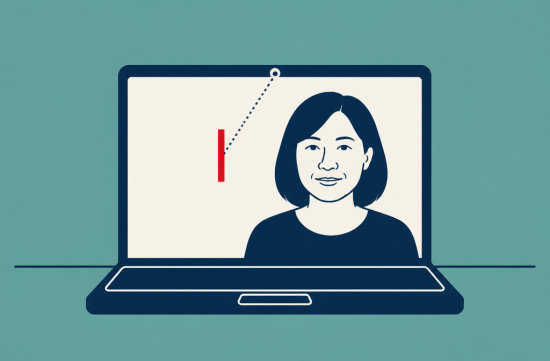
Have you ever thought after a video conference at work, could this program be reading my facial expressions?
It may sound like a joke, but in reality, there are quite a few AI tools in the U.S. that analyze employees' facial expressions or voice tones to score their moods or stress levels. These are often marketed for call centers or remote work management.
However, California has drawn a line here. Governor Gavin Newsom signed a bill known as AB 1883 on September 30, and this law will take effect on January 1, 2027.
Today, I will clarify exactly what this law prohibits and what it does not, as there are some misunderstandings that can arise just from reading the news headlines.
The first point is that there are two main prohibitions. One is the use of AI surveillance tools to recognize, infer, or predict employees' emotional states.
The other is the collection of neural data. The law defines this as information derived from measuring the activities of the central or peripheral nervous systems.
In simple terms, it aims to prevent the use of headbands that measure brainwaves or wearables that read neural signals to monitor employee states. While these devices are not common yet, the intention seems to be to prevent them before they become widespread.
The second point that many people find confusing is facial recognition. Some headlines mention a ban on facial recognition, but the final version of the law does not include that.
The initial version of the bill included regulations on facial recognition technology used for disciplinary decisions. However, during the review process, the scope was narrowed, and the final version focuses on emotion recognition and neural data.
This means that a system that uses facial recognition to clock in and out at company entrances is not automatically illegal under this law. However, if that camera analyzes expressions to determine mood, then the situation changes.
The third point is the safety exception. The law does not prohibit the use of AI surveillance tools for ensuring safety.
For example, consider a system that detects drowsiness in truck drivers. However, legal experts believe that if such a tool also involves emotion recognition or neural data collection, it may not qualify for the exception.
The fourth point is what happens if you violate the law. Each violation can incur a civil penalty of up to $500, enforced by public agencies like the Labor Commissioner and the Attorney General.
You might think $500 is not a big deal. But if you were using the same tool on hundreds of employees every day, consider how the numbers would add up; it could be significant for the company.
There is some debate about whether employees can file lawsuits directly. Some analyses suggest that the individual lawsuit rights included in the initial draft were removed, while other law firms believe there is room for dispute based on the wording of the statute.
This aspect will likely become clearer once the Labor Department issues guidelines or actual cases arise after implementation. If you come across definitive statements on this matter, it might be wise to take them with a grain of salt.
Now, let's consider the opposing viewpoint. Companies have argued that if the scope is vague, it could discourage the use of general security cameras or safety-related AI.
In fact, Governor Newsom reportedly asked the legislature to clarify the scope of the law when he signed it. So, while he signed it, he left some homework for them.
The labor side is clear. They argue that scoring employees based on their moods or brain activity, which are the most private areas, crosses a line.
Honestly, I think this law strikes a good balance. It doesn't prohibit all surveillance, but it specifically targets the most sensitive areas of emotion recognition and neural data, which lack strong scientific backing.
In the past, when my company installed a new monitoring program, no one could properly explain what data was being recorded. Reflecting on that discomfort, I welcome the establishment of such standards.
So, what can employees like us do? First, it's not at all strange to ask HR what data the monitoring or productivity tools used by the company are collecting.
Especially for tools that deal with facial expressions, voice, or biometric signals, such as video conference analysis, call quality assessments, or wellness apps, they may be related to this law starting next year.
If you run a small business, you should also check your software. Confirm with vendors whether there are hidden emotion analysis features and take a look at your contracts.
Many modern tools have these features enabled by default, so claiming ignorance may not be a valid excuse.
In summary, starting January 1, 2027, California will prohibit reading employee emotions or collecting neural data using AI, while facial recognition itself and tools for safety purposes are not included in this ban.
While the law may not perfectly keep up with technology, I believe it is significant that we now have a standard for what is acceptable. I recommend checking how our company stands before the law takes effect.
 BalanceWork
 OceanCore80








 neroyo |

 American Food Information & Calories |
 Bald Eagle Brothers |

 sunny side |

 kodak |

 Anna Life |

 Round and Round Children's Song Kingdom |


 My Love DS |

 U.S. Weather Bureau News |
 donggul donggul |
 korvix |
 Noodle Zin |
 Forever Tiger Teacher |
 strongman |
 U.S. Military Recruitment Information |
 |
 cherry cherry |
 Star Way |
 Pleasant K |
 Spaghetti Flying Religion |
 Texas Migration Story |
 Forever Coco is Bangga |
 nougat |
 coloradoman |
 Village Man |
 endone |
 Live and that's it |
 what gives |
 willow woo |