
The question of whether Medicare covers acupuncture comes up quite often in Korean senior gatherings. To answer briefly: yes, but the conditions are much stricter than expected.
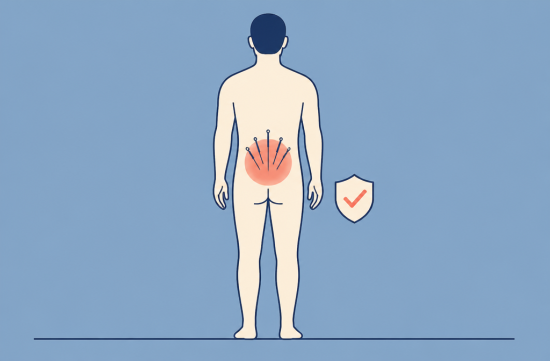
Acupuncture for shoulder pain, knee discomfort, or headaches is not covered under Original Medicare. The only condition that is covered is chronic back pain.
The basis for this is the national coverage determination set by CMS, known as NCD 30.3.3. This has been applicable for treatments received after January 21, 2020.
Prior to that, it was completely non-covered, so the change is significant. The issue lies in the details. If you go in without knowing the details, you might be surprised by the bill.
The first condition is the duration. Chronic back pain must persist for more than 12 weeks to be considered chronic. A sprain lasting a week or two does not qualify.
The second condition is the cause. According to CMS, the pain should not stem from specific systemic diseases. If the cause is cancer metastasis, inflammatory diseases, or infections, it is excluded.
Thirdly, pain related to surgery is also excluded. Back pain related to pregnancy is not covered either.
In simple terms, it only applies when the cause of the pain is nonspecific chronic low back pain. In medical terminology, this is referred to as nonspecific chronic low back pain.
Therefore, medical records are crucial. If your primary care physician notes when the pain started and rules out other causes in the chart, it will serve as evidence when billing later. Without records, it is difficult to prove that you meet the conditions.
There are also clear limits on the number of treatments. A maximum of 12 sessions can be covered within 90 days.
If it is confirmed that your condition has improved during those 12 sessions, you can receive an additional 8 sessions. The annual limit is 20 sessions.
Conversely, if there is no improvement or if the condition worsens, it is stated in the NCD that treatment should be discontinued. It is not a structure where you just keep receiving treatments; it is based on results.
Personally, I find this aspect reasonable. Since it is a program funded by taxes, it makes sense to determine the continuation based on effectiveness data.
Here, many people overlook a crucial detail: who performs the treatment.
Even if the director of a local acupuncture clinic holds a California license as an acupuncturist, they are not recognized as a provider who can bill Medicare directly. This is key.
Medicare recognizes physicians, as well as certain qualified PAs, NPs, and CNSs. They must have a master's degree or higher in acupuncture or Oriental medicine from an accredited school and also need a formal acupuncture license from the state.
Even if a licensed acupuncturist performs the treatment, it must be under the supervision of such a provider, and billing must be done through them for coverage to apply. Ultimately, where you receive treatment can determine whether the same acupuncture is covered or not.
So, asking these questions before making an appointment is the most reliable approach: Will it be billed to Medicare Part B, and who is the billing provider?
The cost structure is the same as general Part B services. The annual deductible for Part B in 2026 is $283.
After meeting the deductible, you pay 20% of the Medicare-approved amount. Medicare covers the remaining 80%.
If you have supplemental insurance like Medigap, it can cover a significant portion of that 20%. It varies depending on the type of plan you have, so I recommend reviewing your plan booklet.
Medicare Advantage plans are different. They are legally required to cover at least what Original Medicare covers, and depending on the plan, they may also include additional benefits for acupuncture treatment in areas other than the back.
However, they often require treatment at in-network facilities, prior authorization, or may have a copay structure. If you are comparing plans during the year-end enrollment period, this is something worth adding to your checklist.
In summary, the steps are as follows: First, confirm with your primary care physician whether your back pain has lasted more than 12 weeks and whether the cause is not a specific disease.
Next, check if the treatment facility is one that can bill Medicare. Finally, note the limits of 12 sessions within 90 days and 20 sessions per year on your calendar.
Honestly, there are some disappointing aspects. Korean Americans often use acupuncture as a part of their healthcare, but since licensed acupuncturists cannot bill directly, access is limited.
There have been proposals in Congress to change this, but nothing has passed yet. The current criteria remain as outlined above.
Coverage and out-of-pocket costs can vary based on individual circumstances, so please make sure to check with a Medicare counseling center or an insurance expert. You can also request Korean interpretation by calling 1-800-MEDICARE.
If I were considering acupuncture for back pain, I would first ensure that my primary care physician documents chronic back pain and then look for a billing provider. If the conditions are met, there's no reason to pay the full amount out of pocket when I could receive benefits at just 20%.
 InariEmpire
 MaskTroll








 American Politician Community |

 memorabilia |

 orvian89 |

 looksee 78 |

 vivavida |

 productionblog |

 U.S. Military Recruitment Information |

 fernando park |

 Valley Bang |

 Angeles Choi |
 donggul donggul |
 korvix |
 Noodle Zin |
 Forever Tiger Teacher |
 strongman |
 |
 cherry cherry |
 Star Way |
 Pleasant K |
 Spaghetti Flying Religion |
 Texas Migration Story |
 Forever Coco is Bangga |
 nougat |
 coloradoman |
 Village Man |
 endone |
 Live and that's it |
 what gives |
 willow woo |