

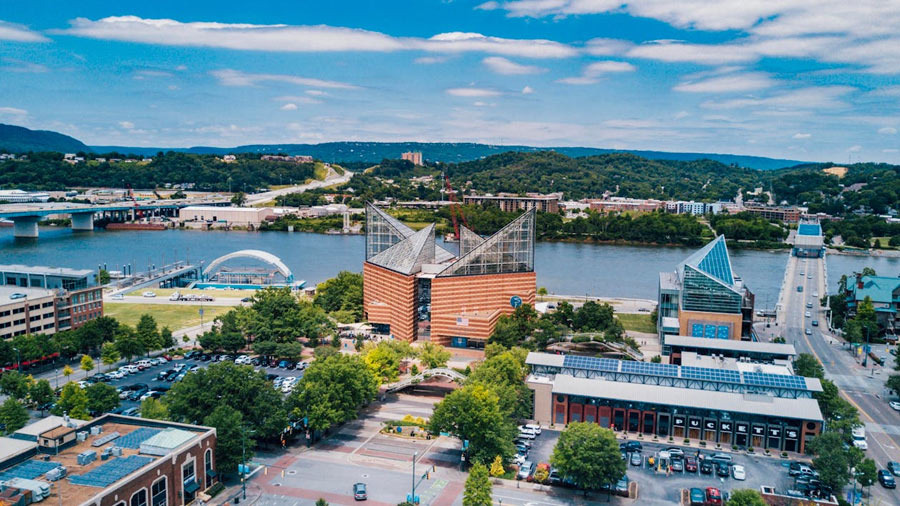
Chattanooga is a city located in southeastern Tennessee, well known as a cultural and historical center of the Chattanooga and Impadige regions.
This city is situated between the Tennessee River and the Impadige River, which span north of Florida and northern Georgia, establishing itself as an important hub for the local economy and culture.
Chattanooga is known for its unique historical background, natural scenery, and economic development, and it is also a region affected by various natural disasters.
History of Chattanooga
Chattanooga was the site of significant historical events related to the American Civil War in the mid-19th century. The city was an important logistics and trade hub through the Mississippi River and the Tennessee River at that time, and it was also the battlefield of the Battle of Chattanooga (1863), one of the major battles of the Civil War.
Important Battle of the Civil War: Chattanooga was the site of significant battles between the Union and Confederate armies during the Civil War, and this area is considered a historical site. In particular, the Battle of Chattanooga ended in a Union victory, which is regarded as a pivotal battle that provided a turning point for the Union's advance into the South.
Industrial Development: In the early 20th century, Chattanooga rapidly developed around the railroad and steel industries. This area established itself as a major industrial city in the central South, playing a crucial role in steel production and the national logistics network.
Economy of Chattanooga
Chattanooga is a city that has achieved economic growth in various industrial sectors. It primarily shows strengths in transportation, railroads, logistics, and technology industries.
Chattanooga is well known as a hub for logistics and transportation. It has established itself as an important logistics hub along the Chattanooga Railroad and the Mississippi River, with developed transportation infrastructure functioning as a key logistics center in the southern United States.
- Railroads: Chattanooga is located at a railroad junction, making it an important logistics and transportation hub since the 19th century. Even today, the railroad industry plays a significant role in the local economy.
- Aviation: Chattanooga has the Chattanooga Helicopter and Chattanooga Airport, where logistics and air transport are actively conducted.
Chattanooga has strengths in the steel industry and machinery manufacturing. Since the early 20th century, industries related to steel have been actively developing, and many manufacturers and machinery-related companies continue to support the local economy.
In recent years, investments in the technology industry have increased, leading to a rise in startups and IT companies. Software development, technological innovation, and digital marketing are actively taking place, and Chattanooga plays an important role in the digital economy and startup ecosystem.
Chattanooga is a famous tourist destination known for its natural scenery and historical sites, with Lookout Mountain and the Tennessee River being major tourist resources in the area. Additionally, the Chickamauga and Chattanooga National Military Park is a historically significant site. Other attractions include the Riverwalk and the Chattanooga Aquarium.
Climate of Chattanooga
Chattanooga has a humid subtropical climate. The climate is characterized by hot and humid weather in the summer and mild temperatures in the winter.
Summer (June to August)
- Temperature: Summer temperatures range from an average of 25°C to 35°C, with hot and humid weather persisting. Summer temperatures can exceed 38°C, and high humidity makes the perceived temperature even higher.
- Precipitation: Showers and thunderstorms frequently occur in the summer. On average, rainfall is high from June to August.
Winter (December to February)
- Temperature: Winters are mild, with average temperatures ranging from 1°C to 10°C. Occasionally, cold snaps occur, but winters are relatively milder than in northern regions.
- Precipitation: Rainfall is common in winter, and occasionally snow or ice rain may fall. However, less snow falls compared to Nashville or northern regions.
Spring and Fall (March to May, September to November)
- Temperature: Spring and fall have mild weather. Spring temperatures range from 10°C to 20°C, while fall temperatures range from 15°C to 25°C, maintaining mild weather.
- Precipitation: Spring sees high rainfall, with concentrated rain in April and May. Fall has less rainfall, but it still often rains.
Records of Natural Disasters in Chattanooga
Chattanooga is affected by various natural disasters. This city is particularly vulnerable to tornadoes and floods, having historically experienced significant natural disasters.
- Tornado on April 27, 2011: Chattanooga was affected by an EF3 tornado. This tornado caused significant damage by destroying homes and buildings with strong winds.
- Characteristics: Chattanooga is an area where tornadoes frequently occur in spring and summer. Strong winds and whirlwinds accompany these events, causing damage.
- 2009 Major Flood: Chattanooga is located near the Tennessee River and the Impadige River, which are connected to the Mississippi River, often experiencing floods due to increased rainfall. In 2009, the floods in this area resulted in hundreds of victims and many buildings being submerged.
- Characteristics: Flooding due to river overflow and heavy rainfall is a common natural disaster in Chattanooga.
- Hurricane in 2011: Hurricanes and tropical storms have affected Chattanooga, bringing strong winds and heavy rain that impacted the power grid and transportation.
- Characteristics: Because Chattanooga is located in the South, it can be affected by tropical storms or hurricanes, which cause heavy rain and strong winds.
Chattanooga is a city with a humid subtropical climate, characterized by hot and humid summers and mild winters. However, this area frequently experiences the impacts of natural disasters such as tornadoes, floods, and storms.
In particular, tornadoes and strong storms often occur in spring and summer, and flooding can happen during periods of heavy rainfall.






 El Dorado |
 lightyear |
 Moscow Kim |
 coloradoman |
 Montgomery Mom |
 quietwave |
 ttano |
 cloudnest |

 Tonky |
  viroma |
  cookie |
  Live and that's it |
  Alright Twain |
  eatontown blog |
  HAWAII Korean Church News |
  Amore |
  linex |
  Balancework |
  laro90 |
  MEDBIO American Doctor Blog |
  SWAT TEAM BLK |
  DREAM BIG |
  frostbite |
  330 Forever My Love |
  dralix58 |
  Gorama Round |
  Skydiving |