
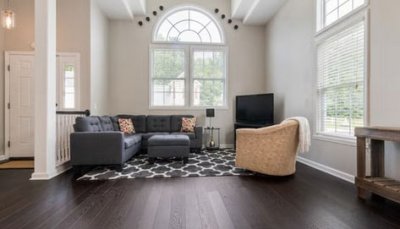
A buyer in Little Rock I met a few years ago was not approved on their first application. Although their credit score was decent, the overlap of auto loan payments and credit card balances caused their debt-to-income ratio (DTI) to exceed 50%, which was the issue. After six months of paying down credit card balances and reapplying, they were approved with the same income. This case illustrates that managing DTI is just as crucial as the down payment for approval.
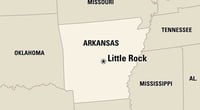
The average home price in Little Rock is around $197,594 (Zillow, as of May 31, 2026, down 0.1% from the previous year). Based on this price, a 3.5% down payment is $6,916, 5% is $9,880, 10% is $19,760, and 20% is $39,519. The entry amounts are relatively low compared to other areas, so many households start with 5-10%, and reaching 20% can waive PMI, lowering monthly payments.
DTI is recommended to be below 43% for Qualified Mortgages, while conventional loans typically range from 36% to 45%, and the ideal front-end ratio for housing costs is below 28% (according to the Consumer Financial Protection Bureau). For credit score ranges, the 30-year fixed rates are 6.59% for scores above 780, 6.66% for the 760s, 6.75% for the 740s, and 6.91% for the 700s (The Mortgage Report, as of July 2026). Organizing credit card balances in advance and obtaining pre-approval, as well as avoiding new loans or job changes before closing, are the most commonly effective strategies in practice.
Securing reserves is also a part of the approval process. If you can show cash in your account equivalent to a few months' worth of payments after closing, lenders often view this as a sign of stable repayment ability. Arkansas generally has lower property taxes and insurance rates, but during tornado season, homeowners' insurance can vary by region, so it's advisable to get insurance quotes before making an offer. Investors looking for rental income should note that rental demand in Little Rock is tied to state-related employment, and it's important to recognize that price increases cannot be guaranteed.
The effective property tax rate in Arkansas is around 0.57%, which is lower than the national average (according to propertytaxrates.org). The Arkansas Development Finance Authority (ADFA) operates a Down Payment Assistance Program, providing second mortgages ranging from $1,000 to $15,000 in the form of interest-free loans that can be forgiven if residency requirements are met within 5-10 years, helping to lower the approval threshold for first-time buyers who find down payments burdensome.
Additionally, securing reserves is also a part of the approval process. If you can show cash in your account equivalent to a few months' worth of payments after closing, lenders often view this as a sign of stable repayment ability. Arkansas generally has lower property taxes and insurance rates, but during tornado season, homeowners' insurance can vary by region, so it's advisable to get insurance quotes before making an offer. Investors looking for rental income should note that rental demand in Little Rock is tied to state-related employment, and it's important to recognize that price increases cannot be guaranteed.
It is also common to fill down payments with family assistance. Both conventional and FHA loans recognize gift funds, but documentation proving the gift relationship and verification of the source of funds are required. If a large amount suddenly appears in an account, lenders often request additional documentation, so it's best to prepare in advance. After an offer is accepted, locking in the interest rate and minimizing credit card use or income changes during this period is a smooth way to proceed to closing without needing to re-approve.
For neighborhoods preferred by Korean families, it's advisable to also check school district ratings. School district boundaries change frequently, so be sure to verify the assigned school for the address before purchasing. This article is not investment or legal advice, and it is recommended to consult with a professional before proceeding with any contracts or loans.
 BlueOcean
 SickKnight







 moo moo |
 ultron78 |
 garlic bread |
 Sugar Cream Door Bulletproof Noodles |
 urbanmint |
 Esther 1983 |
 new sugar |
 Arkansas Kim |
 U.S. Weather Bureau News |
 US Home Buying Information Home Insurance |
  Giant Squid and Sweet Potato Soup |
  Valley Hong |
  The Gelaton |
  Twist Kim |
  berlon93 |
  Physical Laws and Science |
  good thinking |
  Solo Yolo |
  Mr Oh |
  laro90 |
  San Diego TOP Idol |
  Round and Round Children's Song Kingdom |
  American Golf Course Travelogue |
  MEDBIO American Doctor Blog |
  Hot Seat Driver |
  bryvexi |
  koala organic farm |
  riverstone |
  My Antonio |
  California Information News |