
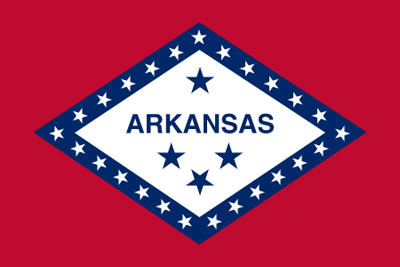
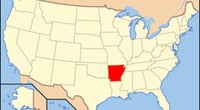
Arkansas is a state in the southern United States with a rich historical heritage and a unique development process.
- Early History: The Arkansas region was originally inhabited by Native Americans such as the Quapaw, Osage, and Caddo.
- European Exploration: In 1541, Spanish explorer Hernando de Soto was the first to explore this area, followed by French colonization.
- Louisiana Purchase: In 1803, Arkansas became part of the United States when the U.S. purchased the Louisiana territory from France.
- Statehood: Arkansas was admitted as the 25th state of the United States on June 15, 1836.
- Civil War and Reconstruction: During the Civil War, Arkansas joined the Confederacy but returned to the Union after the Reconstruction period.
Population
- As of 2023: Approximately 3.2 million people.
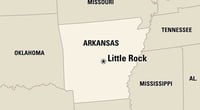
- Capital and Major Cities: The capital is Little Rock, with major cities including Fort Smith, Fayetteville, and Springdale.
- Demographics:
- White: Approximately 70%
- Black: Approximately 15%
- Hispanic: Approximately 8%
- Asian and Others: Approximately 7%
- The population density is relatively low, with many rural areas.
Median Income
- Household Median Income: As of 2022, approximately $51,000, which is lower than the national average of about $71,000.
- Economic Structure:
- Key industries include agriculture (rice, soybeans, poultry), forestry, mining (especially diamond mining), and manufacturing.
- Home to Walmart's headquarters, positively impacting employment and the economy.
Arkansas has developed based on its historical heritage and rich natural resources, and while it has a relatively low income level, it is achieving continuous economic growth.






 Magic Cabbage School of Martial Arts |
 Vacation on Hawaii |
 morvex37 |
 Ari Songhan American Immigration Life |
 Bearded Strawberry Smoothie |
 The Day the Sun Rises |
 US Home Buying Information Home Insurance |


 Information on All Regions of the United States |
  Tora Tora |
  yellowbutter |
  Dolly |
  US Embassy |
  NYC saladbar |
  Finding Superfoods |
  lightyear |
  song bang |
  vexomo |
  Indiana Jones |
  meloncat |
  novapixel |
  mortrix |
  Esther 1983 |
  fortbliss |
  Moscow Kim |
  My Two Way |
  toastyfox |
  FLORIDA Acus |
  tracker |