
These days, discussions about Australia often come up in parent group chats. "Australia has completely banned social media for those under 16; shouldn't we do the same?" That's the kind of question being asked.
Curious, I did some research. Now that it's been over ten months since the law was enacted, the results are quite interesting.
First, let's clarify the facts. Australia's minimum age law for social media for those under 16 went into effect on December 10, 2025.
The platforms affected include Facebook, Instagram, Snapchat, TikTok, YouTube, Threads, Reddit, and Kick. According to an AP report, X and Twitch are also included.
Interestingly, the responsibility lies not with the parents or the children, but with the platforms. If they fail to take reasonable measures to block accounts for those under 16, they could face fines of up to 49.5 million Australian dollars.
On the other hand, messaging apps like WhatsApp and Messenger, YouTube Kids, Roblox, and Discord were not subject to these regulations. I'll discuss this part further later.
The report card for the first month of implementation looked impressive at first glance. According to the eSafety Commission, ten platforms blocked access to 4.7 million accounts.
Wow, 4.7 million! At first, I thought this really had an effect.
However, looking at the details changes the story. This number was self-reported by the platforms, and no one knows how many accounts there originally were.
Cases of circumvention emerged quickly. A 14-year-old reportedly regained access to their Snapchat account by passing age verification using their mother's face.
In an initial study released three months after implementation, there was no clear evidence that social media usage had significantly decreased. Experts noted that it was too early to conclude it was a failure.
Ultimately, the Australian government expressed dissatisfaction. On June 27, 2026, they announced plans to double the maximum fine for systemic violations to 99 million Australian dollars.
At the same time, regulatory agencies revealed they were investigating five platforms: Facebook, Instagram, Snapchat, TikTok, and YouTube. The government believes these platforms are doing the bare minimum.
So, what about the United States? Surprisingly, Arkansas is at the forefront of this issue.
In 2023, Arkansas created the Social Media Safety Act, which requires parental consent and age verification for minors to join social media. However, NetChoice filed a lawsuit, and on March 31, 2025, a federal court ruled it unconstitutional and issued a permanent injunction.
The state legislature quickly amended the law with Act 900 and passed Act 901, targeting addictive feeds. However, Act 901 was blocked by a temporary injunction just before its implementation in December 2025, and Act 900 was similarly halted in April 2026.
The key issue is the First Amendment, or freedom of speech. This illustrates how difficult it is for the government to restrict access to social media in the U.S.
Honestly, I see this a bit differently. I believe this is not something the government can handle on behalf of parents.
Even with strong measures like Australia's, kids will find ways to bypass restrictions using their parents' faces, siblings' accounts, or apps that are not regulated. Data has already shown that laws are not a cure-all.
That said, there are still lessons for American parents from the Australian experiment. In fact, there are several points that can be applied at home right away.
First, setting an age limit can be effective. Having a rule like "our house allows social media only from age 16" can reduce conflicts with your child.
Second, remember that messaging apps and games are loopholes. In Australia, WhatsApp and Roblox were excluded, but kids often communicate through those platforms.
Third, age verification is often less stringent than expected. Occasionally checking the apps on your child's phone is more reliable than any technology.
Fourth, make sure to enable basic features like screen time on iPhones or Google Family Link. It won't cost you anything extra.
By the way, these features often change their settings with updates, so I recommend checking them again at the start of each semester.
Fifth, conversation should come before prohibition. Explaining why you're waiting until a certain age can reduce your child's motivation to circumvent the rules.
Also, if only your household follows these rules, your child may feel isolated. Aligning with a few other parents from the same class can make it much easier.
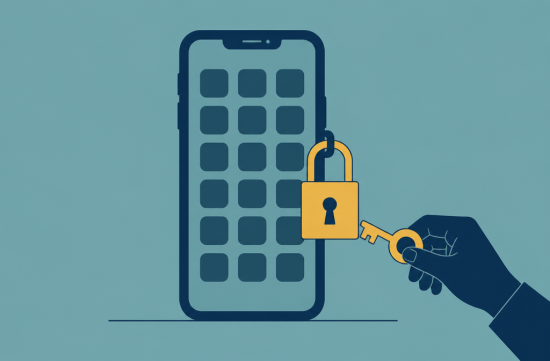
In summary, while Australia tried to lock the door, it ultimately showed that the key is inside the home.
If it were me, I would prioritize establishing our household's social media rules at the dinner table tonight rather than waiting for the law to change. That's the quickest and most certain way to go about it.
 HanselSaid


 Way to easy |

 Magic Cabbage School of Martial Arts |

 Vacation on Hawaii |

 morvex37 |

 Ari Songhan American Immigration Life |

 Esther 1983 |

 US Home Buying Information Home Insurance |


 Arkansas Kim |


 U.S. Weather Bureau News |
 new sugar |
 Palm 1000 |
 loran |
 donutfield |
 Tennis City |
 sunny7 |
 Questions about firearms while living in America |
 Shoot Me |
 mochifox |
 zucchini |
 Anna Life |
 Exciting FM Radio |
 pet dog |
 toodin |
 rosed |
 DeArizona Blog |
 river9 |
 ollege Mom |
 Pronunciation Yo |
 nuvex11 |