
These days, there's a common question that comes up at Korean community gatherings: "I started receiving Social Security at 62, but I've heard that if I keep working, my benefits will be reduced. Does that mean the money just disappears?"
At first, I thought it was just a penalty. However, after digging through SSA materials, I found out that the situation is quite different.
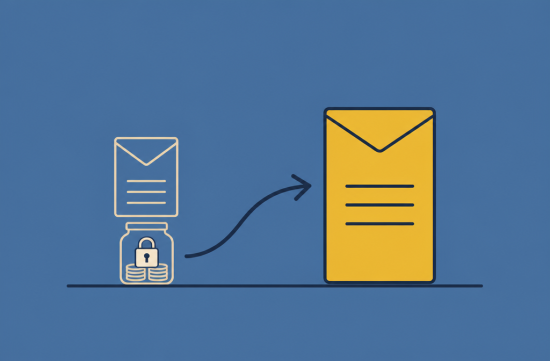
To put it simply, the money that gets cut does not disappear. Instead of being returned as a lump sum in cash, it means that the amount you receive monthly will be increased later, so it's important to understand this difference.
The official name for this system is the Retirement Earnings Test. It's a rule that withholds part of your benefits if you earn above a certain amount while receiving benefits before your Full Retirement Age (FRA).
For those born in 1960 or later, the FRA is 67 years old. That's why we refer to it as "before age 67."
As of this year, 2026, if you earn up to $24,480 in the year before reaching FRA, it won't affect your benefits at all. If you exceed that amount, for every $2 over, $1 of your benefits will be withheld.
In the year you reach FRA, the limits are much more lenient. They only consider income earned before your birthday month, and if you exceed $65,160, $1 will be withheld for every $3 over that amount.
Once you reach FRA, there are no limits at all. No matter how much you earn, your benefits will remain the same.
Interestingly, on October 14th, the SSA announced the figures for 2027. The cost-of-living adjustment (COLA) was set at 3.6%, and the income limits have also increased.
In 2027, the limit before reaching FRA will be $25,560, which breaks down to $2,130 per month. The limit for the year you reach FRA will rise to $67,920.
If you're considering working a bit more next year, it's a good idea to calculate based on these new figures. It's quite encouraging to see the limit has increased by over $1,000.
One thing that can be confusing is that the withholding isn't done gradually each month. The SSA will not pay your benefits for several months until the withheld amount is fully accounted for, and then they will resume payments.
This is why some people are surprised when their benefits don't come in at the beginning of the year. If you know this in advance, you can plan your budget much more smoothly.
So when and how does this withheld money come back? The key point is that once you reach FRA, the SSA recalculates your monthly benefit amount considering the months that were withheld.
The reduction for early retirement is determined by how many months early you started receiving benefits. However, the months that were withheld are counted as "months not received," which effectively reduces the period you received benefits early.
An example from the SSA guide makes this easy to understand. If a person's FRA benefit is $1,300 and they start receiving it at 62, they would get $910 per month, but if 12 months were withheld, it would be recalculated to $975 per month at age 67.
If all months from 62 to 67 were withheld, then they would receive the full $1,300 starting at 67 without any reduction.
I did the math: $910 for 12 months totals $10,920 withheld, and at an increase of $65 per month, it would take 168 months, or 14 years, to make that up.
Honestly, I was a bit shocked by this calculation. The phrase "you will get it back" is true, but you need to live a long time to break even.
For reference, the SSA guide also mentions that the recalculated amount is not immediately reflected in the month of your FRA birthday; it takes some time after FRA for the increase to take effect. So, don't be too anxious if the amount doesn't change right after your 67th birthday.
Also, not all income is counted. Only wages and net self-employment income are included; personal pensions, interest, and investment income are not part of this limit.
If you work as a freelancer like me, it's good to remember that it's based on net income. How well you manage your expenses can affect whether you exceed the limit.
There's one exception: if you are receiving survivor benefits while caring for a minor child or a disabled child, the withheld amounts do not get reflected back into your FRA calculations.
So, if you are receiving survivor benefits, don't assume it works the same way as regular retirement benefits. You need to check separately.
If you think your income might exceed expectations, it's a good idea to inform the SSA in advance to adjust your estimated annual income. This can help reduce the chances of receiving a notice for overpayment recovery later on.
The SSA website has a Retirement Earnings Test calculator. By entering your expected salary and benefit amount, you can get a rough idea of how much will be withheld.
Of course, factors like health status, spousal benefits, and taxes can complicate things, so be sure to check with the SSA office or a professional based on your individual situation.
To summarize my thoughts: if you are certain about continuing to work before age 67, I don't think it's necessary to apply for benefits early and go through the complicated process of having them withheld and recalculated.
On the other hand, if your income fluctuates around the limit, it's not a losing situation. Just knowing that the withheld money doesn't disappear can bring you a lot of peace of mind.
 RooKickbox



 Burbank Lee |
 vibranto |

 sparkling |

 oh my salami |
 saffronroute |
 Childbirth Drabble Blog |

 U.S. Weather Bureau News |

 velaro |

 tarvion |

 Hot Seat Driver |
 bryvexi |
 koala organic farm |
 riverstone |
 My Antonio |
 California Information News |
 chilli chilli |
 Moon Su San |
 vanilla |
 norvexi |
 Lunch and Dinner Mexican Taco |
 skykong |
 My Circle |
 novapixel |
 urban legend |
 coolriver |
 Good Neighborhood, Wealthy District Information |
 Ro Ro Car |
 Amber H |
 new sugar |