
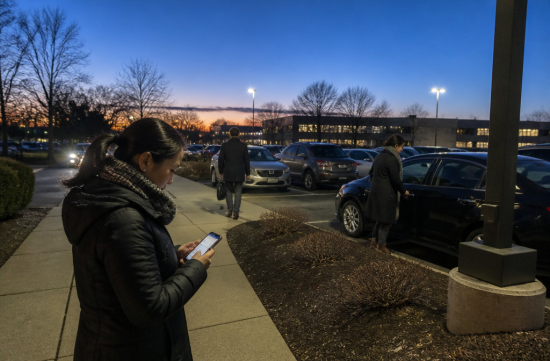
There are days when I start my car on the way home and the sky is already dark. Looking at the clock, it's not even five yet. Even after spending several years in America, I still struggle to adapt to this moment.
This year, daylight saving time ends at 2 AM on Sunday, November 1. From that day, evenings suddenly feel much earlier.
According to data from the U.S. Naval Observatory (USNO), the earliest sunset in the DC area occurs from early December until around the 11th, when the sun sets around 4:46 PM.
Interestingly, the earliest sunset happens about two weeks before the winter solstice. This phenomenon occurs because the clock time and the actual movement of the sun do not align perfectly. This year, the winter solstice is on December 21.
Perhaps that's why the term "winter blues" is often heard in American workplaces around this time. At first, I thought it was just an excuse for the weather.
However, there is a medical distinction. Mild feelings of depression are referred to as winter blues, while recurring symptoms that interfere with daily life are classified as seasonal affective disorder, commonly known as SAD.
Symptoms of the winter type of SAD include fatigue, excessive sleeping, cravings for carbohydrates, and a tendency to avoid people. Not being able to get up in the morning is also included.
What I find interesting is how Americans respond to this. Instead of just "toughing it out" like in Korea, they systematically come up with solutions.
The most noticeable solution is the light box. I saw a white light about the size of a tablet on a colleague's desk and asked about it; they said they turn it on every morning while checking emails.
According to the Mayo Clinic, the standard is 10,000 lux. The product should filter out as much UV light as possible.
The usage is simpler than expected. You turn it on about 20-30 minutes within an hour of waking up, at a distance of about arm's length. You don't need to stare directly at the light; you can drink coffee or work on your laptop while using it.
However, there is something to keep in mind. The light box is not an FDA-approved device for treating SAD, and most insurance plans do not cover the costs.
It is advised that those with bipolar disorder or eye conditions like glaucoma or cataracts consult a specialist first. If symptoms persist or worsen, it's important to consult a doctor rather than making judgments on your own.
Interestingly, this isn't just a story for special people. If you look around a few offices, you'll see similar lighting setups here and there.
The second noticeable trend is lunchtime walks. Since the daylight hours are short, people intentionally make time for it.
More people are seen walking around the company parking lot or deliberately walking to a café. It's a scene that wasn't visible in the summer.
The third trend is the lighting culture. After Halloween, Christmas lights go up in homes almost immediately, which initially seemed a bit premature to me.
Now I understand. In a neighborhood that's dark by five, a few strings of lights at the eaves provide more comfort than you might think.
The fourth trend is how people meet. After work, they seem to put more effort into scheduled gatherings like happy hours, church small groups, and neighborhood bowling leagues during winter.
Since isolation is a common symptom of winter depression, having scheduled events is a reasonable strategy.
Some people even suggest not changing the clocks at all. In fact, on July 14 of this year, the House of Representatives passed the Sunshine Protection Act by a vote of 308 to 117.
However, it has yet to pass the Senate. The main argument against it is safety concerns about children walking to school in the dark winter mornings. So, the clocks will still change on November 1 this year.
Both sides have valid points. Those wanting evening sunlight and those worried about morning safety both have data and experiences to support their views.
Since my job involves looking at homes, I often think of home layouts when considering this issue. Buyers who come to view homes in winter tend to check south-facing windows or large living room windows very carefully.
In summer, people ask about garage sizes, but in winter, they inquire about how long light comes in. Seasons change people's priorities.
Conversely, some people point out the advantage of east-facing kitchens that receive early sunlight. They argue that enjoying coffee in the morning sunlight is better than using a light box.
Ultimately, the way Americans cope with winter can be summarized in one approach: intentionally filling the reduced light and maintaining relationships that can easily break.
I quite like this approach. Instead of trying to solve mood issues solely with willpower, they focus on changing the environment and routines.
If it were me, I would start with lunchtime walks this winter. It costs nothing and is easy to evaluate its effectiveness.
In the first week of November, consider making a small plan for the day you change the clocks. While we can't change the darkness at five, we can choose how we face that darkness.
 RedBeanTV


 U.S. Weather Bureau News |

 Community Cross |

 Conflite Teacher |

 SEVEN SEVEN |

 Korean Mom |
 vexomo |

 monkey |



 PETRO Vatican Shrine |

 Thersburg Mrs |
 Twist Kim |
 berlon93 |
 Physical Laws and Science |
 good thinking |
 Solo Yolo |
 Mr Oh |
 laro90 |
 San Diego TOP Idol |
 Round and Round Children's Song Kingdom |
 American Golf Course Travelogue |
 MEDBIO American Doctor Blog |
 Hot Seat Driver |
 bryvexi |
 koala organic farm |
 riverstone |
 My Antonio |
 California Information News |
 chilli chilli |
 Moon Su San |
 vanilla |