
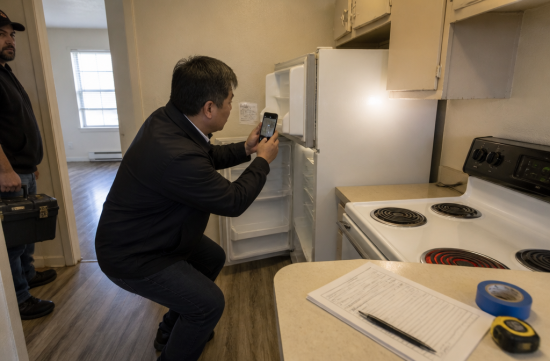
These days, the most common question from landlords preparing for rental agreements is, "Do I have to provide a refrigerator?" The short answer is yes, if the lease is newly signed, modified, or extended after January 1, 2026.
The basis for this is California Assembly Bill 628. It was introduced by Assemblymember Tina McKinner and was signed by the governor on October 6, 2025, taking effect on January 1 of this year.
This law adds stoves and refrigerators to Section 1941.1 of the Civil Code, which outlines the habitability standards in California. Essentially, these appliances have become basic requirements for a "habitable home" alongside water, heating, and electricity.
In fact, it has not been uncommon for apartments in California to lack refrigerators. Particularly in the LA area, it was common for tenants to buy their own refrigerators and move them in and out with each relocation, which is part of the background for the landlord associations opposing this law.
The standard is that the appliances must be in "proper working condition." The stove must safely produce cooking heat, and the refrigerator must be able to store food safely.
Pay attention to the recall provisions as well. Products that are subject to recalls by manufacturers or public agencies are considered unsafe, and landlords must repair or replace them within 30 days of receiving the recall notice.
Here, stoves and refrigerators are treated differently. There are no options for tenants to provide their own stoves, but there is an exception for refrigerators.
The refrigerator exception applies when both parties agree at the time of the contract. If a tenant wishes to use their own refrigerator and manage it themselves, they can do so.
However, the formalities are strict. The contract must include a legal statement indicating that "the landlord is required by state law to provide a refrigerator, but the tenant has requested to use their own refrigerator," and the tenant must confirm this with a checkbox.
A tenant can change their mind later. If they notify the landlord in writing at least 30 days in advance, the landlord must install a functioning refrigerator by the end of that period.
Conversely, landlords are prohibited from renting under the condition that "the tenant must bring their own refrigerator." However, it is fortunate that the landlord is not responsible for the maintenance of the tenant's refrigerator while it is being used.
There are also exceptions to this requirement. This includes SRO units with shared kitchens, residential hotels, and permanent supportive housing.
If you are renting out a standard single-family home or apartment, you are not considered an exception. So what should you check now?
First, check the contract date. Determine if it is a new, modified, or extended contract signed after January 1 of this year, and if so, both appliances must be present.
Second, check the condition of the appliances currently in place. If one burner is not working or the refrigerator temperature is inconsistent, it is advisable to fix these issues before bringing in the next tenant.
Third, take photos of the model numbers and serial numbers. If a recall occurs, the 30-day deadline starts immediately, so periodically checking the Consumer Product Safety Commission (CPSC) recall database can help you stay prepared.
Fourth, if a tenant says they will bring their own refrigerator, make sure to include the appropriate language in the contract. Verbal agreements or a simple line stating "no refrigerator" will not meet the legal requirements.
Fifth, add a section to the move-in inspection checklist to confirm the operation of the appliances. On move-in day, check the lights and refrigerator temperature with the tenant and obtain their signature to reduce disputes later.
From the landlord's perspective, there are two paths to consider: providing a new refrigerator or obtaining a tenant refrigerator agreement.
Providing a refrigerator incurs purchase costs and repair responsibilities if it breaks. However, it can help reduce vacancy periods by advertising the rental as including appliances.
On the other hand, obtaining an agreement does not incur immediate costs, but if the tenant provides a 30-day notice, the landlord will ultimately have to install one. This is more about delaying costs than eliminating them.
In most cases, I would recommend providing the refrigerator from the start. If it is an obligation that can be requested at any time, it is better to have it planned than to rush to buy one later.
Enforcement falls to local governments. In Sacramento, city code compliance handles it within city limits, while the county's Rental Housing Inspection Program (RHIP) oversees it in unincorporated areas.
Both can be contacted through 311 for complaints. When calling from outside the jurisdiction, the city can be reached at 916-264-5011, and the county at 916-875-4311.
It is also good to know the tenant support resources. The Sacramento Renters Helpline (916-389-7877) and North Bay Legal Services (LSNC) are notable examples, allowing you to anticipate where the other party might seek advice.
One downside is that there is no specific legal definition for "proper working condition." It may take local enforcement cases to clarify how old a refrigerator can be before it is considered acceptable.
Therefore, if you find it ambiguous, I recommend checking the contract language with your local landlord association or a real estate attorney rather than making a judgment on your own. The interpretation can vary depending on the timing of the contract and the type of housing.
In summary, stoves are mandatory, while refrigerators are generally the landlord's responsibility. Before the next lease renewal, take a moment to check your kitchen.
 MaskMan






 moo moo |

 ultron78 |

 garlic bread |

 Sugar Cream Door Bulletproof Noodles |

 urbanmint |

 Tony Park |

 US Home Buying Information Home Insurance |

 Grow Your Gut Bacteria Well |
 Only Dentalbay |

 U.S. Weather Bureau News |
 berlon93 |
 Physical Laws and Science |
 good thinking |
 Solo Yolo |
 Mr Oh |
 laro90 |
 San Diego TOP Idol |
 Round and Round Children's Song Kingdom |
 American Golf Course Travelogue |
 MEDBIO American Doctor Blog |
 Hot Seat Driver |
 bryvexi |
 koala organic farm |
 riverstone |
 My Antonio |
 California Information News |
 chilli chilli |
 Moon Su San |
 vanilla |