
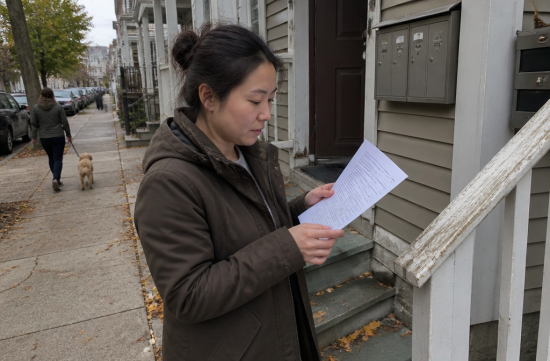
This year, the rent control question that was expected to appear on the Massachusetts ballot in November has ultimately been removed. This is because the state's Supreme Judicial Court ruled on June 23 that the question could not be put to a vote.
Even with about two weeks left until the election, I still receive the question, "So, will there be a rent cap?" quite often. The answer is simple: No, there will not be one this year.
The reason for the ruling was surprisingly unrelated to rent itself. The bill included a provision that exempted housing operated by religious organizations, and the state constitution's Article 48 prohibits handling matters related to religion through citizen initiatives.
The court viewed this exemption clause as making the entire question related to religion. It is also worth noting that the court did not rule on whether rent control is unconstitutional or a good policy.
Looking back at the original bill, it proposed a structure that would limit annual rent increases to the lower of the inflation rate or 5%.
The baseline rent was set at the amount as of January 31, 2026. Properties with four or fewer units where the owner resides and newly constructed buildings less than ten years old were excluded.
Support for the measure was not weak. A survey by Suffolk University and the Boston Globe found that 62.6% of registered voters were in favor, while 30.6% opposed it.
There were also enough signatures collected. The required number was 74,574, and the state Secretary of the Commonwealth certified that this number was surpassed.
However, as a result of one clause, the opportunity for a vote has disappeared. From a numerical standpoint, this is quite a disappointing outcome.
So, the current legal status remains as it was in 1994. That year, a ballot initiative banned rent control statewide, and this ruling has upheld that ban.
Compromise proposals in the legislature have also lost momentum. A local option plan that would allow cities to selectively implement rent regulations was discussed, and Governor Healey had expressed support for a compromise.
However, immediately after the ruling, the real estate industry group NAIOP Massachusetts withdrew from negotiations. With the pressure of a vote gone, there is no longer a reason to rush.
Tenant organizations are still pushing to advance local option legislation in the legislature. However, projections suggest that if it were to go to a citizen initiative again, it would likely not happen until 2028.
So, what is the current level of rent in Boston? According to Apartment List's July report, the overall median rent in Boston is $2,492, and the median for one-bedroom apartments is $2,396.
The same report indicates that Boston's one-year rent increase rate has outpaced both the state and national averages. The state average is -0.1%, while the national average is -1.2%.
Looking at neighborhoods, the differences are even greater. According to RentHop data, the median rent for one-bedroom apartments in the Dorchester 02124 area rose from $2,433 to $2,650 over the past year, an increase of 8.9%.
This is why it is difficult to feel reassured by just looking at the citywide average. It is advisable to check based on your specific zip code.
While there is no rent cap, there are already mechanisms available for tenants. The first is the brokerage fee regulation that will take effect on August 1, 2025.
The key point is that the party that hires the broker first pays the fee. If the property is listed by the owner, it is typically the owner's responsibility, and tenants only pay if they hire a broker separately and have a written agreement.
However, this is still not being well enforced in practice. Reports have been filed with the state Attorney General's office indicating that over a dozen cases involved tenants being asked to pay a fee just for inquiring about online listings.
The second is the move-in cost regulation. Under state law, the only payments a landlord can collect before move-in are the first month's rent, last month's rent, a security deposit not exceeding one month's rent, and the cost of new keys and locks.
Fees for applications, cleaning, pet deposits, and hold fees cannot be charged. It is also worth noting that if violations are confirmed, triple damages may be possible.
Security deposits must be kept in a separate interest-bearing account, and landlords must provide receipts for the last month's rent and pay interest annually. Many people are surprisingly unaware of this aspect.
The practical implication of this ruling ultimately relates to bargaining power. Without a legal cap, the amount of rent increase during lease renewal is determined through discussions based on market conditions.
Therefore, I recommend checking recent listing prices for similar buildings or within the same zip code a couple of months before renewing your lease. Having comparative data can create room for negotiating the increase.
If the terms are ambiguous or the landlord requests payments outside of the regulations, it is advisable to first contact the Office of Housing Stability in Boston or the state Attorney General's office. It is safer to verify directly, as the application may vary depending on the type of building.
Personally, I find this conclusion disappointing yet understandable. I believe there is merit to the industry's concern that a statewide cap could stifle new construction supply.
If I could choose a policy, I think a local option that allows for tailored decisions based on each city's circumstances is more realistic. However, it remains to be seen whether that discussion will continue without the pressure of a vote.
What tenants need to do right now is clear: know the existing regulations accurately and negotiate based on the numbers.
 BundangSenior







 moo moo |

 ultron78 |

 garlic bread |

 Sugar Cream Door Bulletproof Noodles |

 urbanmint |

 NO CAP LIFE |

 cookie |

 almondpop |

 tiramisu |

 The Gelaton |
 Twist Kim |
 berlon93 |
 Physical Laws and Science |
 good thinking |
 Solo Yolo |
 Mr Oh |
 laro90 |
 San Diego TOP Idol |
 Round and Round Children's Song Kingdom |
 American Golf Course Travelogue |
 MEDBIO American Doctor Blog |
 Hot Seat Driver |
 bryvexi |
 koala organic farm |
 riverstone |
 My Antonio |
 California Information News |
 chilli chilli |
 Moon Su San |