
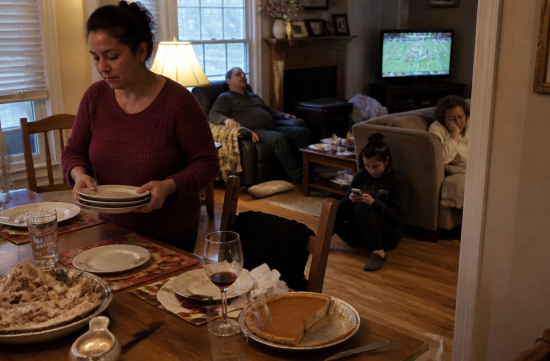
Thanksgiving is now just 18 days away. This year, somewhere in a living room, someone will be sprawled on the couch saying, "It's the tryptophan."
I first heard that phrase during my first Thanksgiving dinner after moving to the U.S. Everyone nodded in agreement, so I thought it was common knowledge. The addition of a scientific term made it seem more credible.
To get straight to the point, blaming turkey for sleepiness lacks strong evidence. Today, I will break down this misconception step by step.
Tryptophan is an essential amino acid. The body cannot produce it, so it must be obtained through food, and it is used to produce serotonin and melatonin in the brain.
So far, that's true. The problem lies in the next step.
First, let's look at the quantity. Tryptophan in 3 ounces of turkey is reported to be between 250 and 310 mg. In contrast, tryptophan supplements for sleep aid contain 1,000 to 5,000 mg per dose, making the comparison unfair.
Turkey isn't particularly high in tryptophan either. According to USDA figures cited by Fox News, cooked chicken contains 362 mg per 100g, while turkey has 252 mg.
Of course, the order may vary depending on the cut and source. Some data suggests turkey has slightly more than chicken. However, there is little disagreement that it is at a "normal poultry level."
Cheddar cheese and dried beans also showed similar or higher levels of tryptophan in the sources I found. Yet, I haven't seen anyone blame tryptophan after feeling sleepy from a cheese sandwich. At this point, turkey seems to be the unfair scapegoat.
More crucially, there's the pathway to the brain. Tryptophan must hitch a ride on a transporter to cross from the blood to the brain, and other amino acids use the same transporter.
In simple terms, it's like a shuttle bus with assigned seats that has many passengers. Eating protein foods doesn't just increase tryptophan; it also increases the competition. Therefore, it's hard to say that a plate of turkey significantly boosts tryptophan levels in the brain.
So what is the real cause? Experts often point to the sheer volume of the meal itself. Joan Salge Blake, a professor at Boston University, argues that the tryptophan theory doesn't make physiological sense.
The Calorie Control Council estimates that a Thanksgiving dinner can reach 3,000 calories, and when snacks and drinks are included, it can total around 4,500 calories. However, this number has faced some criticism. New York Times journalist Tara Parker-Pope calculated a maximum of 2,486 calories in 2012 when she prepared a heavy meal.
Either way, it's a vastly different quantity compared to a typical dinner. There are explanations suggesting that the expansion of the stomach itself is related to drowsiness, and some studies indicate that solid foods make people sleepier than the same volume of water.
The common explanation that "blood is all diverted to the stomach, causing sleepiness" is somewhat weak. I found it a bit embarrassing since I had believed it for so long.
The second suspect is the clock. Our body's alertness rhythm dips between 2 PM and 5 PM. This drop occurs whether we eat or not.
However, many households have Thanksgiving meals right during this time. They are eating significantly more than usual during a naturally sleepy period. If we're looking for culprits, this combination is much more likely.
The third factor is alcohol. Alcohol is a central nervous system depressant, which inherently induces sleepiness. Blaming a couple of glasses of wine on turkey is unfair.
There's an interesting twist here. In 1971, MIT's Fernstrom and Wurtman published a study in Science showing that rats fed carbohydrates had increased serotonin levels in their brains.
The explanation is that carbohydrates stimulate insulin, which lowers the blood concentration of competing amino acids, making it easier for tryptophan to enter the brain. Conversely, eating protein alongside carbohydrates negated this effect.
So if there's any truth to the tryptophan story, the credit goes more to mashed potatoes and pie than to turkey. Of course, we can't directly apply rat experiments to a holiday dinner table.
Tryptophan also has a lesser-known history. Until the 1980s, L-tryptophan supplements were widely used for insomnia and other issues.
Then, in 1989, there was a cluster outbreak of eosinophilia-myalgia syndrome, and the FDA warned against its use on November 11 of that year. At least 1,500 cases were reported, with death toll estimates ranging from 31 to over 37, depending on the source. Most were traced back to a product from Japan's Showa Denko.
The FDA's sales restrictions weren't lifted until 2001. Nowadays, it's easier to find, but those considering taking it should consult a doctor or pharmacist first.
There is also a perspective that popular culture played a role. In a 1997 episode of Seinfeld, the characters feed their girlfriend a lot of turkey and wine to put her to sleep while they play with her toy collection. It was a comedic scene, but such moments can solidify misconceptions more than academic papers.
I understand why this misconception persists. Explaining my drowsiness on a holiday by saying "I ate a lot and drank" is less convincing than saying "it's because of tryptophan."
Still, caution is advised when driving long distances while feeling sleepy after a meal. Whether it's turkey's fault or not, feeling drowsy is still feeling drowsy.
If it were me, I would fill my plate a little less and, instead of heading straight to the couch after eating, take a walk around the neighborhood. The driver should avoid drinking alcohol.
This year, turkey will once again be wrongly accused, but there's no reason to cut back on turkey itself. If anything should be reduced, it's the second slice of pie and the third glass of wine. Let's see who the culprit will be at your dinner table this year.
 Largo

 Chino Min |
 Glow Yo |
 Michigan Enthusiast |
 xylora |
 Tan Zoo |

 Carolina border |

 Watanaka Karametibaksa |


 Augusta 90 |
 frostpup |
 Non-Stop Squat Team |
 laughing |
 sweetvan |
 lattepop |
 Augusta Univ |
 Well Done Sir |
 nrixa |
 vrixen73 |
 A landlocked state |
 rockets |
 Smile Face |
 Polaris |
 Should we begin? |
 tarvion |
 kodak |
 Lifestyle Information Search USA |
 yenne |
 beerdreamer |