

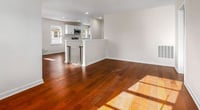
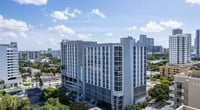
$1,265. This is the median rent in downtown Houston according to the Apartment List November report. It decreased by 0.3% over the month of October and is down 2.2% from a year ago.
Breaking it down by room size, a one-bedroom averages $1,116, while a two-bedroom averages $1,323. For renters, there's not much urgency in the market this fall.
First, it's important to note that the HAR (Houston Association of Realtors) sales statistics for October have not yet been released. Given that the September statistics were published on October 14, we can expect them to be available around mid-month.
So, we will summarize apartment rents for October, single-family home leases and sales for September, and interest rates based on the end of October figures. Please keep in mind the different reference points when reading.
Even within the Houston area, rental conditions vary significantly depending on the location. The overall metro median is $1,330, but The Woodlands is at $1,705, while Humble is at $1,127.
Price fluctuations also differ. Over the past year, Galveston has increased by 3.3%, while Baytown has decreased by 6.2%.
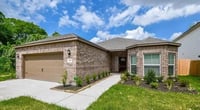
Single-family home rentals need to be viewed separately. According to HAR, the average lease price in September was $2,333, down 0.6% from a year ago.
However, the number of contracts increased to 3,761, up from 3,645 a year ago. I interpret this as a trend of people who were considering buying a home opting to stay in rentals.
Townhome and condo rentals moved in the opposite direction. The average rent rose by 3.5% to $1,958, and the number of contracts increased by 26.3% to 663.
However, the average time to contract has increased to 48 days, four days longer than a year ago, indicating room for negotiation.
Apartment vacancy rates vary widely by source. According to Lee & Associates, the vacancy rate for Q2 2026 is 12.2%, while Northmarq reports it at 7.1%. This discrepancy likely stems from differences in survey subjects and methods.
Therefore, it's better to directly inquire about special offers and renewal increases at each complex. You can't compare an older complex in Spring Branch to a new one in Katy using the same criteria.
Now, regarding sales. The median price for single-family homes in September was $325,000, down $990 from $325,990 a year ago. Essentially, it's stable.
The slowdown is in transactions. Sales dropped to 7,030, a decrease of 5.7%, and the number of pending contracts fell by 11.6% to 6,789.
Pending contracts indicate future transactions. Since this number has decreased more significantly, it's hard to expect positive news in the next statistics.
The inventory stands at 40,192, an increase of 6.3%. The months of inventory have risen from 5.1 to 5.5 months, longer than the national average of 4.8 months. This reflects the time it takes to deplete the current inventory at the current sales pace.
By price range, the $150,000 to $250,000 segment decreased by 8.4%, and the $250,000 to $500,000 segment decreased by 5.7%. In contrast, the $500,000 to $1 million segment increased by 0.6%.
This suggests that the entry-level market for first-time homebuyers is particularly weak.
Sales of townhomes and condos are even weaker. Sales dropped to 323, down 21.0%, and the median price fell by 9.1% to $209,000. With inventory at 9.3 months, it's definitely a buyer's market.
The variable is interest rates. The average 30-year fixed rate from Freddie Mac was 6.86% in September, but it reached 7.24% on October 29. A year ago, it was 6.17%.
According to HAR calculations, if you buy a median-priced home in September with a 20% down payment, your monthly principal and interest would be $1,705, excluding property taxes and insurance. Using the same conditions with a 7.24% rate, my calculation shows it would be $1,772.
There are also significant differences by neighborhood. Although it's slightly outdated, a comparison by SmartAsset using Zillow indices shows that Katy decreased by 3.44% and Spring by 0.69% between February 2025 and February 2026.
Both are suburbs of Houston, but the drop varies by nearly five times. Don't just look at the overall numbers for the region; you should check recent transactions in neighborhoods of interest on the HAR site.
If you're a renter, don't sign the renewal notice immediately. Check the new move-in prices for the same complex first, and if I were you, I would bring that number to the management office.
If you're looking to buy, remember that inventory and time are on your side. With interest rates in the 7% range, it's worth considering seller credits to lower the initial rate. In simple terms, this means using the seller's money to reduce your initial interest rate.
Landlords should be more concerned about vacancies than rent increases at this point. If a $2,333 home sits vacant for a month, raising the rent by $100 would take nearly two years to recover that loss.
If I were a renter right now, I would prefer to lock in a favorable lease rather than wait for rents to drop further. Northmarq predicts that as new supply decreases, vacancies will gradually decline.
If you're contemplating a purchase, it won't be too late to act after reviewing the HAR October statistics mid-month. First, check whether the decrease in pending contracts translates to actual transaction declines and whether the median price has held up against the 7% interest rates.
 DreamWalker





 Dr. Kelso |

 silents |

 Choco Choco Star |

 gentle |
 neapolis |

 Shintongbangtong Shin Naerin James Park |

 4 Runner x100 |

 California Information News |

 TEX MEX STAR |
 rockets |
 Smile Face |
 Polaris |
 Should we begin? |
 tarvion |
 kodak |
 Lifestyle Information Search USA |
 yenne |
 beerdreamer |
 Chino Min |
 ness 6 |
 Min's blog |
 American Politician Community |
 Sarah's Blog |
 james choi |
 solvix18 |
 Massachusetts |
 clouds 09 |
 You Turn Me On |