
When asked what they would do after retirement, many people mention golf first. I enjoy golf too, but spending the entire week on the course gets old faster than you might think.
People need to feel useful to get up early in the morning. After running a business for a long time, I found that feeling comes from being someone who is needed by others rather than just looking at my bank account.
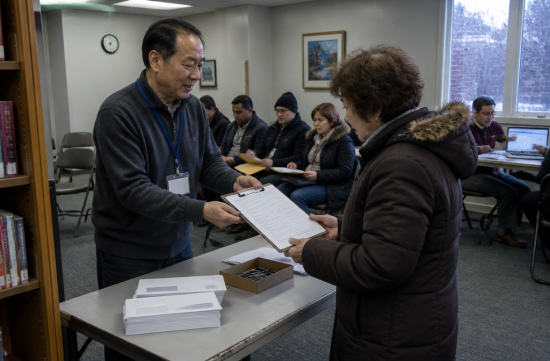
That's why I want to recommend volunteering with AARP Foundation's Tax-Aide program. It's a program that helps neighbors with their tax filings for free, which can be quite daunting.
The scale of the program is larger than you might expect. It started in 1968, and according to a guide released by AARP this September, over 30,000 volunteers helped more than 1.8 million taxpayers during the 2026 season alone.
The refunds and credits they found exceeded $1.8 billion. I really appreciate that neighbors can come together to achieve this. It shows that we don't have to rely solely on the government.
The first question that comes up is whether you can do this without being an accountant. You can. AARP states that they provide training and IRS certification even if you have no prior experience.
Many people also ask if you need to be an AARP member. You can volunteer even if you are not a member.
Next, let's talk about the roles available. Not everyone will be preparing tax returns, so you can choose a position that fits your personality.
The person who prepares the tax returns is called a Tax Counselor. They sit down with taxpayers to help identify any missed deductions or credits.
If numbers make you uneasy, there's a Client Facilitator role. This person greets visitors, organizes documents, and explains the process.
If you're tech-savvy, the Technology Coordinator position might be right for you. This role involves managing equipment and protecting taxpayer information.
If you have experience managing people, there are Leadership roles available. This involves overseeing volunteers and ensuring quality, which is a good fit for someone who has run a business.
A noticeable role for Korean volunteers is Bilingual Interpreter. AARP has noted that there is a high demand for bilingual individuals in all roles.
If there is someone who can explain things in Korean next to a Korean senior who freezes up in front of English documents, it changes the atmosphere significantly. This is a valuable skill that first-generation immigrants can offer.
How much time does it take? According to AARP guidelines, Tax Counselors need to complete 20 hours of training between September and January, and during the season, they must commit at least 4 hours a week.
This year, the program opened in early February and continued until April 15. It doesn't take up the entire year and doesn't overlap significantly with the golf season.
We should also mention the testing requirements. All volunteers must complete the IRS's Volunteer Standards of Conduct, which is essentially ethics training, and pass an exam.
Those who prepare or review tax returns also need at least Basic tax law certification. The passing score is 80% for each exam, based on IRS guidelines updated in September 2025.
The recommended method by the IRS is the online course Link & Learn Taxes. It features automatic grading and explanations for incorrect answers, making it a great option for older learners.
Once you get certified, it's not the end. Volunteers must undergo training and recertification every year.
There are also rules stating that you can only handle tax returns at the level you are certified for. Some may find this cumbersome, but I believe this level of diligence is appropriate when dealing with other people's financial matters.
Studying tax law can also be directly useful in your own life. For instance, the AARP Illinois guide emphasized that seniors over 65 can claim a maximum of $6,000 individually or $12,000 for couples.
However, don't rely solely on the knowledge gained from volunteer training to determine your retirement income. Individual circumstances vary, so it's wise to consult a tax professional.
Getting started is simple. You can submit a volunteer application or an interest form on AARP's Tax-Aide volunteer page (aarp.org/volunteer/programs/tax-aide).
It's not too late to apply. Training schedules vary by location; for example, New Hampshire starts in October, while Hawaii offers classes in December or January.
In Champaign County, Illinois, the local news section of the News-Gazette featured a call for facilitators for the AARP tax program in January, along with training information for January 22 at the Champaign Public Library.
I haven't confirmed the schedule for the next season yet. It's best to check with Family Service's Stevick Senior Center (217-359-6500) or the AARP page, as some locations may have additional requirements like background checks.
If it were me, I would start my first year as a Facilitator or Interpreter. After observing how things operate for a season, it wouldn't be too late to take the Counselor exam the following year.
Many of us remember feeling overwhelmed in front of tax documents during our early immigrant days. Now it's our turn to sit in that position, helping those who might need just an hour of support.
Retirement means stopping work, not losing your usefulness. This winter, while you put your golf clubs away, consider submitting your application.
 GirlAndGoose




 American Politician Community |

 memorabilia |

 orvian89 |

 looksee 78 |

 vivavida |

 golfmaster |


 Trot King News |
 Smile Face |

 Hot Seat Driver |
 rockets |
 Polaris |
 Should we begin? |
 tarvion |
 kodak |
 Lifestyle Information Search USA |
 yenne |
 beerdreamer |
 Chino Min |
 ness 6 |
 Min's blog |
 Sarah's Blog |
 james choi |
 solvix18 |
 Massachusetts |
 clouds 09 |
 Dr. Kelso |
 You Turn Me On |