
The air has definitely turned colder in the mornings and evenings. It's that time at the end of October when it's still warm enough for short sleeves during the day, but I find myself grabbing a cardigan for my commute.
This season always makes me feel a bit busier. After Halloween, Thanksgiving is right around the corner, followed by the year-end shopping season.
However, this year, there's a bit more weight on my mind. It's because of a conversation I had with a coworker over lunch last week.
"I checked my credit card statement, and the interest has gone up again. I haven't done anything!" my coworker sighed as they showed me their phone.
It turns out the reason was simple. The Fed raised the benchmark interest rate by 0.25 percentage points during their meeting on September 16, setting the target range to 3.75–4.00%.
This was the first increase since July 2023, and the Fed indicated that there might be another hike before the end of the year. There was a lot of discussion about the results of this week's meeting.
Credit card interest rates are mostly variable and tied to the prime rate. As the benchmark rate increased, the prime rate also rose to 7.00% starting September 17.
This means that anyone carrying a credit card balance sees their interest rate increase automatically, without needing to apply for anything.
According to Bankrate, the average credit card interest rate in the U.S. was 19.63% as of September 30. In fact, a 0.25 percentage point increase only amounts to an additional $12.50 per year on a $5,000 balance, which isn't significant.
The real issue lies with the underlying interest rate of around 19%. If you leave a $5,000 balance, the monthly interest alone exceeds $80.
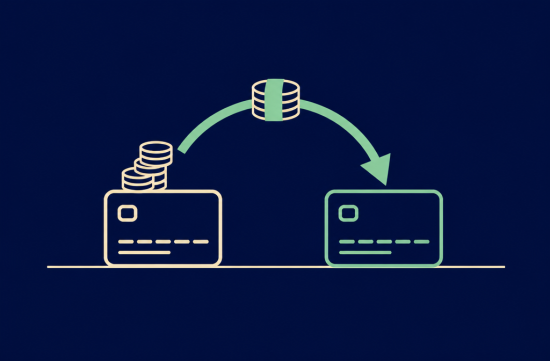
That's why balance transfers are being talked about a lot again these days. This involves moving high-interest credit card balances to another card that offers a 0% introductory rate.
Among the products available in 2026, there are cards that offer 0% for 21 months on balance transfers. Cards like Citi Simplicity and Wells Fargo Reflect are commonly mentioned.
However, it's not free. They take a transfer fee of 3–5% on the amount being transferred.
For example, with Citi Simplicity, if you transfer within the first 4 months after opening the account, the fee is 3% (minimum $5), and after that, it's 5%. Wells Fargo Reflect charges 5%, and the introductory rate applies only if you transfer within 120 days.
I ran the numbers myself. If you transfer $5,000 with a 3% fee, you pay $150, and if you pay $238 each month for 21 months, you'll pay it off without interest.
If you leave the same amount on a 19.63% card and pay the same $238 each month? It would take 26 months to pay off, and you'd pay over $1,170 in interest. I was really shocked when I saw those numbers.
So, should you always transfer? Not necessarily. There are a few things you need to keep in mind.
First, you usually can't transfer between cards from the same bank. This means you can't transfer debt from one Chase card to another Chase card.
Second, if you miss even one minimum payment, you could lose the 0% benefit and revert to a high standard rate. Make sure to set up autopay.
Third, once the introductory period ends, the remaining balance will incur the standard rate. The standard variable rates for these cards range from the 17% to 28% range, so having a plan to pay it off within the promotional period is crucial.
Fourth, be cautious about making new purchases with the transferred card. If you start swiping during the year-end sales, your original plan could quickly fall apart.
Thanks to the CARD Act, any amount over the minimum payment goes toward the highest interest balance first. Still, it's best to keep things separate from the start.
The credit limit is also a variable. The limit you receive upon application may be less than the amount you want to transfer, so in that case, prioritize transferring the highest interest balance first.
Opening a new card will result in a hard inquiry, which can temporarily lower your credit score. If you're planning to apply for a home or auto loan soon, consider the timing carefully.
Before applying, be sure to check the current fees, transfer deadlines, and rates after the introductory period on the card issuer's website. These conditions can change frequently.
My coworker ultimately decided to transfer their balance to a 21-month card. They were initially grumbling about the $150 fee, but after we looked at the numbers again, they quickly changed their tune.
Honestly, just looking at the interest rate news can be a bit frustrating. Still, I'm glad there are ways to manage it.
If it were me, I would do this: If I had a balance of several thousand dollars and was confident I could pay it off within 21 months, I would transfer it this year.
On the other hand, if I couldn't plan how much I could pay each month, I would hold off on getting a card and focus on creating a budget first.
Just like the cooling weather, interest rates seem like they will remain chilly for a while. But let's keep our wallets warm; let's take a look at our statements together this weekend!
 GarlicNotGingr
 skyvalleycreator1968



 juicylol |

 Mr Song Song |

 Way to easy |

 holy cow |

 Soy Angelino |

 Carolina border |

 Watanaka Karametibaksa |


 Augusta 90 |

 Augusta Univ |
 ssome |
 skykong |
 Shining Our Own World |
 gardener 007 |
 golfmaster |
 Nanana Nanana Nanana |
 Who's watching? |
 endone |
 RockStar |
 Casa Mia |
 You Only Live Once |
 Hardworking CPA |
 Joyce 77 |
 Runner Kim |
 My Town My Way Blog |
 My Miami Stories |
 Entip |
 Tony Park |
 Jean Claude Bundang Blog |
 DJ DC BLOG |