

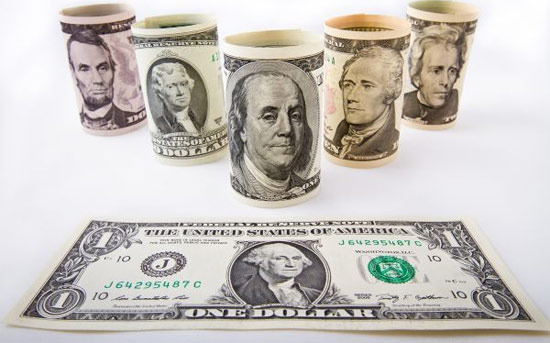
If you're looking for a "cash cow" business in the US that can generate steady monthly income without risking your initial capital of $500,000, it's best to start by adjusting your expectations.
These days, it's not easy to find truly profitable industries. Particularly, sectors like restaurants that rely on continuous customer visits, remain resilient even in tough economic times, and can be operated by new immigrants once they learn the system are saturated markets.
As of 2026, $500,000 is often insufficient for larger ventures like hotels, new car washes, or large gas stations. Instead, focusing on a "small but consistently profitable business" is much more realistic.
In my view, the most practical first choice with $500,000 is senior home care.
The reason is that the US population is aging. The number of people aged 65 and older increased by 38.6% from 2010 to 2020, reaching 55.8 million, and by 2030, all baby boomers will be 65 or older. As of 2022, around 3.3 million patients were already using home healthcare services. This indicates a structurally increasing demand in the industry. Additionally, the franchise entry costs are relatively low.
Home Instead has a total startup cost of around $98,000 to $125,000 for new markets, while FirstLight requires $150,000 in liquid assets and $250,000 in net worth. This means that with $500,000, you can open one location and still have operating funds left over.
However, even non-medical care requires attention to state regulations, hiring management, scheduling, and insurance processing, so it's more about "certain demand" than "ease of operation." Still, if you can tap into language communities like Korean, Chinese, or Hispanic, it can be very advantageous.
The second choice is a packing, shipping, and printing center, exemplified by models like The UPS Store.
US e-commerce is projected to reach $1.2337 trillion in 2025, a 5.4% increase from the previous year, accounting for 16.4% of total retail. As online sales grow, the demand for returns, package acceptance, boxes, printing, and mailbox services also rises. The initial investment for a traditional UPS Store ranges from $216,000 to $608,975, so $500,000 fits within the possible range depending on the location.
The advantages of this industry include significantly lower inventory risk compared to restaurants, relatively simple employee training, and the potential for B2B sales to local small businesses. The downside is that if you enter a high-rent area, profits may be slim, and you need to pay close attention to corporate regulations and renewal costs. Still, this is a sector where "communicative, friendly, and punctual operators" can thrive, making it a good fit for immigrants.
The third choice is commercial cleaning. This industry may seem unexciting, but that's why it tends to last longer.
The US commercial cleaning and sanitation services market is estimated to reach $75.3 billion by 2026, and the number of related businesses continues to grow. Models like JAN-PRO can start with low capital depending on the region and structure, and ServiceMaster Clean officially states that the initial investment can be as low as $89,775. The key to this business is "recurring contracts." Once you get into hospitals, offices, schools, churches, or warehouses, you generate monthly recurring revenue.
This industry is particularly good for immigrants because it can be started with a family focus, and even if your English isn't perfect, you can succeed based on quality and trust. However, it often involves night work, requires hands-on effort initially, and managing people can be challenging. While it may lack glamour, it can be a profitable sector if done right.
The fourth choice is pest control, especially home services like mosquito and insect control. This market is projected to reach $29.7 billion in the US by 2026, with the number of businesses increasing at an average annual rate of 3.4% from 2021 to 2026. Although there is seasonality, once you acquire a customer, it's easy to convert them into a recurring visit contract. Brands like Mosquito Joe describe it as "relatively low-priced among outdoor home service industries," with investment costs estimated at around $150,000 to $190,000.
This industry doesn't require fancy storefronts, but it does need warehouses, vehicles, and scheduling systems. However, handling chemicals and state licensing issues are crucial, so checking regulations is essential. I see this as a "surprisingly good industry if managed well." Since pests return every month, customers will call you back. You can promote the idea that "your home shouldn't be a home for pests" to facilitate expansion.
The fifth choice is coin laundry, or laundromats. However, the key here is that acquiring an existing store is more realistic than building a new one from scratch. The US laundromat market is projected to reach $7.2 billion by 2026, and while the industry itself is stable, it maintains steady growth.
Speed Queen states that the total investment for a store ranges from $500,000 to $1.5 million, while also suggesting the possibility of financing up to 90% with more than $300,000 in liquid assets. This means that with $500,000, you can purchase a small to medium-sized store or enter with some financing. The advantages of this industry include relatively few employees, steady cash flow, and the potential for revenue diversification through wash-and-fold or pickup and delivery services. The downsides include location, utility costs, and equipment maintenance. Above all, management is crucial.
Conversely, I wouldn't recommend starting a restaurant, gas station, motel, or large retail store with $500,000 from the outset. Restaurants have too much volatility in labor costs and food prices, and gas stations rely more on convenience store operations than fuel margins. Currently, US gasoline consumption is projected to average 8.9 million barrels per day in 2025, down 1% from the previous year and 4% from 2019. This indicates that the formula "gas will always sell" is no longer as straightforward as it used to be.
New investments in 7-Eleven can vary widely depending on the store, with some requiring over $1 million. With $500,000, it would be too tight. In conclusion, immigrant cash cow businesses with $500,000 should be found in "dirty industries with recurring demand" rather than in "glamorous-looking sectors."
To reiterate, the order is senior home care, packing and shipping centers, commercial cleaning, pest control, and laundromats.
And the most important takeaway is this: acquiring an existing business with proven revenue is much safer than starting a new one.
Cash cows are confirmed by numbers, not ideas.
 USAToday






 Tonky |
 My NYC |
 coloradoman |
 Living Economy Information Blog |
 Tomato Health Club blog |
 Questions about firearms while living in America |
 Famous Attractions in the United States |
 forever young |
 Skydiving |
  apricotla |
  Soy Angelino |
  nati8 |
  NE Hodori Preik |
  washington mom |
  celtics |
  Balancework |
  round1 |
  Way to easy |
  musicque |
  road98 |
  Churros Train Conductor |
  gleeful |
  Burbank Lee |
  Olivia's Blog |
  Bushing Around Life |
  Active |
  Cherokee Rose |
  Kor. Master |
  Holey Moley |