
Let's say you take the subway from the Bronx to Manhattan once a day, Monday through Friday. How much will this person save with the OMNY fare cap?
The answer is $0. If you ride 10 times, that's $30, and the cap is $35, so the week ends before you even hit the ceiling.
If you were hoping that the cap would automatically save you money, you might feel a bit disappointed. So let's figure out how it works, starting with the numbers.
As of January 4 this year, the base fare for subways and local buses increased from $2.90 to $3. The 7-day cap also rose from $34 to $35, an increase of $1.
Additionally, the trial cap system has now become permanent. The unlimited 7-day and 30-day MetroCards are no longer available, so for those who ride daily, the remaining discount is essentially this cap.
The math is simple. The first eleven rides cost $33, the twelfth ride hits $35, and from the thirteenth ride until the end of that 7-day period, it's free.
If you commute 6 days a week, that's 12 rides, so you would pay $36 but are capped at $35. That's just a $1 difference.
If you commute 7 days a week, that's 14 rides, so $42 is reduced to $35, leaving you with $7. This structure benefits those who work two jobs or need to run errands on weekends.
Therefore, for someone commuting 5 days a week, the tipping point is one round trip on the weekend. If you start on Monday, you can complete 12 rides with a round trip on Saturday, and Sunday outings won't incur any fare worries.
One more thing: this 7-day period does not align with a calendar week starting on Monday. It begins the moment you tap your card, and after 7 days, it resets with your next tap.
Transfers can also be confusing. Transferring from a bus to a subway within 2 hours is free, but free transfers do not count towards the cap.
This means that if you take a bus and then switch to the subway on your commute, it counts as one ride, not two. Remember, only paid rides count.
The fare cap is particularly beneficial for express buses. For example, the BxM routes that MTA operates to Manhattan cost $7.25 per ride.
If you commute 5 days a week, that totals $72.50, but the 7-day cap is $67. That's an effortless savings of $5.50 each week.
Moreover, this $67 cap includes subway and local bus rides as well. If you take an express bus to work and use the subway on weekends, you can move around without any additional fare.
However, mixing in express bus rides occasionally doesn't automatically mean you're saving. If you usually hit the $35 cap with just the subway, you might end up paying more for the convenience, so calculate based on your own usage.
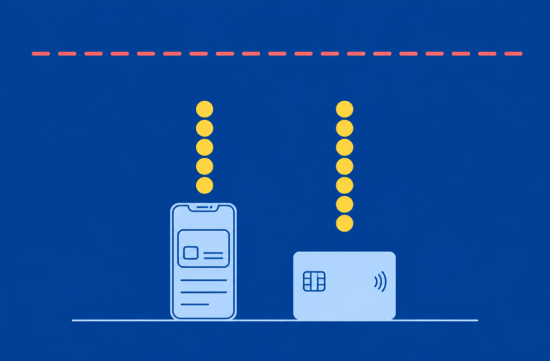
Now, let's look at the biggest pitfall. Even if you use the same bank card, tapping a plastic card and tapping a phone will be recorded as different payment methods.
This is clearly stated in the OMNY official FAQ. Cards stored on your phone each have their own cap, and even joint cards with the same number for couples are treated separately.
If you tap with your phone in the morning and your wallet card in the evening, you could end up splitting your rides into six counts even after taking twelve rides. Honestly, this design is unfriendly to passengers.
Free transfers also need to be tapped with the same payment method to be recognized. If you mess this up, you won't just miss the cap; you'll also pay a fare when transferring.
Be cautious when tapping for family fares. You can pay for up to three additional people with one card, but only your first tap counts towards the cap.
The remaining passengers will pay full fare each time. If a couple commutes separately, it's best for each to use their own card.
There are also considerations specific to the Bronx. The Bee-Line buses in Westchester are included in the $35 cap, so if you commute north, those rides also count.
On the other hand, Metro-North is not on that list. CityTicket fares are calculated separately at peak $7.25 and off-peak $5.25, so don't combine those with subway counts.
For those aged 65 and older or with qualifying disabilities, the fare is $1.50 with a cap of $17.50. The express bus fare is $3.60, but during peak hours from 6-10 AM and 3-7 PM, full fare applies.
If you're between 18 and 64, check out the city's Fair Fares half-price program. Starting this coming Monday, November 30, the income threshold will expand from 150% to 200% of the federal poverty line.
For a single-person household, that's $31,920, and for a four-person household, it's $66,000. The city website still had the old criteria up until a few days ago, so check nyc.gov/fairfares or call 311 before applying.
The MTA has included a 4% fare and toll increase in its budget proposal for next year. The fare for a single ride has not yet been determined, and public hearings and board votes are still pending.
If it were up to me, I would choose just one payment method, create a free account at omny.info to register that card, and monitor my rides for a week.
While I can't stop fare increases, I can prevent money from slipping away. Developing the habit of tapping with just one card is the easiest and most reliable way to save.
 CaptainCupid




 mistic |

 babybay |

 willow woo |


 Living in America and Writing Essays |









 biscuitz |

 Scade Studio |

 Nevada Vegas UNLV |

 Things to know |
 West Kong |
 Exciting FM Radio |
 vexon87 |
 Helpful Life Stories |
 leaves |
 glenview 89 |
 Wang Ga Nae |
 Life in the US |
 Alright Twain |
 cloud0 |
 Allaston New Yorker Notebook |
 MBTI Detective Agency |
 Cool Beach Freeway |
 John Denver |
 Iri Jori Missouri |
 road98 |
 American Airlines Mileage |
 Whoever It Is, I Don't Know |
 meloncat |
 kimchi warrior |