

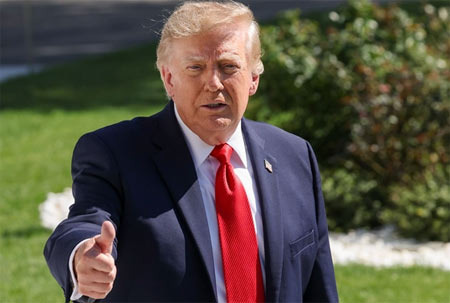
As I follow American political news, I often wonder how Trump will be recorded in history textbooks about 30 years after his death.
Right now, with supporters and opponents so polarized, it's difficult to make an objective assessment.
However, as time passes and political emotions fade, leaving only policies and results, the narrative might change.
This is evident from the recent midterm election results.
Despite the Republican defeat, Trump doesn't seem inclined to adjust his existing policies.
Typically, American presidents who suffer significant losses in midterm elections make some adjustments.
Bill Clinton did, as did George Bush and Obama.
They acknowledge public dissatisfaction and either compromise politically or introduce new policies.
In contrast, Trump appears to be moving in the opposite direction.
He is strengthening tariff policies and maintaining relationships with wealthy tech executives while not denying his ties with Putin.
What Americans are most concerned about right now isn't grand international politics.
It's rent, car insurance, grocery prices, and healthcare costs.
Salaries are rising slightly, but they can't keep up with the pace of living expenses.
Dining out, which used to be a thoughtless decision, now requires checking menu prices first.
It's understandable that more people feel the American economy favors the wealthy.
No matter how well the stock market performs, it means little to someone worried about next month's rent.
Of course, I understand the logic of those who support Trump.
The aim to revive American manufacturing, reduce economic dependence on China, and break the practices of the existing political establishment isn't inherently wrong.
There is a possibility of long-term success.
However, the distinction between having good policy goals and achieving positive results is significant.
Personally, I find Trump's most unique trait is his reluctance to acknowledge the possibility that he might be wrong.
Even after losing elections and facing declining public opinion, his conviction that his direction is correct seems largely unshaken.
Whether this trait will be viewed as the decisiveness of a great historical leader or as the dangerous arrogance of a national leader will ultimately be determined by the outcomes.
If America's economic dominance strengthens and manufacturing revives, he may be reevaluated.
Conversely, if inflation, wealth disparity, and international isolation worsen, he will likely receive a very negative assessment.
One thing is certain: Trump will not be remembered as an ordinary president in American history.
I am genuinely curious how historians will describe the Trump era when I reach my 60s in the 2050s.
Perhaps we are witnessing a significantly important historical period in modern American history every day.
 foxriverdreamer1982
 midnightforestbuilder1948






 Yo Lock Me Up |

 There Are Such Things in the World |


 Study Abroad Life Know-How Tips |

 Noodle Noodle |























 musicque |
 Kondae Garusong Blog |

 mykiwi blog |
 maple lady |
 Allaston New Yorker Notebook |
 MBTI Detective Agency |
 Cool Beach Freeway |
 biscuitz |
 John Denver |
 Iri Jori Missouri |
 road98 |
 American Airlines Mileage |
 Whoever It Is, I Don't Know |
 meloncat |
 kimchi warrior |
 Angeles Choi |
 nutnew |
 ringwinds |
 happy 9 |
 United States National Administrative Organization Stories |
 upbeat |
 silents |
 Korean American National Foundation Promotion Blog |
 PETRO Vatican Shrine |