
After Thanksgiving, the night walks are particularly quiet. The leaves have all fallen, leaving only the sound of footsteps on the path, and when I come home and open the mailbox, I find a bill and an empty reply envelope side by side.
The friendly note in the envelope said this: please send a check. From a country that sends rovers to Mars, no less.
Anyone who is a Korean person visiting the U.S. for the first time might tilt their head in confusion. They write the amount in numbers, spell it out in English, sign it, and even attach a stamp. How has this slow paper method survived?
First, let's look at the numbers for fairness. According to the Federal Reserve, in 2000, there were 42.6 billion checks processed in the U.S. At that time, this was more than the combined total of 29.9 billion card and automatic transfer transactions.
By 2024, that number has dropped to 9.2 billion. Compared to the total of 236.6 billion non-cash transactions, checks account for less than four out of every hundred.
However, when it comes to the dollar amount, the story changes. $24.45 trillion, which is over 17 percent of the total non-cash payment amount. I was a bit surprised by this point.
The average amount of a check has increased from $1,533 in 2015 to $2,653 in 2024. The checks that used to pay for coffee have disappeared, leaving behind checks used for larger sums of money.
So who is using them, and for what? In October of this year, the Atlanta Fed published an article examining personal checks.
In a 2025 survey, the average consumer wrote 1.12 checks per month. This is down from 1.83 checks in 2021, indicating a clear decline.
The differences by age are even more pronounced. Those aged 25-34 write an average of 0.17 checks per month, while those over 75 write 4.14 checks. It seems to rise sharply after the age of fifty-five.
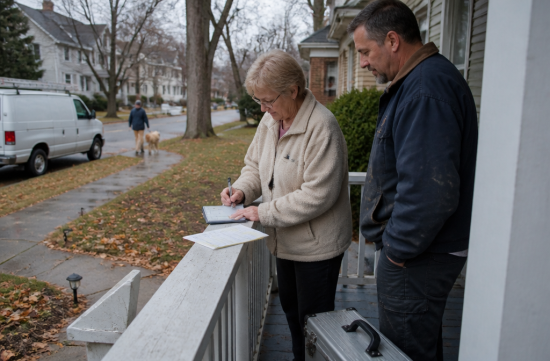
I found the table summarizing the uses of checks to be the most interesting. Payments to home repair workers like plumbers and electricians accounted for 31.7 percent of checks.
Anyone who has worked in the field understands quickly. Card fees become painful as project costs rise, and there's less worry about a check bouncing when you know the homeowner's face and address. The Atlanta Fed's explanation was similar.
Tax payments were made with checks 23.3 percent of the time. When paying government agencies with a card, there are often additional fees, making a single piece of paper the cheaper option.
Church donations and charitable contributions accounted for 21.5 percent, while rent payments made up 12.5 percent. The desire to avoid fees is common for both churches and landlords.
When laid out like this, the survival strategy becomes clear. The giver and receiver know each other, the amounts are large, and there's no urgency. Checks endure in these spaces.
Why was it different in Korea? There were personal checks in Korea as well. They were first attempted in 1977 but failed after a few months because stores wouldn't accept them, and they were reintroduced in 1980.
A 1993 article from the Seoul Newspaper pinpointed the reason accurately. There was no way to verify the issuer's credit, so people wouldn't accept them, and without acceptance, there was no chance to build credit.
What filled that gap was the cashier's check, which banks guaranteed. In the first half of 1993, personal checks accounted for only 2.3 percent of the volume of cashier's checks.
By 2003, the volume of personal checks exchanged had shrunk to 11.4 trillion won, less than half of the previous year. The bounce rate had risen to 2.1 percent.
However, it would be an exaggeration to say that checks have completely disappeared in Korea. Cashier's checks and corporate checks still exist. What has vanished from our daily lives is the personal check handed over with a signature.
When stacking bricks, the first row determines the next. The U.S. laid down the trust in a person's signature first, while Korea laid down the trust in banks first. That's how it appears to me.
Of course, it's not all romantic. Check washing, where thieves steal checks from mailboxes and erase the writing with chemicals to change the name and amount, is a headache.
The Treasury Department's FinCEN received 15,417 reports of check fraud related to mail theft over six months following a warning in 2023. The amount involved in suspicious transactions exceeded $688 million, which is disheartening.
Therefore, the FBI and the Postal Inspection Service recommend writing with indelible black ink, leaving no blank spaces, and depositing checks in the post office drop box whenever possible. Personally, I would only write checks when absolutely necessary and check the transaction history through an app.
The future is quietly moving forward. The Federal Reserve asked for opinions last December on how to handle check processing services, including the option for significant reductions.
The response released on the 12th of this month was not about abolishing checks. They stated they would adjust processing timeframes and increase fees charged by banks and credit unions, but that it would not affect individuals and businesses using checks.
In terms of convenience, Korea's bank transfers are a hundred times better. Still, I don't mind that brief pause when I write a check. It makes me think about who I'm sending this money to and why, as I write it down by hand one more time.
Take out your checkbook from the drawer and look at the last check you wrote. The name written there might be a record of the trust built in this land.
 MackerelFly


 My blog Story |

 Arlington house |











 happy 9 |
 aloeverame |

 some fame |

 Yo Lock Me Up |

 moodansa 77 |
 Wang Ga Nae |
 Life in the US |
 Alright Twain |
 cloud0 |
 Allaston New Yorker Notebook |
 MBTI Detective Agency |
 Cool Beach Freeway |
 biscuitz |
 John Denver |
 Iri Jori Missouri |
 road98 |
 American Airlines Mileage |
 Whoever It Is, I Don't Know |
 meloncat |
 kimchi warrior |
 Angeles Choi |
 nutnew |
 ringwinds |
 United States National Administrative Organization Stories |