
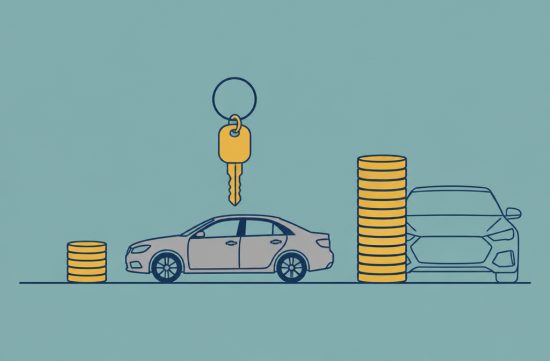
When the lease expiration notice arrives, there are exactly three options: return the car and get a new one, return the car and be done, or buy out the car you're currently driving.
Most people simply return the car and sign the new lease estimate presented by the dealer. However, looking at this year's numbers, there's not much reason for that to be the default option.
First, let's look at the price of new cars. According to Kelley Blue Book, the average transaction price for new cars in July was $49,855, which was the highest this year.
The all-time high was $50,612 in December of last year. So, new cars are currently trading just below their all-time high.
The impact is even more noticeable in financing. According to Edmunds' third-quarter data, the average monthly payment for new car financing was $787, with an average loan amount of $44,664.
The average interest rate for new cars was 7.0%, the same as in the second quarter. The idea that lower interest rates would ease the burden isn't reflected in the numbers yet.
What about used cars? The same data shows that the average interest rate for used cars was 10.6%, with a monthly payment of $582 and an average loan amount of $30,703.
This is where the structural advantage of buying out a lease comes into play. The lease contract specifies a residual value, meaning you can buy the car for that price at the end of the lease.
If the price set three years ago is lower than the current market price, that difference becomes your equity. To put it academically, this is a rare case where information asymmetry works in favor of the consumer.
In simple terms, it means this: I can buy a car that the dealer could sell for more in the used car market at the price agreed upon three years ago.
Now, let's do some calculations. This is just an example, but let's assume a car with a residual value of $22,000 is currently trading for $25,000 in the market.
In California, sales tax applies to the entire buyout price. With a state base rate of 7.25% plus local additional rates, let's estimate it at 9% for this example.
This brings the total to $23,980 including tax. If you finance this amount over 60 months at 7% interest, the monthly payment would be approximately $475.
If we apply the average interest rate of 10.6% for a regular used car under the same conditions, the monthly payment would be around $517. Depending on where you get the buyout loan, there can be a difference of over $40 a month.
For reference, LeaseEnd, a lease buyout loan provider, reported that as of September, the average interest rate for customers with a credit score above 800 was 6.26%. However, keep in mind that this is data from a company whose business is to encourage buyouts.
Now, compare this to the average new car payment of $787. Based on this example, you would be paying over $300 less each month.
Of course, if it were that straightforward, everyone would buy out their leases. There are a few pitfalls.
First, many cars have a residual value that is higher than their market value. In this case, buying out the lease means paying a premium for someone else's car, so returning it is the right choice.
Second, when going through a dealer, there may be processing fees that weren't in the contract. You should compare the purchase option fee in the lease contract with the actual estimate line by line.
Third, the moment you buy out the lease, that car is a three-year-old used car that is nearing the end of its warranty. The time for replacing consumables like tires, brakes, and batteries will soon come.
Fourth, some people try to convert their equity into cash by selling to another dealer, but whether third-party sales are allowed varies by leasing company. It's best to confirm this with a quick phone call.
On the flip side, buying out the lease can help you avoid certain costs. Fees for excess mileage, excessive wear charges, and return fees will all disappear.
Especially for those who have exceeded their mileage, this can be more significant than expected. In many cases, it's more financially sound to add that money to the buyout price rather than paying excess mileage fees when returning the car.
So, my process is simple. I get the exact buyout price from the leasing company and check the market value for the same trim and mileage on Kelley Blue Book or Edmunds.
This process might seem tedious, but it actually takes about an hour. If that hour can save you thousands of dollars, it's a pretty good deal on an hourly basis.
Then, I compare the total amount including sales tax and fees with the market value. If the total is lower than the market value, it's a candidate for buyout; if it's higher, return it without hesitation.
Finally, I need to consider whether I plan to keep the car for a few more years. If I intend to keep it for more than three years, buying out leans in favor of being advantageous; if I plan to change it within a year, it could just mean losing the sales tax.
When it comes to loans, don't just look at the dealer's offer; get estimates from at least two other places like credit unions. As shown in the example, a few percentage points difference in interest can add up to a significant amount over five years.
My personal conclusion is this: as long as new car prices remain at this level, buying out a lease car with equity is the most rational choice.
Whether the new car smell is worth $300 a month is up to each individual's judgment. Personally, I would rather keep that $300 in my bank account.
 AlaskaSalmon
 ChickSkinLab







 Grow Your Gut Bacteria Well |
 choi family |
 content |
 Carolina border |
 Que Buena |
 Nanana Nanana Nanana |
 West Kong |

 dictionary |

 United States National Administrative Organization Stories |


 donggul donggul |
 korvix |
 Noodle Zin |
 Forever Tiger Teacher |
 strongman |
 U.S. Military Recruitment Information |
 |
 cherry cherry |
 Star Way |
 Pleasant K |
 Spaghetti Flying Religion |
 Texas Migration Story |
 Forever Coco is Bangga |
 nougat |
 coloradoman |
 Village Man |
 endone |
 Live and that's it |
 what gives |
 willow woo |