

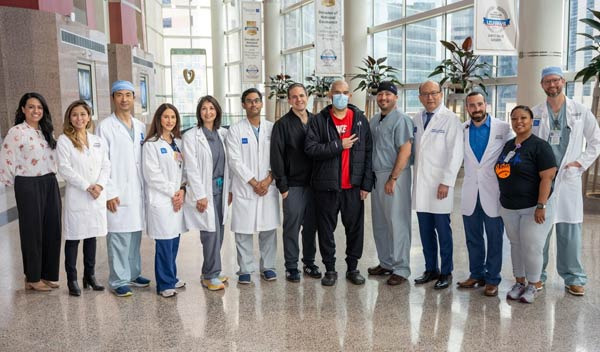
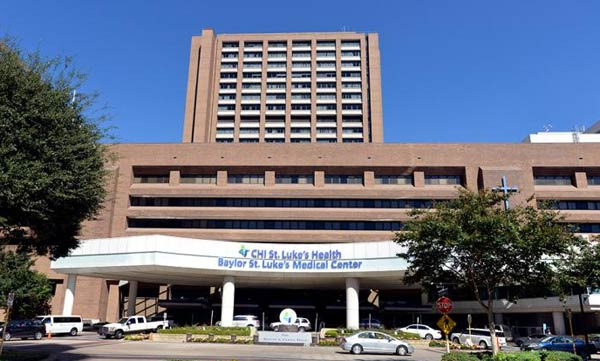
When talking about the Texas Medical Center in Houston, many people first think of names like MD Anderson or Houston Methodist.
However, when it comes to the history of cardiac treatment, Baylor St. Luke's Medical Center is an essential hospital that cannot be overlooked.
This hospital began in 1954 as St. Luke's Episcopal Hospital. It is now a large teaching hospital operated jointly by Baylor College of Medicine and St. Luke's Health, located right in the heart of the Texas Medical Center. It has over 800 beds, making it a large facility.
What has made this place famous is its focus on the heart.
In 1968, a team led by Dr. Denton Cooley performed the first successful human heart transplant in the United States here.
Since then, in collaboration with the Texas Heart Institute, it has advanced fields such as heart transplants, artificial hearts, ventricular assist devices, and aortic surgery, leaving a mark in the history of global cardiac medicine.
To date, the number of heart transplants performed in programs associated with this hospital has exceeded 1,400. It also has significant experience in complex aortic surgeries and ventricular assist device procedures. The facilities for heart catheterization and treatment are also among the best in the world.
Remarkably, it is not just a hospital with a past reputation.

In 2025, Dr. Kenneth Liao's team from Baylor College of Medicine successfully performed the first fully robotic heart transplant in the United States at Baylor St. Luke's.
Instead of the traditional method of making a large incision in the center of the chest, the surgery was performed using small incisions with a robot. This is significant as robotic surgical technology is now being introduced into complex surgeries like heart transplants.
Currently, the heart center treats a wide range of conditions, from coronary artery disease, myocardial infarction, heart failure, arrhythmias, and valve diseases to aortic diseases and end-stage heart failure.
In addition to heart transplants, treatments using ventricular assist devices like LVADs are also important for allowing patients to wait for transplant surgery.
In the 2025-2026 U.S. News rankings, Baylor St. Luke's was ranked 4th among all hospitals in Texas, 2nd in the Houston area, and 25th nationwide in the field of heart and vascular surgery. It also made the national rankings for gastroenterology and GI surgery, as well as neurology and neurosurgery.
Cancer treatment is also quite strong. The Dan L Duncan Comprehensive Cancer Center at Baylor College of Medicine collaborates with oncology, surgery, radiation oncology, radiology, and genetic counseling to develop treatment plans.
It handles various cancers that require collaboration among multiple specialties, including pancreatic cancer, liver cancer, colon cancer, stomach cancer, lung cancer, and brain and spinal tumors.
The field of organ transplantation also extends beyond just the heart.
Programs for the transplantation of various organs, including the liver, kidneys, and lungs, are in operation, and the hospital has extensive experience dealing with critically ill patients.
Another significant advantage of this hospital is that the faculty from Baylor College of Medicine actively participates in patient care and surgeries.
Research conducted at the medical school often connects to clinical trials at the hospital, providing opportunities for patients to participate in clinical trials testing new drugs, medical devices, or surgical techniques beyond standard treatments.
Its location is also notable, as stepping outside the hospital, you find world-class medical institutions like MD Anderson Cancer Center, Houston Methodist Hospital, and Texas Children's Hospital, all within the Texas Medical Center.
Therefore, thinking of Baylor St. Luke's simply as a large general hospital in Houston does not adequately describe the nature of this institution.
Especially in situations where choosing a hospital is crucial, such as for heart transplants, severe heart failure, or complex heart surgeries, it is a name that comes to mind.
The history of cardiac medicine that began in the 1950s has now evolved into robotic heart transplants and artificial heart research, which is what makes Baylor St. Luke's special.
 LuckyLife
 VelvetStone81





 Churros Train Conductor |
 Tora Tora |
 neroyo |
 nivex85 |
 Old English |
  SEVEN SEVEN |
 Things to know |
 U.S. Weather Bureau News |
 Shintongbangtong Shin Naerin James Park |
 Texas Real Estate Blog |
  Sunshine Blog |
  Minnesota Small Business |
  Strawberry Pancake Warrior |
  amolayo |
  korvon |
  Que Buena |
  virexo |
  silverpath |
  Komet Park |
  reliable |
  vexo90 |
  As Always Today |
  veltar87 |
  United States National Administrative Organization Stories |
  springwaltz |
  dense |
  Tiger Milk Foam Research Institute |
  Oreore Mushroom |
  optimistic |
  Good Good |