

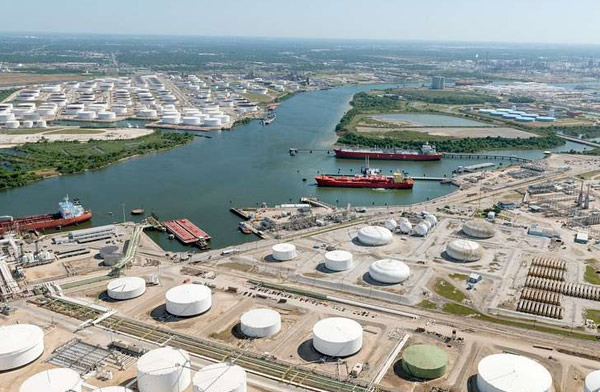
The Houston Port is a key logistics hub located in Texas, playing an important role that impacts not just the local area but the national economy as a whole. Thanks to its geographical advantage connected directly to the Gulf of Mexico, a variety of goods including energy, chemicals, agricultural products, and manufactured goods pass through here, and the fact that it is the fifth largest port in the U.S. in terms of container traffic highlights the status of the Houston Port.
As of the first half of 2023, the container import volume at the Houston Port was recorded at approximately 1.8 million TEUs, which is a slight decrease of about 2% compared to the same period last year. While the numbers may suggest a decline, it can be seen as a demonstration of stable port operations, maintaining this level even amidst the broader trends of global economic slowdown and supply chain restructuring.
In particular, the Houston Port is the largest container port in the Gulf region, handling about 73% of the total container trade in the U.S. Gulf, making it a central hub for logistics in this area. More than half of the cargo entering through this port originates from Asia, with a significant portion coming from China.
As of the first half of 2023, imports from Asia accounted for about 53% of the total, with the volume from China estimated to exceed 60%. This indicates that the Houston Port has played a crucial connecting role in the trade structure between the U.S. and China. However, in recent years, due to U.S.-China trade conflicts, tariff policies, and companies' supply chain diversification strategies, the import of Chinese products has not been increasing as sharply as before.
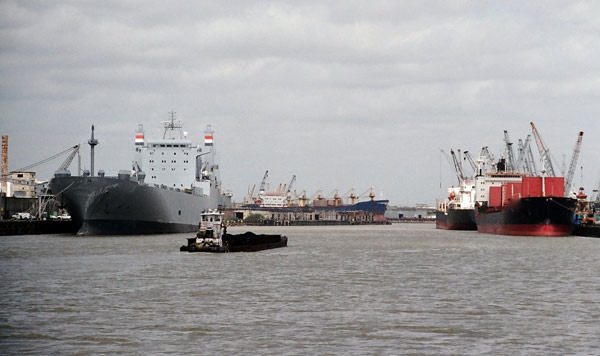
In fact, from January to May 2023, the U.S. import amount from China was about $169 billion, showing a decrease of approximately 25% compared to the same period last year. This trend is directly affecting the Houston Port, making it inevitable for port operations to adapt to these changes.
Additionally, as the U.S. government considers imposing a 25% tariff on Chinese port cranes, concerns among port operators are growing. Cranes are essential equipment directly linked to port productivity, and if tariffs are implemented, the cost of acquiring new equipment could significantly increase, potentially weakening the port's competitiveness.
This is also why major ports, including Houston, are opposing such policies. In summary, the Houston Port remains one of the top logistics hubs in the U.S. and holds an important position in trade with China.
When thinking about trade between Korea and the U.S., one might recall the ports of Los Angeles or Long Beach in California, but in reality, a considerable amount of Korean cargo also comes through the Houston Port. Notably, automotive parts, steel products, and petrochemical raw materials are representative examples. The structure where cargo departing from Ulsan or Yeosu enters Houston via the Gulf of Mexico and moves directly to Texas factories is quite efficient.
With Hyundai, Kia, and Korean parts manufacturers establishing factories in Texas and Mexico, the importance of the Houston Port has increased. Moreover, Houston's status as an energy city means it has deep connections with Korean refining and chemical companies.
In any case, I believe that how flexibly the Houston Port responds to changes in the supply chain will be a key factor determining its future competitiveness.







 US Embassy |
 fortbliss |
 Folding Instructions |
 yentra |
 Cali M Law Group |
 U.S. Weather Bureau News |
 Things to know |
 Premium Gas Camp |
 Texas Real Estate Blog |
 action blog 101 |
  Korean Mom |
  My NYC |
  moo moo |
  Mr Oh |
  forevergee |
  festival |
  manchester |
  constant |
  Leapfrog Move |
  vibranto |
  Tora Tora |
  yellowbutter |
  Dolly |
  NYC saladbar |
  Finding Superfoods |
  lightyear |
  song bang |
  vexomo |
  Indiana Jones |