
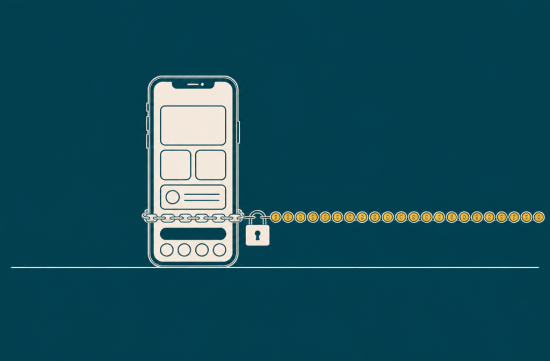
Every fall, there's a phrase we often hear: "The new iPhone is almost free." Last month, I was really stopped in my tracks when I saw the "Up to $1,200 off" banner in front of a carrier store.
However, after listening to the staff's explanation inside the store, the story was a bit different. When I got home that day, I went through the terms and conditions one by one, and today I'll share my summary.
First, let's look at the numbers. With the release of the iPhone 18 Pro this year, all three carriers—AT&T, T-Mobile, and Verizon—are offering up to $1,200 off as part of their trade-in conditions.
The key point here is that this discount doesn't come off your total at the register. Instead, it's given as a bill credit that reduces your monthly bill over time.
For example, AT&T divides the $1,200 over 36 months. When you do the math, that's just over $33 a month, which you receive over three years.
The credit doesn't apply immediately either. According to AT&T's terms, the first credit starts within three billing cycles.
So what happens if you switch carriers in the meantime? If you cancel the service, the remaining credits stop, and you still have to pay off any unpaid balance on the phone.
In simple terms, if you use the service for a year and leave, you might only receive up to $400 of the $1,200, with the rest going to waste. I think this is the biggest hidden cost.
The second trap is the plan itself. The maximum discount isn't available on any plan; it's tied to expensive unlimited plans.
For AT&T, you need to be on Premium 2.0 or higher to get the full $1,200, while the lower tier, Extra 2.0, drops to $930. T-Mobile also requires a plan at the Experience Beyond level.
This means that if someone on a cheaper plan upgrades to get the credit, the increased monthly bill could eat away at the credit. When you multiply that over three years, it adds up faster than you might think.
There's also tax to consider. While the credits are received later, sales tax is typically charged upfront based on the full price of the phone.
The third issue is fees. AT&T charges a $35 activation fee when setting up or changing devices, and T-Mobile has a $35 device connection charge.
It's not a huge amount, but if you're switching multiple lines for a family, it can add up. This part isn't always highlighted in the store.
The fourth issue is the condition of the trade-in device. AT&T's maximum condition requires an iPhone 14 or newer, regardless of condition, but the 16e is excluded.
For Android or older phones, they must meet a certain appraisal value. If your phone doesn't meet the criteria, the $1,200 becomes just a dream.
The fifth issue is unlocking. There have been significant changes this year.
Originally, Verizon was the only nationwide carrier subject to FCC regulations requiring phones to be automatically unlocked 60 days after activation. However, on January 12, 2026, the FCC granted Verizon an exemption from this rule.
Since then, Verizon follows industry self-regulation, and unlocking is no longer automatic; customers must request it. For postpaid phones, you must pay off the installment plan to unlock it.
T-Mobile's postpaid phones must be used on the network for at least 40 days and the installment plan must be paid off to unlock. Essentially, during the credit agreement period, the phone is tied to that carrier.
Honestly, this part is a bit disappointing. While I understand the reasoning for fraud prevention, it ultimately makes it harder for consumers to switch and can lead to losses.
So what are the alternatives? It's worth comparing Apple's own trade-in program. You can get an estimate online without needing to visit a store, which is convenient.
As of September 9 this year, Apple's official trade-in offered up to $510 for the iPhone 16 Pro. That seems much lower than the maximum offered by carriers.
However, Apple doesn't have plan requirements or a 36-month commitment. The credit can only be used for purchasing Apple products or an Apple Gift Card.
My criteria are simple. If I already like my carrier, plan to use it for three years, and am on an expensive plan, then the carrier deal is beneficial.
Conversely, if I might switch to a cheaper MVNO within 1-2 years, then it's a different story. In that case, opting for Apple's trade-in or buying an unlocked phone might actually be less of a loss.
And before signing a contract, make sure to ask the staff three key questions: the total number of credit months, the name of the required plan, and how much the remaining balance will be if you cancel.
Conditions can change even after the launch week, so it's best to check the final terms on the carrier's official page for the most accurate information.
In the end, I decided not to switch this time. Remembering that it's a three-year contract before getting tempted by the word "free" makes the decision much easier.
 Comet Blog








 SKy Face |

 gleeful |

 forevergee |

 mortrix |

 cherrydino |

 Tora Tora |

 Fun Flex Life |

 Gongs Blog |

 Experiences Living in America |

 Good Neighborhood, Wealthy District Information |
 coolriver |
 Ro Ro Car |
 Amber H |
 new sugar |
 Palm 1000 |
 loran |
 donutfield |
 Tennis City |
 sunny7 |
 Questions about firearms while living in America |
 Shoot Me |
 mochifox |
 zucchini |
 Anna Life |
 Exciting FM Radio |
 pet dog |
 toodin |
 rosed |
 DeArizona Blog |