
In the months leading up to putting a house on the market, I often receive inquiries like this: If I completely renovate my outdated kitchen with high-end materials, won't that significantly increase my home's value?
To put it simply, most of the time, the answer is no. The larger the renovation, the lower the percentage of the investment that can be recouped in the sale price.
The most commonly referenced data comes from Zonda's Cost vs. Value report. The 38th edition, released in September 2025, is the most recent version available, comparing the average costs and remaining values of 28 different projects across 119 markets in the U.S.
The recovery rate is the ratio of the increased value at sale compared to the renovation costs. It is calculated based on actual construction cost data and evaluations of sale values by real estate professionals.
Returning to the kitchen example, the national average recovery rate for an upscale major kitchen remodel is 35.7%.
This means that if you spend $100,000, only $35,700 will be reflected in the sale price. The rest is essentially money spent improving someone else's kitchen.
For the same major kitchen project, if you opt for a mid-range remodel, the recovery rate can rise to 51%. Still, that means you lose half of your investment.
However, if you only make minor updates without a complete overhaul, the situation changes. A mid-range minor kitchen remodel has an average cost of $28,458 and a recovery rate of 113%.
This includes replacing cabinet doors and hardware, countertops, sinks, and some appliances. The layout remains unchanged.
The projects with the lowest recovery rates are additions. An upscale master suite addition averages $351,613 but only retains $63,136 in sale value, resulting in an 18% recovery rate.
Honestly, I was a bit shocked when I first saw these numbers. Spending $350,000 and only recouping $60,000 doesn't make sense as an investment.
A mid-range master suite addition averages $170,517 with a recovery rate of about 32%. Even at a lower tier, an addition is still an addition.
Bathroom additions are similar. An upscale bathroom addition costs $111,255 and retains $40,526, resulting in a 36.4% recovery rate, while a mid-range addition costs $60,645 with a 53% recovery rate.
Why does this happen? Buyers assess a home's value based on comparable properties in the neighborhood, not on the renovation costs incurred.
The same goes for appraisals. If similar homes in the area are priced at a certain level, having a fancy kitchen won't necessarily raise the appraisal to match the renovation costs.
Taste also plays a role. Higher-end materials often reflect a strong personal taste, and if that taste doesn't align with the buyer's preferences, it may be seen as something that needs to be redone.
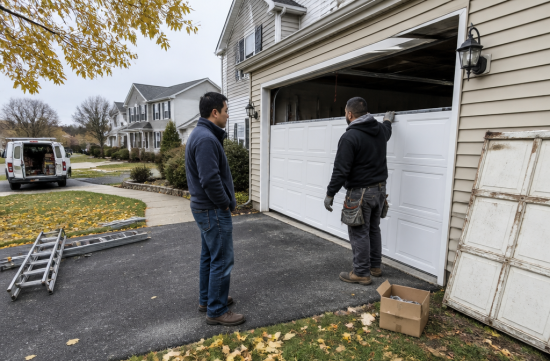
Conversely, projects with high recovery rates are typically small, visible updates. In the 2025 report, replacing a garage door averages $4,672 with a recovery rate of 268%, making it the top project.
Replacing a steel front door also ranks high, averaging $2,435 with a recovery rate of 216%. This indicates that projects that enhance curb appeal tend to yield a return.
The National Association of Realtors (NAR) also shows similar trends in its Remodeling Impact Report released in April 2025. A new steel front door had the highest cost recovery at 100%, followed by closet renovations at 83%.
However, both reports reflect national averages. The numbers may vary for specific neighborhoods in the Middle Atlantic region, including New Jersey and Bergen County.
Therefore, it's essential to look at comparable properties before focusing solely on the numbers. The recent sale prices and conditions of homes in the same school district and size should be the benchmark.
If all the neighboring homes have updated kitchens, listing your home with an outdated kitchen could lead to a price reduction. In such cases, it may be better to make minor updates to bridge the gap rather than undertake a full renovation.
One more thing to keep in mind: many municipalities in New Jersey require homeowners to obtain a Certificate of Continued Occupancy (CCO) before selling.
According to the Closter borough guidelines, a CCO must be obtained before selling or renting, open building permits must be closed, and a fire safety inspection must be completed.
If the home was built before 1978, certification regarding lead paint may also be required. If you're planning to undertake renovations that involve tearing down walls in an older home, this aspect should be included in your timeline.
So, if you rush to do renovations without permits or finish the work without a final inspection, you could face delays right before closing. Since standards vary by neighborhood, it's best to check with your borough's building department first.
If it were up to me, I would skip the additions and major kitchen renovations, and instead invest in paint, lighting, front doors, garage doors, and repairs for damaged areas.
And I would leave the remaining budget as room for price negotiation rather than spending it on renovations. Many buyers prefer to make their own repairs.
Major renovations are typically done when you plan to stay in the home for several more years. Remodeling right before selling should be viewed as organizing rather than investing.
 OceanField96








 moo moo |

 ultron78 |
 garlic bread |

 Sugar Cream Door Bulletproof Noodles |

 urbanmint |

 Glow Yo |

 Anytime Journey |

 Silent Sea |

 zymit |

 Good Neighborhood, Wealthy District Information |
 Ro Ro Car |
 Amber H |
 new sugar |
 Palm 1000 |
 loran |
 donutfield |
 Tennis City |
 sunny7 |
 Questions about firearms while living in America |
 Shoot Me |
 mochifox |
 zucchini |
 Anna Life |
 Exciting FM Radio |
 pet dog |
 toodin |
 rosed |
 DeArizona Blog |
 river9 |