
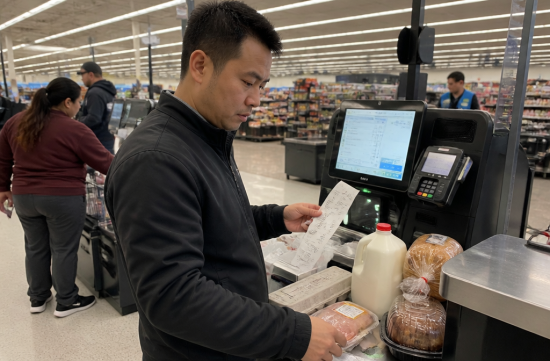
Last week, while shopping at Kroger and looking at my receipt, I noticed that basic food items like eggs, milk, and bread had a separate tax line. This is often the first thing that surprises newcomers to Tennessee.
Many states in the U.S. do not charge sales tax on groceries or significantly reduce it. However, Tennessee's state government collects a flat 4% on groceries.
On top of that, there is an additional local tax from the county. This is why the tax line on the receipt can look thicker than expected.
The good news is that Davidson County's grocery local tax is set to decrease soon. According to the Tennessee Department of Revenue, starting November 1, 2026, the local tax rate on groceries will change to 1.75%.
It was previously 2.25%, so this is a reduction of exactly 0.5 percentage points. The Metro Council passed this half-cent tax cut while processing this year's budget.
According to Metro estimates, the average household will save $72 a year. That breaks down to about $6 a month, which honestly might not feel like a significant difference.
However, the math is straightforward. If you buy $100 worth of groceries, the local tax will decrease by 50 cents.
One confusing point is that starting February 2025, Davidson County will have an additional 0.5% transit surcharge for public transportation funding. The announcement regarding this reduction does not specify how it relates to this additional charge.
So, I won't definitively state what the final tax rate will be after November. The best way to find out is to compare the first grocery receipt in November with previous ones side by side.
When will the state government's 4% tax be eliminated? Several bills have been introduced in this year's state legislature to abolish the grocery tax.
One notable bill is HB 1530, which estimates that the state revenue would decrease by over $885.62 million. Ultimately, there was no agreement on how to make up for this lost revenue, so it did not pass this session.
Personally, I find it disappointing, but given the scale, it seems challenging to push through without alternatives. For the time being, it's realistic to shop with the assumption of a 4% tax.
This is where the real savings tips begin. The lower grocery tax rate in Tennessee applies only to what the law defines as food (food and food ingredients).
Items like candy, chocolate bars, alcohol, tobacco, dietary supplements, and prepared foods are excluded. These items are subject to the general sales tax rate of 7% plus local taxes.
This means that even within the same grocery receipt, the tax rates can be split. This local tax reduction does not apply to these exempt items.
The deli corner is the easiest place to overspend. Chicken or ready-made meals heated up at the store are classified as prepared foods and fall under the 7% tax rate.
However, if you buy raw chicken to cook at home, it falls under the 4% rate. Just looking at the tax, that's a 3 percentage point difference, so I generally prefer to buy raw for weekend barbecues.
Snacks are similar. According to the Department of Revenue, packaged candy like chocolate bars is taxed at 7%, while products like trail mix that combine candy and nuts are considered food and are taxed at the lower rate.
Knowing this difference when choosing snacks can make you feel a bit less frustrated at the checkout. Of course, for health reasons, trail mix is generally the better choice anyway.
If you receive SNAP benefits, there's one more thing to keep in mind. Under federal regulations, groceries purchased with SNAP do not incur sales tax.
If you separate your cart into SNAP and regular payment items, you can see a significant difference in the tax amount. If applicable, make sure to keep track of the order at the checkout.
If you can't change the tax rate itself, ultimately, reducing the total amount spent while shopping is the answer. Since taxes are proportional to the amount, if you reduce $100 to $80, the tax will decrease as well.
I've made it a rule to do one big shopping trip on the weekend and avoid going to the store during the week. Every time I stop by, I end up picking up unplanned candy and prepared foods.
The grocery store app's digital coupons can also be quite useful. Whether the tax is calculated based on the discounted amount varies by coupon type, so I recommend checking your receipt.
Stopping by a local farmer's market while walking along the Cumberland River can also be a good choice during the season. Prices can fluctuate, so compare them with the grocery store flyers before making a decision.
To summarize, the state grocery tax of 4% remains, while Davidson County's grocery local tax will decrease to 1.75% starting November 1.
Prepared foods and candy will be taxed at 7% plus local taxes, and SNAP purchases will not incur sales tax. For everything else, reducing the frequency and total amount spent while shopping is the most reliable way to save.
If I were you, I would definitely take a photo of one receipt during the first week of November. There's nothing quite as satisfying as visually confirming whether the tax has really decreased.
 SconeWarRoom


 SKy Face |

 gleeful |
 forevergee |

 mortrix |

 cherrydino |

 dreamport |

 swiftlane |

 U.S. Weather Bureau News |



 urban legend |
 coolriver |
 Good Neighborhood, Wealthy District Information |
 Ro Ro Car |
 Amber H |
 new sugar |
 Palm 1000 |
 loran |
 donutfield |
 Tennis City |
 sunny7 |
 Questions about firearms while living in America |
 Shoot Me |
 mochifox |
 zucchini |
 Anna Life |
 Exciting FM Radio |
 pet dog |
 toodin |
 rosed |