
Whenever I hear in the news that an industry has grown to a global scale, I always become curious about its beginnings. I often think it must have started with grand investments or corporate strategies.
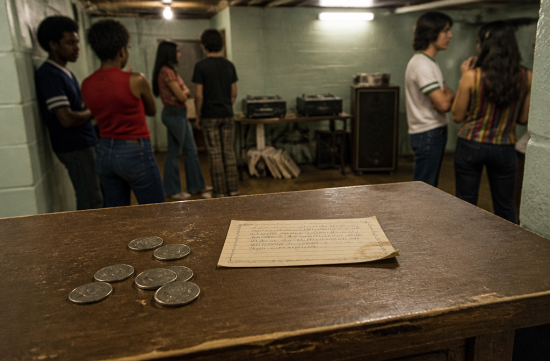
However, hip hop is completely different. It began with a neighborhood party held in the recreation room of an apartment building, and the entrance fee was just a few coins.
It was August 11, 1973, at 1520 Sedgwick Avenue in the Bronx. This date and address are almost always mentioned when talking about the birthday of hip hop.
The person who organized the party was a high school student named Cindy Campbell. Her goal was very practical: to raise money for back-to-school clothes for the new semester.
She handwrote invitations on index cards and distributed them. The entrance fee was 25 cents for girls and 50 cents for boys.
When asked why those prices, Cindy later explained in an interview that she based it on the cost of a soda and a pack of gum. After all, the kids only had spare change in their pockets.
I found this part amusing. Without conducting any market research, she perfectly matched the amount that customers could pay. Isn't this what pricing sense is all about?
The music was handled by her brother Clive Campbell, the very person we know as DJ Kool Herc.
Clive was born in Kingston, Jamaica, in 1955 and moved to the Bronx with his family at a young age. During high school, he worked out a lot, earning him the nickname Hercules from his friends, which eventually became Kool Herc.
What stands out to me is that a child from an immigrant family changed American pop culture entirely. This is something that doesn't feel foreign to first-generation immigrants like us.
What Herc did that day seemed simple at first glance. He realized that the most exciting part for people to dance to wasn't the entire song but the short break where only the drums remained.
So, he placed two copies of the same record on two turntables and alternated playing that short section. A few seconds of music turned into a dance party that lasted for minutes.
Herc called this method the Merry-Go-Round. It meant that the same section kept coming back like a carousel.
His friend Coke La Rock grabbed the microphone and added words over the beat. This scene is often referenced when discussing the roots of MCing and rapping today.
Of course, history doesn't just start on one specific day. There were similar parties and experiments happening throughout the Bronx around that time, and this date is best viewed as a symbolic reference point.
Details of the records vary slightly. Some testimonies recall different entrance fees for boys, but most sources report 25 cents and 50 cents.
Still, there's a reason this party is remembered as special. At that time, the Bronx was struggling with fires, vacant homes, and job issues, and there weren't many places for kids to play freely.
In such a neighborhood, two teenage siblings organized a party without government support or sponsorship. They gathered guests, collected money, and provided satisfaction through music.
I see this as a small entrepreneurial story before it becomes a cultural history. They identified demand, set prices, and offered a product that was different from others.
Some people describe hip hop solely as music of poverty and resistance. While that's not incorrect, I believe we should also consider the self-reliance and business sense that were present at its inception.
The handwritten invitation card from that first party later appeared at a Christie's auction. It has been introduced as the earliest existing one, so the value of that 25-cent card has changed over time.
The building at 1520 Sedgwick Avenue still stands today. Some sections of nearby Sedgwick Avenue have even been named Hip-Hop Boulevard.
In 2023, it marked 50 years since that party, leading to commemorative events held not only in New York but across the United States. A neighborhood apartment party has turned into a nationwide celebration half a century later.
On the banks of the Bronx Harlem River, the construction of the Universal Hip Hop Museum is also underway. The original plan was to coincide with the 50th anniversary, but it has been delayed, so if you're considering a visit, it's best to check the official site for opening updates.
If you find yourself in New York, I encourage you not just to see the glamorous Manhattan but to take a step toward the Bronx. Standing in front of an ordinary apartment building, you'll realize that history doesn't always start in grand places.
From this story, I learn two things. One is that even a small idea can grow significantly if it accurately identifies what customers want.
The other is that the unfamiliar perspective of a child from an immigrant family can lead to the creation of something new. The sound system culture brought from Jamaica blossomed in the Bronx.
Ultimately, the start of hip hop was a schoolgirl trying to earn money for clothes, a brother who loved records, and neighborhood kids with coins in their pockets. I believe this kind of beginning is much more American than any grand plan.
 OhRengee



 Community Cross |

 Conflite Teacher |

 SEVEN SEVEN |

 Korean Mom |
 novapixel |

 vale vale |
 Exciting FM Radio |


 Living in America and Writing Essays |

 zucchini |
 Anna Life |
 pet dog |
 toodin |
 rosed |
 DeArizona Blog |
 river9 |
 ollege Mom |
 Pronunciation Yo |
 nuvex11 |
 Living in Florida |
 axelon47 |
 lumbus |
 Texas Migration Story |
 Scade Studio |
 love ya |
 biscuit90 |
 chicpo |
 Helpful Life Stories |