
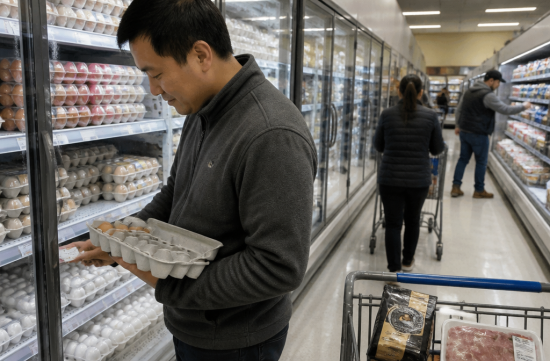
Last weekend, while grocery shopping and scanning my receipt, I paused at the egg section. It feels like just yesterday that I sighed every time I picked up a dozen eggs, but this time the price was surprisingly reasonable.
Wondering if it was just my imagination, I looked up the numbers. According to the Consumer Price Index data from the Bureau of Labor Statistics (BLS) released on October 14, it wasn't just my imagination.
As of September, the egg price index has dropped by 20.6% compared to a year ago. In contrast, the overall grocery index rose by 1.8% during the same period, making eggs the odd one out.
These days, I've been hearing phrases like "egg prices down 17%", but the official figure confirmed by the September index is 20.6%. Since different numbers can circulate based on varying periods or criteria, it's best not to jump to conclusions based on just one figure.
There are also numbers on the price tags. According to the average price data released by the BLS, a dozen Grade A eggs was $2.272 in September this year.
In September last year, the same dozen eggs cost $3.488. Back in March of last year, prices soared to $6.227, so compared to that time, it feels like we're in a completely different world now.
It's worth noting that the methods for calculating the price index and average prices differ, so the rates of decline won't match exactly. However, it's clear that both are trending downward.
So why did prices drop so much? The primary reason cited is the recovery of the laying hen population, which had decreased due to avian influenza.
The USDA Economic Research Service projected on September 25 that the average annual egg price this year will be 29.4% lower than last year. However, avian influenza often resurfaces in the fall and winter when migratory birds are active, so we shouldn't let our guard down completely.
What else has become cheaper besides eggs? I took a look at the September data item by item.
Cheese prices have dropped by 3.0% compared to a year ago. Ice cream prices also fell by 2.4%, giving us another excuse to enjoy ice cream while snuggled under a blanket on cold days.
Bacon prices decreased by 3.3%, and lunch meats dropped by 3.4%. Overall pork prices fell by 0.7%, while other pork cuts like ribs and roasts saw a decline of 3.9%.
Chicken prices decreased by 0.6%, and cooking oils also dropped by 0.8%. Sugar prices fell by 1.0%, which is good news for those planning to bake during the holiday season.
Milk prices rose by 2.3% compared to a year ago, but for just the month of September, they decreased by 2.0%. It may take another month or two to see if this trend continues.
On the flip side, there are definitely items that have increased in price. The one that hits me the hardest is coffee.
Coffee prices have risen by 7.1% over the past year. As someone who brews a cup every morning, I find myself wincing every time I check the price tag on a bag of beans.
Beef and veal prices increased by 3.5%, with ground beef rising by 5.4%. While the beef index dropped by 1.0% in September alone, it is still more expensive than it was a year ago.
Fresh fruits rose by 4.9%, and fish and seafood prices increased by 6.9%. Beverages like soda and juice also saw a 3.8% rise, which can add up in your grocery basket.
For those preparing for Thanksgiving, keep an eye on other poultry items that include turkey, which have increased by 8.4% compared to last year.
After seeing this, I felt it was time to adjust my shopping habits a bit. Nothing drastic, just a slight rearrangement of my menu order.
Now is definitely a good time to buy eggs. I could incorporate more egg-based dishes like steamed eggs, egg rolls, and scrambled eggs into my meals a few more times a week.
Another option is to swap out ground beef in stews or stir-fries for ground pork or chicken. Kimchi stew, for instance, pairs better with pork.
Brewing coffee at home is still much cheaper than buying it at a café. I tend to buy two bags of beans when they go on sale and store them in the freezer.
One thing to note is that these figures represent the national average for the entire U.S. Actual prices can vary significantly depending on where you live or which grocery store you visit.
That's why I always check the unit prices listed below the price tags. Comparing prices per ounce or per item helps me see if larger packages are truly cheaper or how much cheaper store brands are.
If you alternate between Korean markets and regular grocery stores, it might be helpful to pick a few frequently purchased items like eggs, tofu, and pork, and jot down the prices at both places. After a few weeks, you'll quickly get a sense of where to buy what.
Overall, prices haven't dropped across the board. The overall consumer price index for September rose by 3.7% compared to a year ago, and gasoline prices spiked significantly in just one month.
Still, it seems like there's a bit more breathing room within the grocery basket. If it were me, I'd stock up on eggs and pork this fall while only buying beef and coffee on sale days.
The weather has turned quite chilly. On the first snowy morning, I plan to make a warm bowl of egg soup and enjoy the view outside my window at a leisurely pace.
 Smart Yo


 SKy Face |

 gleeful |

 forevergee |

 mortrix |

 cherrydino |

 tooto |

 Iri Jori Missouri |


 metsoo |

 Investment Information News Update |

 pet dog |
 toodin |
 rosed |
 DeArizona Blog |
 river9 |
 ollege Mom |
 Pronunciation Yo |
 nuvex11 |
 Living in Florida |
 axelon47 |
 lumbus |
 Texas Migration Story |
 Scade Studio |
 love ya |
 biscuit90 |
 chicpo |
 Helpful Life Stories |
 Kitchen Ideas |
 Diana Blues |
 Agenda Center |