
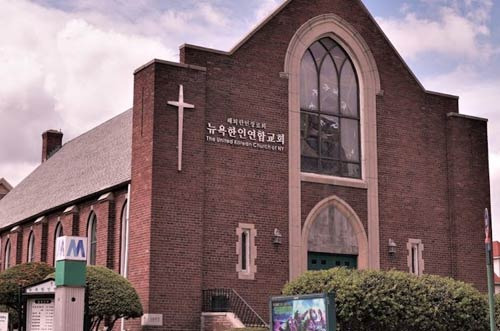
For the first Korean settlers in Brooklyn, the church was not just a place to attend services on Sundays.
Especially for the first generation of immigrants who were not familiar with English and found it difficult to obtain information about life in America, the church was akin to a combination of a Korean community site, a KakaoTalk group chat, and a resource center.
"Where is there a Korean grocery store?" "Do you know any doctors who speak Korean?" "I need to find an apartment; what neighborhoods are good?"
When these questions were asked at church, someone usually had the answers. Over the years, churches where Korean believers gathered have established themselves in Brooklyn. Various Korean churches and faith communities, including the Brooklyn Korean Church, have created spaces for Koreans to meet through Sunday Korean services, Bible studies, prayer meetings, and youth programs.
For earlier immigrants, connections made through the church were quite significant.
Even if someone arrived in New York without knowing anyone, after attending church a few times, they could get job referrals and find real estate information when looking for a home. Information about lawyers, accountants, and hospitals was also shared naturally. When someone moved, church members would help, and if someone was sick, food would be brought to them.
At a time when it wasn't easy to find information with just a few internet searches, the church played a much larger role.
One interesting aspect of Brooklyn is the diversity of its residents.
Areas like Sunset Park have many Chinese and other Asian residents, as well as Hispanic residents, leading to a varied church landscape. Korean churches sometimes extend beyond just gathering Koreans, engaging in community service or interacting with residents from other cultural backgrounds.
As generations change, the church's role is also evolving.
While Korean services were important for the first generation of immigrants, the 1.5 and 2nd generation, who were born in the U.S. or immigrated at a young age, find English much more comfortable. Therefore, some Korean churches operate separate English services and English Ministries (EM).
It is now quite common for parents to attend Korean services while their children attend English services.
Of course, for the younger generation today, the church is no longer the absolute source of life information it once was. People search for real estate online and look for restaurants on their phones. The Korean community has also largely moved online.
Still, for Koreans who have just moved to Brooklyn, a Korean church can be a solid connection.
This is especially true for families with children or those new to life in America who need people to converse with in Korean.
Ultimately, the history of Korean churches in Brooklyn closely resembles the history of Korean immigration.
Initially, they gathered to support each other in a foreign land, and over time, their children grew into English-speaking generations. Now, they are gradually transforming from spaces solely for Koreans to churches that engage with the local community.
While the building is a church, the activities that take place within it have made it more than just a place of worship.
For countless Koreans who have lived in Brooklyn, the church has been like a small hometown that offered a helping hand when they first started their lives in America.
 DrJart
 VelvetSky82



 Valley Hong |

 Mr Oh |
 ollege Mom |

 Helpful Life Stories |

 prixon74 |

 lightyear |
 newyorker 101 |

 Franco Family |
 Living in America and Writing Essays |
 Giant Squid and Sweet Potato Soup |
 The Gelaton |
 Twist Kim |
 berlon93 |
 Physical Laws and Science |
 good thinking |
 Solo Yolo |
 laro90 |
 San Diego TOP Idol |
 Round and Round Children's Song Kingdom |
 American Golf Course Travelogue |
 MEDBIO American Doctor Blog |
 Hot Seat Driver |
 bryvexi |
 koala organic farm |
 riverstone |
 My Antonio |
 California Information News |