
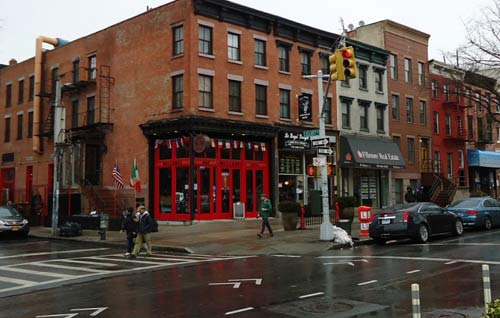
Brooklyn is a city with a history of immigration spanning hundreds of years. Starting in the late 19th century, immigrants from Eastern Europe, Italy, and Ireland began to arrive, and by the mid-20th century, large numbers of Puerto Rican and Caribbean immigrants settled here. Today, a significant portion of Brooklyn's population is foreign-born or from the first or second generation of immigrants. Thanks to this background, Brooklyn offers a relatively easy environment for immigrants to adapt, but it also presents unique challenges associated with immigrant life. Here, I will candidly outline the pros and cons of living in Brooklyn from an immigrant's perspective.
The first advantage is diversity and inclusivity. In Brooklyn, you can meet people from almost every country in the world. Hearing multiple languages on the subway is a common occurrence, and there is relatively little discrimination against immigrant communities. New York State and New York City are among the regions with strong immigrant protection policies, and there are many nonprofit organizations and legal services that support immigrant rights. The second advantage is the public transportation infrastructure. Thanks to a public transit system that allows for daily life without a car, you can live without the costs of a driver's license or purchasing a vehicle. The third advantage is job opportunities. There are many jobs available in various fields such as healthcare, food service, construction, IT, and education throughout Brooklyn and New York City. Even if your English isn't perfect, you can often find your first job within your language community.
The first disadvantage is the high cost of living. New York City is one of the most expensive cities in the U.S., and Brooklyn is no exception. Housing costs, food expenses, and healthcare are all above the national average, and especially during the initial settlement phase, coming up with the apartment security deposit (usually one to two months' rent) along with the first and last month's rent can be a significant burden. The second disadvantage is the difficulty in finding housing. Due to a shortage of housing in Brooklyn, competition is fierce, and landlords often require credit history and proof of income. In the early stages of immigration, it can be challenging to find housing without a credit history, and you may be asked for a guarantor or a larger security deposit.
The third disadvantage is cultural and language barriers. While Brooklyn has various immigrant communities that reduce cultural shock, many immigrants often feel the limitations of their English skills when dealing with official administrative processes, visiting healthcare facilities, or communicating about their children's schooling. New York City provides interpretation services in several languages, including Korean, but it can be difficult to receive help in all everyday situations. The fourth issue is safety. Although Brooklyn is generally experiencing a decline in crime rates, there are significant differences in safety levels between neighborhoods. Some areas, such as East New York, Brownsville, and Cypress Hills, have relatively high crime rates, and this should be carefully considered when choosing a place to live.
As an immigrant, one of the most helpful things in living in Brooklyn is to actively utilize community networks. Through Korean community centers, religious organizations, and online communities, you can receive practical assistance with settlement information, job opportunities, child education, and connections to healthcare and legal services. The NYC Mayor's Office of Immigrant Affairs (MOIA) offers various support programs and information for immigrants, and you can also receive guidance on city services in Korean through the NYC 311 phone service. Every city has its challenges during the initial stages of immigration, but Brooklyn is a place where there are many fellow immigrants to help navigate those difficulties together.
 CocoHello
 BellGrayCall
 BasementKing


 Folding Instructions |
 yentra |
 Cali M Law Group |
 quanta7 |
 Helpful Life Stories |
 Franco Family |
 Starbucks Reserve Roastery Closure |
 newyorker 101 |
 Softember |
 Encyclopedia of New York and Surrounding Areas |
  uplifted |
  same same life |
  USA Hyundai Kia |
  morvex37 |
  BOL SA RAM |
  TOUCHE NEWS |
  Small Business Information USA |
  draxen |
  gallery |
  milkyotter |
  Zoom Zoom Zoom |
  Minnesota Lakes and Clouds |
  noraro |
  tervox95 |
  vale vale |
  Golden life |
  andrew park |
  Peter Pan Pet |