

Every time I hear that the U.S. economy is doing well, I can't help but tilt my head in confusion.
Talk of the Dow Jones, S&P, stock market performance, and Nasdaq earnings seems distant from the reality that ordinary workers are increasingly struggling.
Living in Chicago, I consider myself politically moderate. I don't blindly support either the Republican or Democratic parties.
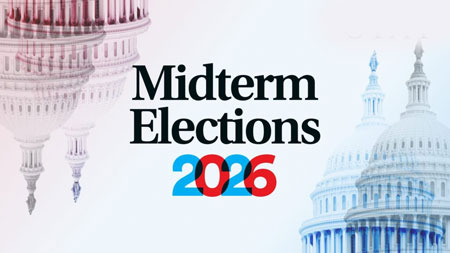
However, this November 3rd midterm election feels different. It seems that the middle class in America is genuinely angry.
The most noticeable issue is gas prices. As of October 26, the average price of gasoline in the U.S. is $4.29 per gallon.
This is reportedly about a 43% increase compared to before the Iran war. It's frustrating to see such issues arise.
For someone who fills up twice a week due to commuting, the burden is significant.
But gas prices are just the most visible number reflecting the economic pain experienced by the middle class.
Grocery prices have been rising for several years, and auto and home insurance premiums are also burdensome.
Those looking to buy a home are blocked by skyrocketing mortgage rates, while homeowners worry about property taxes and maintenance costs.
In Chicago, winter heating costs cannot be ignored. When electricity and gas bills rise, the term "middle class" loses its meaning.
Moreover, salaries are not increasing enough to keep up with living expenses.
Recently, the University of Michigan's Consumer Sentiment Index dropped to 48.0. This is surprising as it marks the second-lowest level in the survey's history.
This indicates that people are not just feeling down; they are viewing the future economic situation quite pessimistically.
What's even more interesting is the movement among moderate voters.
Recent polls show that the Democratic Party is leading in the House elections over the Republican Party.
However, it's hard to interpret this as enthusiastic support for the Democrats. I also have many reservations about the Democratic Party. Haha.
CBS polls indicate that voters do not believe either party can effectively solve economic issues.
I share a similar sentiment.
President Trump promised to revive the economy. However, amidst the noise surrounding tariffs, the Iran war, and rising energy prices, the burden of living expenses remains.
Will gas prices suddenly drop and grocery prices decrease if the Democrats take power?
I find that hard to believe.
The president or Congress pressing a button won't lower international oil prices or inflation.
However, what's crucial in this election is that when people feel their lives are worsening, they want to hold someone accountable.
In a poll released at the end of October, 38% of voters reported that their household finances have worsened over the past year.
Only 15% said their situation has improved.
This gives a sense of how hollow politicians' claims that the economy is doing well must sound.
Of course, not all middle-class individuals will make the same choice.
Among Republican supporters, some maintain their support despite high prices, while others distrust Democratic policies more.
Conversely, there are moderates who may turn away from the Republican Party due to the burden of living expenses.
I believe this election will likely be less about supporting a particular party and more about judging whether people can continue to accept the current situation.
For the middle class, the most frightening thing is not becoming poor immediately.
It's the anxiety that despite working hard, paying taxes, and saving, they might be worse off in five or ten years.
The fact that gas prices have surpassed $4 per gallon is far less serious than that anxiety.
The American middle class has not collapsed yet.
However, the belief that hard work will lead to a better life is significantly shaken.
What results that anxiety will manifest in at the polls on November 3rd remains to be seen.
 Dynamite
 foxvalleydreamer1989




 My Town My Way Blog |
 Arizona AZ Cowboy |
 Valley Hong |
 Mr Oh |
 ollege Mom |
 Rice Shop Uncle BLOG |

 Illinois Mom |

 American General Knowledge Expert |
 Life in the US |
 Electricity Field Certification Collector |
 Only Dentalbay |
 postcard |
 Buckwheat Muktudari Notebook |
 Kitchen Ideas |
 Jellia Angel |
 Victory 1988 |
 ASURA |
 hot chocolate |
 rapids |
 Softember |
 mykiwi blog |
 Maria Mom |
 Watch for possible danger |
 northpeak |
 Far East Movement |
 Light of the World |
 mariashin |
 lavender |
 Bridgo |