
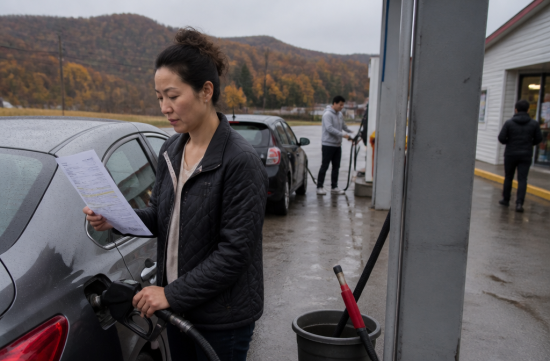
These days, I often hear people around me sighing after receiving their car insurance renewal notices. Last year, it seemed like rates might go down, but this year, the trend has reversed.
Let's start with the numbers. According to Insurify's mid-year report released in August, West Virginia was noted as a state where insurance rates increased by 8% compared to the previous year.
It ranked alongside Kentucky, which also saw an 8% increase, and Connecticut, which topped the list with a 15% rise. Honestly, I didn't expect this quiet mountain state to be on that list.
What's more concerning is the outlook for the second half of the year. The same report predicts that West Virginia's insurance premiums will rise by another 3% by the end of the year, marking the second-largest increase after Connecticut.
However, this is just one company's estimate. It's important to note that my actual insurance premium can vary significantly based on the company, type of vehicle, and driving record.
So, how much are we currently paying? According to Experian's data from May, the average in West Virginia is $2,119 annually, which breaks down to about $177 per month.
For full coverage, it was $2,721 annually. Adding just 3% to that would mean an increase of over $80 a year, which is not a trivial amount.
You might be wondering why rates are rising. The most commonly cited reason in the industry is the cost of repairs per accident. Analysis shows that vehicle maintenance and repair costs have risen by 45% over the past five years.
Today's cars, loaded with sensors and cameras, have repair costs that differ significantly from the past, even for something as simple as replacing a bumper. Insurance companies are reflecting this in their rates on a state-by-state basis.
Let's clarify one basic point. In West Virginia, the mandatory liability insurance covers $25,000 per person for bodily injury, $50,000 per accident, and $25,000 for property damage.
Coverage for uninsured motorists is also mandatory at the same limits. This means that reducing coverage below these levels due to cost concerns is not an option.
Ultimately, the only area where you can save is through discounts. In college towns, one discount that is particularly valuable is the student discount, so I've focused on that.
The first is the good student discount, commonly referred to as the good student discount. According to Bankrate, this typically reduces premiums by about 10% to 25%.
The requirements vary slightly by company, but generally, you must be a full-time student with a GPA of 3.0 or higher. There are also age limits, usually ending around 23 or 25 years old.
When applying, you'll often need to submit a copy of your transcript or a grade verification letter issued by your school. Some companies require you to resubmit this each semester, so keep that in mind during renewal.
The second is the distant student discount. This applies when your child attends school far from home and does not take their car with them.
According to Progressive, you must be under 22 years old, the school must be more than 100 miles from home, and there should be no car at the school.
WVU has many students from other states. If your name is on your parents' insurance but you left your car at home, it's worth checking this discount first.
On the other hand, if a student brings their car to Morgantown, the situation changes. You may need to inform the insurance company of the vehicle storage address at the school, which could lead to a recalculation of the rates.
If you delay this out of inconvenience, it could become an issue later if an accident occurs. I believe it's just as important to report accurately as it is to take advantage of discounts.
The third is the driver education completion discount. Each company recognizes different educational programs, so it's best to ask in advance about what they accept.
Discounts can sometimes stack, but companies may also impose limits on overlapping discounts. Therefore, when getting quotes, it's a good idea to request a breakdown of which discounts have been applied.
Even if you're not a student, there are discounts to consider. Bundling with home insurance, discounts for tracking driving habits through apps, and discounts for paying the full year upfront are all options.
If you have an older car, it's worth considering whether to maintain collision and comprehensive coverage. If the annual insurance premium feels higher than the car's market value, it might be time for a review.
There's also the option of raising your deductible. However, keep in mind that if an accident occurs, you'll have to pay that amount out of pocket first, so it's safest to consider this only if you have some emergency funds available.
And the most reliable method is still to compare quotes. Even under the same conditions, there can be significant differences between companies in this market. The varying statistics in average rates are ultimately due to this.
I would aim to get quotes from at least three companies about a month before renewal. I would also check the list of discounts I'm currently receiving one by one.
Surprisingly, there are often discounts that you might be eligible for that are missing. Insurance companies don't always inform you first, so you need to ask to ensure you receive them.
The overall trend of rising insurance rates is something individuals cannot control. However, ensuring you take advantage of all available discounts is something you can definitely manage.
In areas with a lot of mountain driving and long winters, I believe it's best to maintain coverage while preventing unnecessary expenses. Take a close look at your renewal notice this year.
 LiveBold







 Way to easy |
 holy cow |

 Soy Angelino |
 SKy Face |

 gleeful |

 Gomex Korea |




 Market K |

 Oz's Wow Company |
 mariashin |
 lavender |
 Bridgo |
 Tamfa Fan |
 Sunny Sunday |
 mini hometown |
 torvia |
 Chichiki Chicago Train |
 Univ Student |
 See It |
 Con Cheese |
 softmoony |
 Breaking Bad Drama |
 New York Queens Native Blog |
 Shinbaram Dr. Blog |
 vivavida |
 limestone |
 oster |
 daddyyo |