
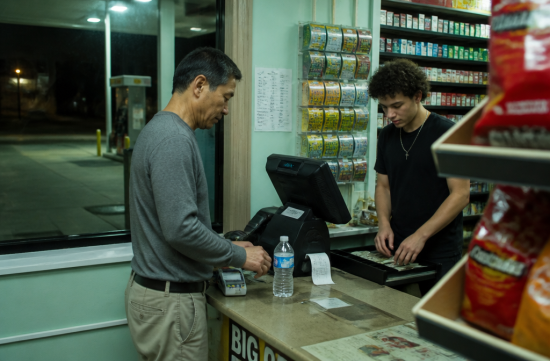
When I walk around the neighborhood after work, I often see the lights on at a gas station convenience store just before closing time. Watching the young cashier organizing the end-of-day tasks made me wonder how much they earn per hour.
Mississippi has no state minimum wage law at all. In the U.S., only five states lack such a law: Alabama, Louisiana, South Carolina, Tennessee, and Mississippi.
However, that doesn't mean there's no floor at all. For businesses covered by the federal Fair Labor Standards Act (FLSA), the federal minimum wage of $7.25 per hour applies.
This $7.25 has not increased since July 24, 2009. It's surprising to see that it has remained the same for 17 years as of 2026.
Counties cannot set their own minimum wage either. State law (Mississippi Code 17-1-51) prohibits local governments from establishing separate minimum wage regulations.
For jobs that receive tips, the calculation is a bit different. Employers can lower the cash wage to as low as $2.13 per hour, but if the total amount including tips falls below $7.25 per hour, they must make up the difference.
To use this tip credit, employers must inform employees of this in advance. If you're starting a job in a restaurant, it's a good idea to ask about this on your first day.
Overtime rules also follow federal law. Non-exempt employees must be paid at least 1.5 times their regular hourly rate for hours worked over 40 in a week.
Overtime pay for tipped employees is calculated based on $7.25, not $2.13. Many businesses mistakenly confuse this, so it's worth checking your pay stub.
If you've heard that there's no overtime because you're on a salary, you should verify the amount. According to federal standards, if your weekly salary is below $684 or annual salary is below $35,568, you are generally eligible for overtime pay, regardless of your position.
A regulation intended to significantly raise this threshold in 2024 was invalidated by a Texas federal court in November of that year. The Department of Labor officially rescinded that regulation in May 2026, reverting to the 2019 standards.
So, in a place where the legal minimum is so low, what should be the basis for hourly wage negotiations? In my opinion, it should be the market rate for the same job, not the legal minimum.
According to O*NET, which compiles data from the Bureau of Labor Statistics (BLS), the average hourly wage for truck drivers in Mississippi is $24.92, lower than the national average of $28.19.
For nursing assistants, the Mississippi average is $15.15, while the national average is $20.32. Plumbers earn an average of $26.67 in Mississippi compared to $30.67 nationwide.
These numbers reveal two things: the actual market wages are significantly above $7.25, and there is a clear difference from the national averages.
Therefore, if you only present the national average during negotiations, it may lack persuasive power. It's much more realistic to discuss the Mississippi average along with your experience, certifications, and work schedule.
If you're working nights or weekends, you should definitely highlight that. There's no legal requirement for night shift differentials, so if you don't set that as a condition from the start, it may be hard to get it later.
One more thing to keep in mind: Mississippi implemented an equal pay law prohibiting gender wage discrimination on July 1, 2022, making it the last state in the U.S. to enact such a law.
This law recognizes previous salary history and whether an employee attempted to negotiate as valid reasons for wage differences. It does not prevent employers from asking applicants about their previous salaries.
There's also no requirement to disclose salary ranges. Ultimately, it's fair to say that if you don't speak up, you may end up at a disadvantage.
That's why I advise against bringing up your previous salary first. If asked, it's better to state the range you expect for this position.
It's advisable to prepare your desired hourly wage as a range rather than a single number. The lower end should be something you're willing to accept to avoid regrets later.
If your hourly wage isn't increasing, consider asking about other conditions. These could include guaranteed hours, health insurance contributions, paid leave, or the timing of your first raise.
Make sure to document any agreements in writing. Even a line in an offer letter or a text message can serve as evidence if things change later.
If you feel your pay is below the minimum wage or overtime standards, it's better to contact the federal Wage and Hour Division rather than state agencies, as there are no separate state-level systems.
For those working in Korean businesses, the same standards apply. Often, people settle for less because they know each other, but it's better to clarify initial conditions to maintain good relationships.
The numbers set by law are just a floor. I hope you remember that your hourly wage is determined by market data and the evidence you bring to the table.
Tonight, I slowed my pace as I passed by that convenience store again. It's a quiet night, but I hope you don't let negotiations pass quietly.
 WinInTheEnd


 limestone |
 loran |

 DeArizona Blog |

 Swift Falcon |
 Tonky |

 donutfield |

 Good World Good Thoughts |


 frostingline |

 As you know, Mississippi |

 Deep South Mississippi |
 ASURA |
 rapids |
 Softember |
 mykiwi blog |
 Maria Mom |
 Watch for possible danger |
 northpeak |
 Far East Movement |
 Light of the World |
 mariashin |
 lavender |
 Bridgo |
 Tamfa Fan |
 Sunny Sunday |
 mini hometown |
 torvia |
 Chichiki Chicago Train |
 Univ Student |
 See It |
 Con Cheese |