
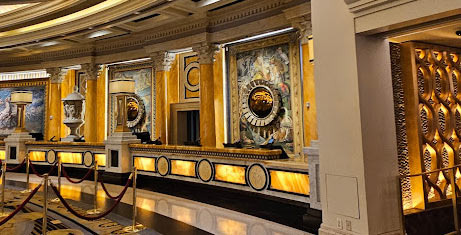
Las Vegas is now known as a symbol of glamorous casinos and entertainment, but its history began quite modestly. Originally, this area was in the middle of the desert, and Spanish explorers named it "Las Vegas" after discovering a water-rich oasis. In Spanish, it means "meadows".
In 1905, Las Vegas began to develop as a railroad station. At that time, it was an important transportation hub connecting the West and the East. However, the city truly came to life in the 1930s when the construction of the Hoover Dam began. This massive project attracted many workers who needed places to rest and enjoy themselves. From this point on, Las Vegas began to transform into a city full of entertainment.
In the 1940s, casinos and hotels started to emerge one by one. Notably, the El Cortez Hotel opened in 1941, followed by entrepreneurs establishing large casinos and resorts centered around the Las Vegas Strip. During this time, Las Vegas earned the nickname "the adult playground." However, the involvement of the mafia in the casino industry also revealed a darker side of the city.
As time passed, the influence of the mafia diminished, and Las Vegas grew into an increasingly glamorous city. In the 1950s and 60s, superstars like Elvis Presley performed here, solidifying its status as the center of entertainment.
Starting in the 1990s, Las Vegas underwent a transformation to attract family travelers by introducing large theme hotels and shows. The massive resorts we see today, such as Bellagio, Mirage, and Venetian, were built during this period.
Today, Las Vegas has become a global tourist destination where visitors can enjoy not only gambling but also performances, food, shopping, and even sports. Las Vegas is the economic center of Nevada, playing a crucial role in the state's revenue and job creation, particularly in the tourism and entertainment industries.
The Nevada economy heavily relies on the growth of Las Vegas, and the city can be seen as the driving force behind the state's overall economy. In fact, Nevada has no state income tax and relies significantly on sales tax and casino revenue. It's impressive that taxes from the casino and tourism industries account for over 50% of state government revenue.
The downside is that during economic downturns, Las Vegas and the state government can face difficulties.







 neroyo |
 Say IT Now |
 celion78 |
 US Legal Consultation on Trials |
 zanero |
  Korean Mom |
  My NYC |
  moo moo |
  Mr Oh |
  forevergee |
  festival |
  manchester |
  constant |
  Leapfrog Move |
  vibranto |
  Tora Tora |
  yellowbutter |
  Dolly |
  US Embassy |
  NYC saladbar |
  Finding Superfoods |
  lightyear |
  song bang |
  vexomo |
  Indiana Jones |