
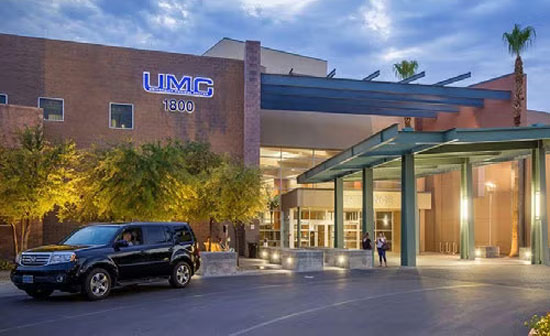
Las Vegas has long been criticized for its lack of medical infrastructure, despite being a rapidly growing city.
This is due to the lag in the number of doctors and the expansion of hospital facilities compared to the population growth rate.
However, over the past decade, Las Vegas has rapidly improved its healthcare environment through the expansion of large hospital systems and the establishment of the UNLV School of Medicine. According to the U.S. physician supply index, Las Vegas still has fewer doctors than the national average, but overall healthcare accessibility is steadily improving.
When discussing medical infrastructure in Las Vegas, one cannot overlook the University Medical Center, or UMC.
This hospital is not only large in scale but also plays a central role in the city's entire emergency medical system. As a public hospital operated directly by Clark County, it accepts a wide range of patients from various backgrounds.
UMC is particularly important because it is the only hospital in Las Vegas certified as a Level 1 trauma center. This means that it can provide the highest level of care in the most critical situations, such as traffic accidents, gunshot wounds, and major incidents. When an emergency occurs, this is the first hospital that comes to mind without having to think about "where to go."
Another notable feature is that it is an educational hospital.
Linked with the UNLV School of Medicine, the latest medical technologies and research are continuously reflected in its practices. Therefore, patients can receive specialized care not only for emergency treatments but also in fields like cancer treatment, cardiology, and neuroscience. In fact, the reason many critically ill patients gather in the area is due to this comprehensive care system.
Its location near downtown also makes it relatively accessible.
However, due to the nature of public hospitals, the number of patients can be high, leading to longer wait times. Nevertheless, it plays a crucial role in the community by offering relatively low costs and accommodating patients without insurance. Ultimately, if you are considering stable healthcare services in Las Vegas, UMC is not just an option but a fundamental part of the infrastructure.
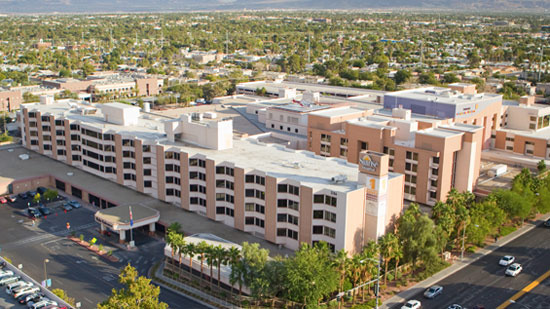
The second hospital to note is Sunrise Hospital and Medical Center, which is part of the Valley Health System, the parent organization of the Stein Medical Institute. Sunrise Hospital is one of the largest private hospitals in Las Vegas, providing specialized services in cardiology, pediatrics, obstetrics, and oncology.
In particular, Sunrise Children's Hospital serves as a key institution for pediatric care in the Las Vegas area, playing a major role in pediatric heart surgeries in Nevada. According to the Ratings Report, a U.S. hospital quality assessment organization, Sunrise Hospital is consistently ranked among the top hospitals in Nevada.
The third hospital to introduce is Desert Springs Hospital Medical Center. Located in the eastern part of the Strip, Desert Springs Hospital is a comprehensive hospital that offers specialized medical services in cardiology, orthopedics, and neuroscience. This hospital has received several commendations for its performance in operating heart clinics and stroke centers in Las Vegas, serving as a major healthcare hub for residents in the eastern and central parts of Las Vegas.
Hospitals under the Valley Health System are collectively enhancing the efficiency of medical services through reduced emergency response times and the integration of electronic medical record systems.
A significant turning point in Las Vegas's healthcare environment was the establishment of the UNLV School of Medicine (Kirk Kerkorian School of Medicine at UNLV) in 2017. Nevada has long been one of the states with the fewest doctors per capita in the U.S., and the UNLV School of Medicine was founded to address this issue.
With the first graduates in 2022, the UNLV School of Medicine is expected to contribute to solving the local physician supply shortage. So far, dozens of graduates have been pursuing residency and specialty training at hospitals and clinics in the Las Vegas area.
In addition to comprehensive hospitals, various specialized clinics and outpatient centers are being expanded in Las Vegas. Notably, Intermountain Healthcare has entered Las Vegas and operates several outpatient clinics, improving primary healthcare access for Las Vegas residents.
There are also some clinics providing Korean language services for the Korean community, and information about Korean medical resources in Las Vegas can be found through community organizations.
When utilizing medical services in Las Vegas, it is important to check the type of insurance and the hospital network. Medical costs in Las Vegas are at the national average level, and emergency room visits can be quite expensive.
To improve local healthcare accessibility, Clark County and the Nevada state government are continuously investing budgets in expanding local medical facilities, and the medical infrastructure in Las Vegas is expected to grow even further in the future.
 ThirstyShin
 RemiCon209
 NGTelecom
 SodaQueen







 LIZ Legal Information Blog |
 Karina's Blog |
 Jimbeam 88 |
 Taco Bell Candy Note Blog |
 Splendid Mission |
 vegas mom |
 Anova US Beauty Information |
 US Legal Consultation on Trials |

 celion78 |
  beerdreamer |
  Kims Spring |
  White bunny |
  Kansas City Representative Singer |
  shadow 007 |
  sun walker |
  Choco Choco Star |
  midnight blue |
  honeypot |
  summer |
  adventure77 |
  flexible |
  Shintongbangtong Shin Naerin James Park |
  truepixel |
  Kathy's Blog |
  Hae Naem |
  quatspace |
  Marisol |
  Glassroom |
  Granola |