

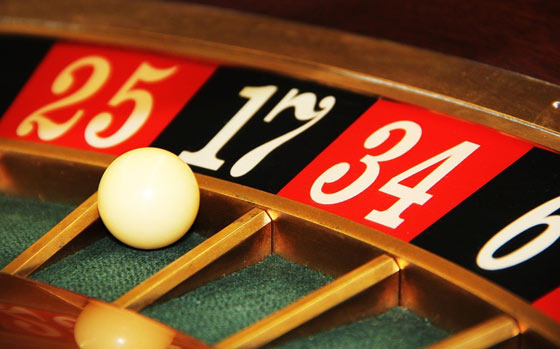
People who get addicted to gambling, especially those who try roulette for the first time at a casino, must have thought about this at least once.
"Isn't roulette a game you can win if you just calculate the probabilities well?"
"If I play well today, can't I walk away with some winnings?"
"If I use the Martingale strategy, I will eventually win, right?"
But the results are generally similar. You win a little at first, then gradually lose, and end up losing everything, haha.
And when the next vacation comes, you find yourself sitting in the same spot again. Why is that?
On the surface, roulette seems like a simple probability game.
Red or black, odd or even.
Isn't it exactly half and half? This makes it easy to think the probability is almost 50%.
But the reality is different. Roulette has the numbers '0' or '00' included.
In other words, in addition to the numbers 1 to 36, there are exceptions like '0' or '00'
which subtly change the overall probabilities.
In European roulette (which has only the number 0), the house edge is about 2.7%,
while in American roulette (which has both 0 and 00), it is 5.26%.
This means that every time the wheel spins, 2.7% to 5.26% of the amount you bet goes to the casino.
This is a figure that statistically emerges over thousands or tens of thousands of attempts.
Many people try the Martingale strategy claiming it's a "foolproof winning strategy."
For example: Bet $10 initially → if you lose, bet $20 → if you lose again, bet $40...
Ultimately, if you win just once, you recover your losses and make a $10 profit.
In theory, this sounds correct, but the reality is different. Capital is not infinite and for instance, if you lose 7 times in a row, you need a total of $1,270 (10 → 20 → 40 → 80 → 160 → 320 → 640). If you lose just one more time, you have to bet $1,280, and your funds run out.
And crucially, there are betting limits. Casinos are not foolish. They set table betting limits to make Martingale impossible. Usually, if you exceed 7 or 8 steps in one direction, you hit the maximum betting limit and can no longer double your bet. As a result, all strategies are rendered ineffective after a long losing streak.
"What if you could make money from gambling?"
Why do casino owners provide us with gaming opportunities?
The answer is simple.
They have designed the system so that customers can never make money.
Probabilities, rules, structures, psychology. Everything is designed to favor the house.
Casinos are businesses that reliably earn profits from customers through games.
If there is someone who can truly "make a profit from roulette in the long run," they should not be sitting at the table but running a 'business' against the casino with their own system.
Have you ever seen such a person? No.
If there were... would casinos keep that game running?
They would immediately change the rules or eliminate the game.
Roulette is not about luck; it is about structure.
Many people approach it with 'luck' and 'psychological warfare', but casinos make money through 'statistics' and 'systems'.
You can win once or twice. But you cannot win consistently.
It is designed that way structurally.
Ultimately, gambling is a structure that gradually erodes your life with the temptation of "just one more time".
Even if you are winning right now, that is just riding a wave for a moment, and eventually, you will be swallowed by the current that pulls you down.
That is why you lose when you play roulette.
In the end, gambling is a game you can never win.







 Korean Mom |
 novapixel |
 Peter Pan Pet |
 horse |
 Sunset Oregon |
 neroyo |
 Folding Instructions |
 Say IT Now |
 celion78 |
 Tonky |
  viroma |
  cookie |
  Live and that's it |
  Alright Twain |
  eatontown blog |
  HAWAII Korean Church News |
  Amore |
  linex |
  Balancework |
  laro90 |
  MEDBIO American Doctor Blog |
  SWAT TEAM BLK |
  DREAM BIG |
  frostbite |
  330 Forever My Love |
  El Dorado |
  dralix58 |
  Gorama Round |
  Skydiving |