
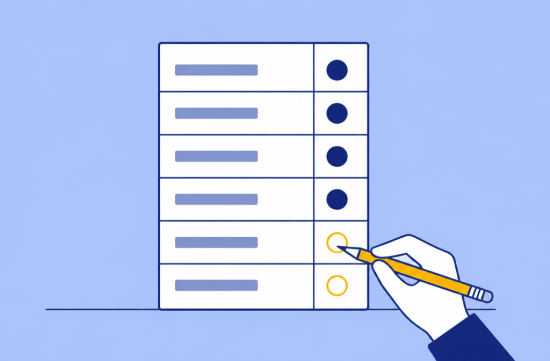
These days, when I hear from parents who have just received their first report cards of the semester, the questions are almost the same. They ask, "Is this good if there are no A's?"
A friend brought a report card from a relative's child who moved from another state, and it had numbers like 3 and 2 listed for each subject. If you think in Korean terms, a score of 3 might seem disappointing as it's just average.
However, on a standards-based report card, a 3 usually means "met grade-level expectations." In other words, it's a passing score. Today, I will explain how to read this numerical report card and what grading system our Prince George's County public schools actually use.
First, let's look at the basic structure of the 1-4 grading system. The wording may vary slightly by district, but the overall framework is similar.
A 4 indicates a level above grade expectations, while a 3 indicates meeting the expectations. A 2 means the student is progressing toward the expectations, and a 1 is often seen as needing significant help.
The key point is that these numbers are not a comparison with classmates. They are a way to check whether the child can independently meet each achievement standard.
Therefore, receiving a 4 is more challenging than you might think. At the beginning of the semester, there may be content on the standards that hasn't been taught yet, so it's common to see a 2 in the first semester.
So, what about our county? I looked up the PGCPS elementary grading regulation, Administrative Procedure 5121.1.
To sum it up, PGCPS elementary schools do not use the 1-4 numerical system. Instead, kindergarten and first grade use standards-based codes represented by letters.
PR stands for Proficient, meaning the student can do it independently, corresponding to 90-100%. IP stands for In Process, indicating a consistent level of achievement, at 80-89%.
EM stands for Emerging, meaning the student can do it with help, corresponding to 70-79%. ND stands for Needs Development, indicating the student is not yet able to do it, corresponding to 50-69%.
From second to fifth grade, the grading system changes to the familiar letter grades from A to E. An A is 90-100%, B is 80-89%, C is 70-79%, D is 60-69%, and anything below 60% is an E, which is a failing grade.
This means that if you moved from another district, you might be used to a numerical report card, but here you will see letters, and then in second grade, you will see the alphabet. Honestly, I was a bit confused at first too.
In fact, the debate over whether to use numbers or letters is not unfamiliar in Maryland. The neighboring Montgomery County switched to the ES, P, I, N codes for elementary grades starting in the 2013-2014 school year.
However, due to ongoing confusion among parents, they reverted most elementary grades back to the traditional grading system in 2017. It was a U-turn after four years.
Those in favor argue that it clearly shows what the child can and cannot do. Those against point out that it makes it difficult for parents to quickly understand the level.
Both sides have valid points. However, from a data perspective, I believe that for younger grades, breaking it down by item is more useful.
So, when you receive the report card, where should you look first? First, check the detailed criteria line below the total score next to each subject.
In math, for example, addition and subtraction might be PR, but word problems could be EM. That's where you can help at home.
Second, check the reading level indicator separately. PGCPS indicates reading levels as AB (Above Grade Level), OG (On Grade Level), and BL (Below Grade Level).
Third, pay attention to the Social Skills and Work Habits sections. These items do not factor into GPA or Honor Roll calculations, but they reveal how the teacher perceives the child most honestly.
Fourth, report cards are issued once per quarter, four times a year. Additionally, an interim progress report comes out midway through the quarter, so don't miss that.
If you have a child who is still learning English, there's one more thing to note. According to regulations, English Language Learner students cannot receive failing grades solely due to their English proficiency.
Finally, the report card format and codes vary by district and grade level, and regulations may change. If you're confused, checking the grading guidelines on the school website or directly asking the homeroom teacher is the most accurate way to get information.
During conferences, instead of asking "What score did they get?" ask, "What can we do at home to help them achieve a PR in this standard?" Teachers appreciate these kinds of questions much more.
If it were me, when I receive the report card, I would highlight the two lowest items, whether they are letters, codes, or numbers. Comparing how those two lines change in the next quarter is how I believe you should effectively use the report card.
 NoManners212
 HoneyLetsPlay




 rissa |

 Gomo Nim |

 lattepop |

 Well Done Sir |

 butter 90 |

 maryland park |

 strawberry |


 macaronpop |

 milkyotter |
 sun walker |
 Hawaii Tourist Information |
 savannah choi |
 glimmer |
 Hot Seat Driver |
 Thou Thou |
 Supplemental Security Income (SSI) Information |
 Breaking Bad Drama |
 San Jose Pop |
 Gook Rule |
 UCLA Captain |
 Asparagus Blog |
 US Regional Information Local News |
 Joseon Dynasty Seal Enthusiasts |
 zestorbit |
 Lemon Kim |
 Noodle Noodle |
 blueman |
 Alabama Bang |