
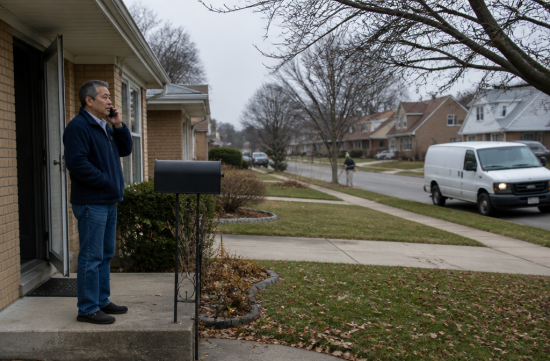
Last month, I scheduled a boiler inspection, but the time given by the company was from 8 AM to 5 PM. I ended up taking a day off, and the technician arrived after 4:30 PM.
Many of you might have had a similar experience. Whether it's for cable installation or plumbing repairs, someone needs to be home to let the technician in, so there's no way around it.
However, Illinois has introduced a law to address this issue. It's called the Service Appointment Fairness Act.
It was introduced as Senate Bill SB 3066, and Governor Pritzker signed it on July 24, 2026. The public law number is 104-0656.
The sponsors are State Senator Christopher Belt and State Representative Rita Mayfield.
The important part is the effective date. It will take effect on January 1, 2027, so it doesn't have any power right now.
As we approach winter, when furnace inspections and repairs are in high demand, this is particularly relevant. However, keep in mind that this winter's appointments will be before the new law takes effect.
The scope of this law is broader than you might think. It applies to any service that requires entry into the home or where the consumer must be present.
Industries such as cable, internet, plumbing, and heating and cooling are typical examples. The law does not list specific industries but defines them by these conditions.
The first requirement for companies is straightforward. They must schedule an appointment and provide an estimated time or time window for arrival in advance.
The second requirement is crucial. If the provided time window exceeds two hours, they must call at least one hour before the expected arrival time.
During that call, they must specify the exact time of arrival. If the consumer does not answer, leaving a voicemail is acceptable.
They must arrive within 30 minutes of the time they provided. If they said they would arrive at 2 PM, they must be there by 2:30 PM.
What happens if they don't comply? If any of these conditions are not met and the technician arrives when no one is home, the company cannot charge any fees or additional costs.
This means they cannot charge a no-show fee or travel fee. This is a significant protection for consumers.
On the other hand, if someone is home, the situation is different. Just because the company arrived late does not mean the consumer can reduce or get a refund on the charges based solely on this provision.
One thing to clarify is that this law does not mandate a two-hour appointment window.
Initially, the proposal included a requirement for a two-hour appointment window. However, it was amended during the review process to the current advance notification method.
This means companies can still provide all-day time slots. However, they must inform the consumer of the exact time one hour in advance.
Honestly, it's hard to say that the practice of waiting all day will completely end. However, if they provide a one-hour notice, it becomes feasible to wait at a nearby café and return home.
Enforcement will be handled by the state attorney general or county prosecutors. If there are repeated violations, legal action can be taken.
Violations are treated as illegal acts under the Illinois Consumer Fraud and Deceptive Business Practices Act. Consumers who suffer actual damages can file lawsuits under this law. While it's rare for individuals to take legal action, it's a mechanism that companies cannot ignore.
The voting results were also interesting. The Senate passed it unanimously at 57-0, while the House passed it with a vote of 70-40.
The 40 dissenting votes in the House likely came from those concerned about the burden on small businesses. A technician often works at multiple homes in a day, and if the first job takes longer, it inevitably delays the subsequent appointments.
I understand that concern. Increased regulations often lead to higher costs for consumers.
Still, I believe this law strikes a good balance. It does not restrict the time slots themselves but only requires a phone call and a 30-minute grace period.
These days, many companies send notifications via text before arrival. However, the law requires a phone call, so those companies will need to ensure they comply with this aspect.
When making appointments next year, it would be wise to keep a few things in mind. Make sure to receive the time window provided by the company via text or email.
Also, double-check that the phone number they will contact you at is accurate. Since voicemail is considered a notification, checking that your voicemail box isn't full is also a good idea.
If they arrive without notification and charge a service fee, the first step is to raise the issue with the company with your records. If that doesn't resolve it, you can report it to the consumer protection division of the state attorney general's office.
For working professionals, taking even a half-day off is significant. Personally, starting next year, I would choose companies that provide reliable advance notifications over those with broader time slots. Just because a law has been enacted doesn't mean everything is resolved, so developing the habit of asking whether they will contact you before arrival during the booking process is the most reliable approach.
 FlixFlex




 Silent Sea |

 Noodle Noodle |

 figtop |

 Toaster Pizza Magic Show |

 DO Main TODAY |

 Sayonara H |

 moo moo |

 glenview 89 |

 milkyotter |
 sun walker |
 Hawaii Tourist Information |
 savannah choi |
 glimmer |
 Hot Seat Driver |
 Thou Thou |
 Supplemental Security Income (SSI) Information |
 Breaking Bad Drama |
 San Jose Pop |
 Gook Rule |
 UCLA Captain |
 Asparagus Blog |
 US Regional Information Local News |
 Joseon Dynasty Seal Enthusiasts |
 zestorbit |
 Lemon Kim |
 blueman |
 Alabama Bang |